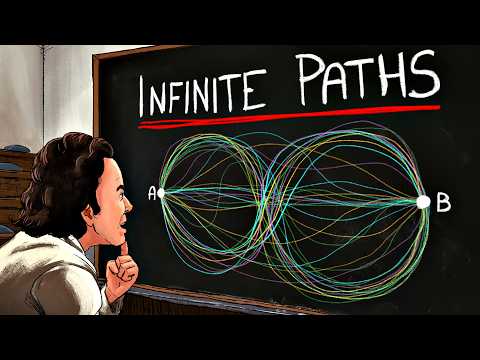
Have you ever watched your morning coffee swirl around in the cup? It’s a little dance, right? Well, that’s basically particles having their own party, and they don’t need an invitation!
Statistical physics is like the backstage pass to this wild event. It helps us understand not just how particles move, but why they act the way they do. Picture tiny marbles in a jar—some are racing around while others chill out.
You might think, “Why should I care about some tiny stuff bouncing around?” But here’s the kicker: this chaotic movement explains tons of things in our everyday lives—like why ice melts or how air fresheners fill a room.
So buckle up! We’re going to explore this fascinating world together. You’ll see that particles in motion are way more interesting than you’d expect!
Exploring the 12 Fundamental Particles in Physics: A Comprehensive Guide to the Building Blocks of Matter
Alright, so let’s chat about the really tiny things that make up everything around us—I’m talking about fundamental particles. These little guys are like the Lego blocks of the universe. There are twelve of them, and they’re divided into two main families: fermions and bosons.
Fermions, which include quarks and leptons, make up matter. Quarks combine to create protons and neutrons, while leptons include electrons, which are crucial for atoms. You can think of it like this:
- Quarks: They come in six “flavors,” but it’s not like ice creams—there’s up, down, charm, strange, top, and bottom. Protons are made up of two up quarks and one down quark.
- Leptons: The most famous member is the electron. You also have muons and taus along with their respective neutrinos. Electrons buzz around the nucleus of atoms.
Now jumping over to the bosons! They’re like the unseen messengers that carry forces in our universe.
- Photon: This one carries electromagnetic force—think about light! Without photons, you wouldn’t be able to see anything. Crazy, right?
- W/Z bosons: These are responsible for weak nuclear force. They play a huge role in processes like radioactive decay.
- The Higgs boson: This was a big deal when scientists discovered it because it’s related to why particles have mass!
You probably know how everything feels solid around you, right? Well, when you zoom way in on matter using statistical physics principles—you see that all these particles are moving constantly! It’s like a wild dance party where everyone is jamming at different speeds.
This motion leads to something called “temperature,” and basically describes how fast those particles are moving on average. When things get hotter? Particles move faster—when they cool down? They start chilling out (literally).
The interplay between these fundamental particles is fascinating because they follow some serious rules laid out by quantum mechanics. Sometimes they act super strange; for instance, a particle can be in two places at once or even pass through barriers like some kind of magical trick!
The thing is these fundamental particles not only build stuff—like all your favorite objects—but also determine how they interact with each other through forces we barely understand. It’s this complex dance that ultimately gives rise to all the matter we see every day—from stars twinkling in space to your morning coffee cup.
If you ever find yourself staring into space or pondering over a problem at work or school? Just remember that it all boils down to these tiny building blocks hanging out together in different ways. Seriously cool stuff!
Fundamental Concepts of Statistical Physics: An Overview for Science Enthusiasts
Alright, so let’s talk about statistical physics and what it’s all about. At its core, this field helps us understand how tiny particles—like atoms and molecules—behave when they’re in large groups. Imagine a big crowd at a concert. Each person has their own way of moving, but overall, you can see the crowd swaying together. That’s kind of what statistical physics does for particles in motion.
First off, one of the fundamental concepts here is temperature. You might think of temperature just as it relates to hot or cold weather, but in statistical physics, it links to the average energy of particles. When you heat something up, like water on the stove, those water molecules start moving faster and hitting each other more often. Suddenly, you’ve got steam! It’s all about that kinetic energy changing with temperature.
Now let me throw another important term your way: entropy. This one sounds complicated but think of it as a measure of disorder or randomness in a system. Picture your bedroom after a week with no cleaning—the clothes are everywhere! High entropy means things are pretty mixed up and chaotic. When you heat a substance, you’re usually increasing its entropy because the molecules gain energy and spread out more.
What’s really cool is that statistical ensembles come into play too. These ensembles describe different states of systems based on varying conditions like temperature or volume. There are three main types to know about:
- Microcanonical Ensemble: This one describes an isolated system with fixed energy—think an enclosed box where no heat is added or taken away.
- Canonical Ensemble: Here, we have systems that can exchange heat with their surroundings at a constant temperature.
- Grand Canonical Ensemble: This fancy term refers to systems where both energy and particle number can change—like when gas expands into a vacuum.
The magic happens when we start combining these ideas! For instance, if we look at how gas particles move in different temperatures using these ensembles, we can predict behaviors like pressure changes or even how gases behave under certain conditions.
Have you ever heard of Boltzmann’s Distribution? It sounds heavy but stick with me! This principle tells us how many particles have certain energy levels at a given temperature. In simple terms: the higher the temperature, more particles will have higher energies—and vice versa. So imagine baking cookies: if you turn up the oven temp too high (whoops!), some cookies get burnt because they reached higher energy states first!
And then there’s this thing called phase transitions. You know those moments when ice turns into water? Yep! That’s statistical physics in action too! As energy is added (heat), molecules get excited and rearrange from solid to liquid (and eventually gas). These transitions can be mapped out using graphs showing different phases under varying conditions.
So next time you’re staring at your ice cubes melting or watching steam rise from your kettle, remember—it’s all those tiny particles dancing around according to the rules set by statistical physics! The world may seem chaotic sometimes, but there’s some serious order hiding behind all those random movements. Pretty neat stuff if you ask me!
Exploring the Breakthroughs in Particle Physics: Understanding the Foundations of Matter and Energy
So, let’s jump into the world of particle physics. It’s a pretty wild field, but at its core, it’s all about understanding what matter and energy really are. You know, like the tiny building blocks of everything around us? We’re talking about particles—stuff like electrons and quarks.
First off, a particle is basically something that defines both matter and energy. In the simplest terms, they’re the smallest units we can break something down to before it stops behaving like what it originally was. Think of atoms as tiny Lego blocks; particles are like the individual pieces that snap together to form those blocks.
A huge breakthrough in particle physics was when scientists found out about the Higgs boson. This funky little particle is essential because it gives mass to other particles through a process called the Higgs mechanism. Imagine trying to figure out how your buddies weigh so much after a pizza night—you’d realize it’s all about what they’re made of! That’s pretty much what the Higgs boson does on a cosmic scale!
- The Standard Model is key here. It’s kind of like a menu at a restaurant for our universe, listing all known fundamental particles and their interactions.
- You’ve got fermions—think quarks and leptons—which make up matter.
- Bosons are the force carriers; they include things like photons (light particles) and gluons (which keep quarks glued together).
The thing is, particles don’t just sit there; they’re always in motion. That’s where statistical physics comes in! It’s kind of like watching kids on a playground—everyone’s moving around in unpredictable ways, right? Statistical physics helps us understand how these movements average out over time.
This connects with particle physics because it shows us patterns in how particles behave under different conditions. For example, when things get super cold or extremely high-energy environments exist—like at the centers of stars—particles start doing funky things based on their statistical properties.
- You might have heard about superfluidity or superconductivity—that’s where particles behave differently because they’re at such low temperatures!
- This means they can flow without friction or conduct electricity without resistance—pretty neat, huh?
Now back to those breakthroughs! The Large Hadron Collider (LHC) is one of the biggest experiments in particle physics today. Scientists smash protons together at nearly light speed to study what happens. And guess what? They found more than just the Higgs boson—they’ve discovered new kinds of interactions too! Every time they smash those protons together, it’s like opening pop cans full of surprises.
You could think about all this as trying to understand not only individual particles but also how they come together to form everything we experience: from trees that sway in the wind to galaxies spinning through space. Every piece counts!
The journey into particle physics isn’t over yet; mysteries abound! Questions linger about dark matter and dark energy—two components thought to make up most of our universe but still remain elusive. It’s wild thinking that most stuff we can’t even see affects everything!
This whole exploration isn’t just for scientists locked away in labs either; it’s for everyone curious enough to look deeper into why things are they way they are. The universe has so many layers waiting for us to peel back, one tiny particle at a time!
So, particles in motion, huh? It might sound a bit dry at first, but believe me, it’s pretty cool when you think about it. Imagine standing outside on a breezy day. You see leaves rustling and maybe even some dust swirling around. All those tiny particles are moving everywhere! And that’s just scratching the surface.
Statistical physics is like the secret code that helps us understand all this chaotic movement. Picture a bustling street: cars zooming by, people hurrying to catch their trains, and bikes weaving through traffic. It seems random, but there’s an underlying pattern to it all. That’s what statistical physics does for particles—it finds patterns in the noise.
A while back, I was at a science museum and just watching an interactive display that showed gas molecules bouncing around in a box. It really blew my mind! Those little guys were moving so fast and colliding with each other constantly. But even though they were bouncing around with total unpredictability, when you zoomed out to look at a lot of them together, you could start to see trends: how temperature affects speed or how pressure can squish them closer together.
Basically, statistical physics helps us make sense of the seemingly random dance of particles by using averages and probabilities. You know, like when you’re trying to guess who’ll win a game based on past performance instead of just taking one game into account? This approach reveals insights about behavior on larger scales without having to track every single particle—thank goodness for that!
And speaking of insights, think about phase transitions—like ice melting into water or water boiling into steam. Those moments are fascinating because they’re all about energy distribution among particles. At certain temperatures or pressures, everything changes dramatically! It’s kind of wild how something as simple as heating up can cause such big shifts at the microscopic level.
So it turns out that these little particles are actually telling us stories about our universe and its laws through their motion and interactions. The more we explore these ideas from statistical physics, the more we see how interconnected everything is—from the air we breathe to the stars in the sky.
Next time you feel that wind blowing or watch dust dancing in sunlight, just remember: there’s an entire universe of tiny particles at play. And hey—maybe next time I’m feeling lost in chaotic situations myself—I’ll think about those lively little molecules bouncing around while finding their own way through life!