You know that moment when you take a bite of a cookie and it’s, like, the best thing ever? But then you realize you ate the last one? Bummer, right? It’s kind of like science with sample sizes. If you don’t get it right, your results might taste super good but turn out to be totally off.
Imagine trying to figure out if people really like chocolate chip cookies more than oatmeal raisin. If you only ask your three friends who all love chocolate chip, well… that’s not gonna give you the full picture!
So, why does sample size matter so much in science? Well, let’s dive into how picking the right number can make or break your findings. Believe it or not, it’s way more crucial than just counting cookies!
Understanding the Golden Rule of Sample Size in Scientific Research: Key Principles and Best Practices
So, you’re curious about the Golden Rule of Sample Size in scientific research, huh? Let’s break it down in a way that feels like you’re chatting with a friend over coffee.
The basic idea is simple: the sample size is super important for determining if your research findings are reliable. Think of it this way: if you’re trying to figure out the average height of basketball players and you only measure, like, three dudes at your local park, you probably won’t get a very accurate picture. You feel me?
Here are some key principles to keep in mind:
- More Isn’t Always Better: Just cranking up your sample size isn’t the magic fix. Sure, having more data can improve precision, but it can also lead to diminishing returns. If you have 5,000 samples instead of 500 but none are representative of the group you’re studying, all that extra work doesn’t help much.
- Diversity Matters: It’s not just about how many people you include; it’s also about who you include. A diverse sample helps capture different perspectives and makes your findings more generalizable. It’s like throwing a party – you want a mix of people for good vibes!
- Catching Errors: Larger sample sizes help minimize sampling error. This means your results are less likely to be skewed by random chance. Imagine flipping a coin three times: it might land heads twice just by chance. But flip it 100 times, and it’ll even out closer to 50 heads and 50 tails.
- Your Research Goal Matters: Depending on what you’re trying to find out – be it a correlation or causation – your required sample size will change. For some studies, a smaller sample might suffice if you’re looking for specific behaviors or responses.
- Basing Size on Power Analysis: This technical term might sound complicated but stick with me! Power analysis helps researchers determine the smallest sample size needed to detect an effect if there actually is one. It’s kind of like setting the stage for success before diving into experiments.
No one wants to invest time and resources only to end up with results that don’t really mean anything! I remember reading about this study where they wanted to see if drinking coffee improves focus. They tested only ten college students during finals week! Unsurprisingly, their results were all over the place—some were buzzing from caffeine while others were just nervous wrecks!
Your ideal sample size should balance practicality with statistical power—you know? Sometimes researchers have budget constraints or limited access to participants; that’s real life! So finding that sweet spot between what’s possible and what’s needed is key.
You might wonder how big you’d really need that number to be for different scenarios—like survey studies vs clinical trials—but there isn’t one universal answer; every study is unique! But generally speaking, aiming for larger samples usually gives you stronger legitimacy.
The Golden Rule? Aim for enough diversity and quantity in your samples so that when you make claims based on your data, they stick – no wishy-washy conclusions allowed! Sounds good? Cool!
This entire process may seem daunting at first glance but trust me; once you get familiar with these principles and best practices, you’ll start seeing how right-sized samples lead us closer toward meaningful scientific discoveries!
Assessing Practical Sample Sizes in Scientific Research: Key Factors and Guidelines
When it comes to scientific research, the size of your sample can make a huge difference in the reliability of your results. You see, if you pick too few people or things to study, your conclusions might be way off. But pick too many, and you could waste time and resources. So, what are the key factors to think about when figuring out the right sample size?
First off, consider your research objectives. What are you trying to find out? If you’re looking for a specific effect or relationship in a small group, you might need fewer samples than if you’re exploring a more general question across a large population. For example, if you want to study the effect of a new drug on blood pressure in adults aged 60 and over, you’ll need enough participants to confidently spot any changes caused by that drug.
Next up is variability. This is about how much difference there is in whatever you’re looking at. In psychological studies, for instance, people’s responses can vary a lot based on their backgrounds or experiences. If there’s high variability in what you’re studying—for example, various reactions to the same stimulus—you’ll need a larger sample size to get reliable data. The lower that variability is, like if everyone responds pretty much the same way, then you can work with fewer participants.
Then there’s power analysis. This fancy term just means figuring out how likely you are to detect an effect if there really is one. Usually represented as “power,” researchers often aim for 80% or higher. This means if there’s an actual effect out there, you’ve got an 80% chance of seeing it with your chosen sample size. Setting this at the beginning helps shape how many people you’ll need.
Another important factor? The expected effect size! This looks at how big of an impact you’re anticipating. If you believe that treatment A will reduce symptoms significantly compared to treatment B (like losing weight compared to just diet changes), that’s going to require more subjects than if you only expect a subtle difference.
Don’t forget about statistical methods! The techniques used can influence how many samples you’ll need too. Some tests require larger samples than others to validate findings properly. So when planning which method you’ll use for analyzing your data—like t-tests or ANOVAs—keep this in mind because it can shift your numbers up or down!
Finally—managing resources matters! You have limitations: time, money, and manpower all play into how large your sample can realistically be. It’s great to aim high for ideal sample sizes but never lose sight of what’s feasible.
So here’s a little recap:
- Your research objectives matter;
- The variability within your data influences size;
- You want enough power;
- The expected effect size plays a role;
- Your statistical methods affect required samples;
- Your resources set real limits.
At the end of the day, nailing down that perfect sample size isn’t just some admin hassle—it’s about making sure what you find is solid science that holds water!
Understanding the 10 Times Rule for Sample Size in Scientific Research: Implications and Applications
Alright, let’s chat about the 10 Times Rule when it comes to sample sizes in scientific research. You know how when you take a slice of pizza, you want to make sure it has enough toppings? Well, it’s kind of like that when researchers pick how many samples they need for their studies. The 10 Times Rule is a guideline that suggests having at least ten times more observations than the number of variables being tested.
So, if you’re looking at three different variables—let’s say age, height, and weight—you’d want a minimum sample size of 30 participants. Sounds simple enough, right? It makes sense because more data usually leads to more reliable conclusions. Imagine trying to guess everyone’s favorite ice cream flavor with only two opinions! That wouldn’t be too reliable.
Why does this matter? Well, having an adequate sample size helps ensure that the results are statistically significant and not just lucky guesses. If your sample size is too small, it’s like throwing darts blindfolded—you might hit something by chance but doesn’t mean you’ve got the right target!
Now consider this: when scientists don’t follow the 10 Times Rule and use a smaller sample size instead, they risk making false conclusions. This can lead to wasted resources or even harm if someone relies on that faulty information for decision-making.
Let’s break down some important implications and applications:
- Reliability: Larger samples lead to more trustworthy outcomes.
- Diversity: A bigger pool can represent different groups better.
- Statistical Power: More data provides better detection of real effects.
- Error Reduction: Minimizing random errors becomes easier with more samples.
Take medical studies as an example. Imagine researchers testing a new drug on only five people compared to 50. The results from just five could easily be skewed by individual responses—like maybe one person has an unusual reaction while others show no change at all. However, with 50 participants, those quirky results get balanced out.
But let’s not sugarcoat everything here; sticking exactly to the 10 Times Rule isn’t always practical or possible due to budget or time constraints. Researchers often have to find a balance between ideal numbers and what they can realistically manage.
In practice, scientists might also use statistical analyses that allow smaller sample sizes in certain cases—but you’d better believe they’ll still keep an eye on those results. So remember: while guidelines like the 10 Times Rule are super important for yielding reliable science, getting creative within those frameworks is sometimes necessary.
So next time someone brings up sample sizes in research around you—just think about how critical those numbers really are! It’s like turning up with that perfectly topped slice of pizza instead of just crust—you know everyone appreciates it more!
So, let’s chat about something that might sound a bit technical but is super important—sample size. You know, when scientists want to figure out if their findings are legit, they need to be careful about how many samples they take from a larger population. It’s like trying to guess the number of jellybeans in a jar; if you just grab a handful, you might miss out on the really blue ones or end up with too many green ones. You follow me?
I remember this one time back in school where we had to do a little social experiment. My friends and I decided to ask people their favorite ice cream flavor. We thought we could just walk around the neighborhood and get answers from whoever we bumped into. But guess what? We ended up with a lot of responses from kids at the park who only liked chocolate! Our results totally skewed because we didn’t talk to enough different kinds of people—like adults or those cool old grandmas who probably have great taste!
That’s basically the thing with sample size in research. If it’s too small or not diverse enough, you run the risk of making wild assumptions about a whole population based on limited data. It could lead to wrong conclusions that affect everything from health recommendations to policy decisions.
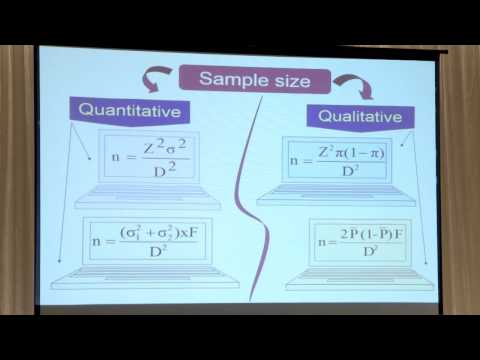
There are all sorts of rules and formulas scientists use to figure out how many samples they really need, depending on what they’re studying. For example, if you’re testing a new drug’s effectiveness, you want more participants because those results can affect health outcomes for a lot of people. But then, more samples can also mean higher costs and longer research times—which is like balancing your budget between buying an expensive coffee machine and just sticking with instant coffee.
So yeah, getting that perfect sample size is kind of like walking a tightrope—you want it just right so that your findings are solid and can be trusted in the scientific community. If scientists mess up here, it can lead to misinformation spreading like wildfire!
In short, nailing down sample size is crucial for reliable science. It reminds us that knowledge isn’t just about numbers but also understanding people and their differences—a bit like mixing all those jellybeans together before taking your scoop!