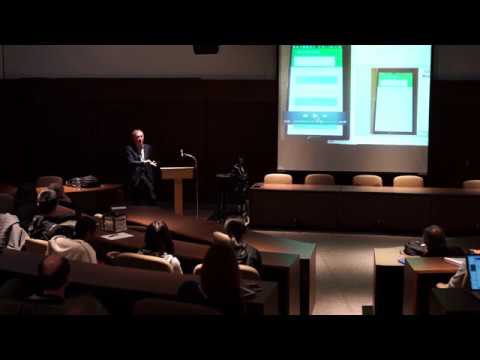
So, here’s a fun fact: did you know that the term “machine learning” was actually coined in 1959? Crazy, right? It’s been a while, but today, it’s like the superhero of tech buzzwords.
Now, let me tell you about Tom Mitchell. He’s not just some random name in the machine learning world; he’s kind of a legend.
Imagine this: you’ve got this brilliant guy who helped shape how we think about computers learning from data. Yeah, I know, sounds super sci-fi!
Tom’s got tons of cool ideas and research under his belt. And honestly, they’re not just dry academic papers; they’ve impacted real-world tech that we use every day.
Stick around as we dive into what makes his work so awesome and important!
Understanding Machine Learning: Insights from Tom Mitchell in the Field of Science
Machine learning is one of those things that sounds super techy and maybe a bit overwhelming, but let’s break it down together. Basically, it’s a field of computer science that teaches computers to learn from data and improve over time without being explicitly programmed for every single task. It’s kind of like how you learned to ride a bike; at first, you might have fallen over a lot, but with practice, you got better!
One of the big names in machine learning is Tom Mitchell. He’s not just some random dude; he’s actually been pivotal in shaping how we understand this whole field. Mitchell wrote a book called *”Machine Learning,”* which is considered a classic in the area. Seriously, if you’re into this stuff, it’s like the bible for machine learning enthusiasts!
In his work, he emphasizes the importance of algorithms, which are basically step-by-step procedures or formulas for solving problems. Think about that moment when you’re trying to figure out how to bake cookies; you follow a recipe (an algorithm) that helps guide you. Similarly, algorithms in machine learning help computers make decisions based on data.
Here are some key points reflecting on Mitchell’s contributions:
Machine learning shows up everywhere now—like when Netflix suggests movies based on what you’ve watched or when your phone recognizes your face. These advancements didn’t just happen overnight; people like Tom Mitchell laid down essential ideas that helped pave the way.
You know what’s really cool? Machine Learning isn’t just about teaching computers; it’s also about understanding intelligence itself. By studying how machines learn from data, we can gain insights into human cognition and behavior too.
So next time you’re scrolling through your phone or bingeing your fave show because Netflix knows you too well—that’s machine learning at work! Pretty neat how it connects us all, right?
Exploring the Pioneer of Machine Learning: The Father of Modern AI in Science
Machine learning is one of those terms you hear everywhere these days, but do you ever wonder who was behind the curtain, pulling all the strings? Well, one name that often pops up is Tom Mitchell. He’s considered a trailblazer in the field, and his work has laid down some serious groundwork for what we call artificial intelligence (AI) today.
Tom Mitchell wrote a groundbreaking book titled “Machine Learning” in 1997. Think of it as a comprehensive guidebook that demystified the concepts and algorithms that form the backbone of this fascinating field. Imagine diving into something so intricate, yet so beautifully structured. That’s what his book offers—clear explanations of complex topics. A lot of folks still reference it today, and it’s a must-read for anyone stepping into the world of AI.
But what exactly did he contribute to science? Well, for starters, Mitchell focused on how computers can learn from data rather than just following strict programming rules. You see, traditional programming is kind of like following a recipe where you have to add exact amounts of ingredients for your dish to turn out right. Machine learning flips this idea on its head—it’s more about teaching the machine to find patterns in data on its own. It’s like letting your computer taste-test different recipes until it figures out how to make a perfect cake.
One key idea he pushed forward was the concept of “hypothesis spaces”. This might sound complicated at first glance, but hang tight! Basically, it refers to all the possible solutions or models that could explain a set of data. When machines learn from data, they’re exploring this vast landscape and picking out hypotheses that seem promising. So, every time an algorithm improves its predictions or decisions based on new data, it’s kind of like it’s saying “Aha! I get it now!”
Mitchell also worked on bridging theory with practical applications. Remember when you learned about decision trees back in school? They help make decisions by splitting data into branches based on certain conditions. His research helped refine these models so they can be used more effectively in real-world situations—like medical diagnoses or even predicting customer behavior!
The work he did wasn’t just theoretical either; he made sure his research had real-world applicability too. For instance, he initiated projects where machine learning techniques could be applied for applications such as robotics and healthcare diagnostics. If you’ve ever used Google to search for something or gotten recommendations on Netflix—thank people like him for making that possible!
And here’s something cool: Tom Mitchell also emphasizes ethical dimensions in AI development which is super important nowadays with all the discussions around privacy and bias in algorithms. Every time you hear about fairness in AI or responsible technology use—it often traces back to conversations initiated by pioneers like him.
In essence, Tom Mitchell isn’t just about number-crunching; he’s influencing how we think about machines learning from us and how they impact our lives today and tomorrow. His legacy inspires not just current researchers but also future innovators who will continue shaping this dynamic field.
So next time you hear about machine learning buzzing around—or even if you’re just scrolling through Netflix—take a moment to appreciate the minds like Tom Mitchell’s behind it all! Isn’t that a neat thought?
Understanding Tom Mitchell’s Definition of Machine Learning in Kevin Murphy’s Probabilistic Framework
So, when we talk about Tom Mitchell’s definition of machine learning, we’re really diving into a fascinating area of computer science. The way he put it is that machine learning is a field of study that gives computers the ability to learn without being explicitly programmed. Sounds cool, right? But what does this really mean in practice?
Mitchell’s definition can be broken down as follows:
Now, when you think about Kevin Murphy’s work in his probabilistic framework, he brings in some deeper statistical ideas. Murphy talks about how we can model uncertainty and make predictions based on data—a crucial part of machine learning.
Imagine you’re trying to guess the weather. You can’t just say “it will rain” without considering possibilities or probabilities, right? Murphy’s framework helps incorporate those uncertainties into the learning process.
Here are a couple key takeaways from this probabilistic twist:
Putting these insights together makes for powerful tools in machine learning! You could think about self-driving cars: They encounter tons of unpredictable situations every day. By applying Mitchell’s ideas alongside Murphy’s probabilistic approach, these cars learn from their experiences while managing uncertainty.
To wrap things up, Tom Mitchell’s definition provides a solid foundation for understanding what’s happening when machines learn, while Kevin Murphy adds depth with his focus on probability and uncertainty—key elements for making sense outta real-world data challenges! And hey, that balance between clear definitions and techy statistical stuff? It makes machine learning all the more interesting!
Tom Mitchell, huh? When you think about the guys who’ve really changed the game in machine learning, he’s definitely one of them. Imagine being in a room filled with brilliant minds, and he’s right there, sharing ideas that could shape the future. That’s something!
He wrote this book called “Machine Learning” which has become kind of a classic in the field. Just picture a college student with stacks of papers and coffee cups scattered around trying to make sense of algorithms and data. That was probably me once! Mitchell’s book didn’t just drop definitions; it laid out concepts that made those seemingly complicated ideas feel manageable. Kind of like having a helpful friend guiding you through a maze.
What I love is how he emphasizes the importance of learning from data, not just crunching numbers. It’s like when you were young and learned that if you touch something hot, it’s gonna hurt—you remember that, right? Well, machine learning is similar; it learns from its past experiences to make better decisions next time around.
One thing that really stands out about Tom is his vision for the future. He doesn’t just look at machine learning as a collection of tricks or tools; he sees it as a way to understand intelligence itself. It’s more than coding—it’s thinking! And honestly, how cool is it to think we’re on the brink of creating machines that could potentially understand us?
I remember reading an article where he talked about how AI could help solve complex societal issues like healthcare or education access. You can almost hear the excitement in his voice as he shares these thoughts! You know how sometimes when someone talks about their passion, it lights up the room? Yeah, that energy shines through his work.
So sure, Tom Mitchell isn’t just some name on a list; he’s this bridge connecting our current understanding with what might come next. Machine learning is evolving so fast, and I can’t help but think about where we’ll be in five or ten years because of contributions from visionary thinkers like him. It gives you hope for what science can achieve—seriously inspiring stuff!