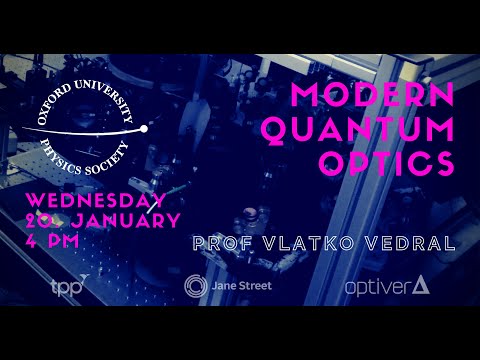
So, you know how some people can make even the most mind-boggling stuff sound super chill? Well, that’s Vlatko Vedral for you. Imagine sitting in a room filled with scientists and suddenly someone cracks a joke about quantum mechanics. Yep, that’s him!
He’s not just any physicist; he’s like the cool uncle who brings fun to nerd talk. Like, when he explains quantum science, it feels less like a lecture and more like a chat over coffee.
Seriously! His work goes way beyond just crunching numbers and spinning theories. He’s all about making science feel accessible, kinda like opening up a hidden treasure chest of knowledge for everyone to explore.
And trust me, once you get a taste of what he’s doing in science outreach, you’ll want to dive deeper into this wacky world of particles and probabilities. Let me tell you more about how Vlatko is shaking things up!
Exploring Retrocausality: Is There Scientific Evidence to Support It?
So, let’s talk about something pretty mind-bending: retrocausality. Basically, it’s this idea that the future could influence the past. Like, what?! That sounds like something out of a sci-fi movie, doesn’t it?
Now, when we dig into this scientific rabbit hole, we can’t help but mention Vlatko Vedral. He’s been doing some cool stuff in the world of quantum science. So, what’s his take on retrocausality? Well, he doesn’t dismiss it outright and instead suggests that our understanding of time in quantum mechanics might be way more flexible than we think.
You see, in quantum physics, particles can behave in quirky ways that defy our everyday experiences. They can be in two places at once or even communicate instantly over large distances. This is where the confusion around time comes up. Since particles don’t always follow a clear path like we expect them to, some scientists like Vedral are curious if information might flow backward as well as forward through time.
- Quantum Entanglement: This is one of those key concepts where things get interesting. When two particles become entangled, the state of one particle instantly influences the other, no matter how far apart they are. You could argue that this hints at a weird kind of ‘backward’ connection—like something from the future affecting one of those particles.
- Time Symmetry: In physics equations, time often behaves symmetrically; that means if you reverse time in an equation, things still work out fine. This has led some scholars to wonder if our perception of past and future is more flexible than we realize.
- Causality and Quantum Mechanics: Traditional causality goes like this: cause leads to effect. But what if retrocausality existed? It would turn this idea on its head! Some interpretations suggest that effects could create causes—a total game-changer for how we see events unfold.
People often feel uneasy when faced with these ideas because they challenge our basic understanding of reality. Can you imagine living where the choice you make today could affect decisions you’ve already made yesterday? It’s wild!
As fascinating as all this sounds, it’s important to note that there isn’t concrete proof yet supporting retrocausality—it’s still very much a theoretical concept being examined by thinkers like Vedral and others in quantum science.
The thing is: exploring these possibilities isn’t just about bending your brain around weird concepts; it helps us understand more about the universe, how information works at a fundamental level and challenges us to reconsider everything we know about time.
In short—while retrocausality is a captivating topic with some intriguing angles thanks to the contributions from folks like Vlatko Vedral, we’re still on that journey for answers! So yeah, keep your curiosity alive—who knows what wonders await us down this twisty path!
Unraveling the Mystery: The True Pioneer of Quantum Physics in Scientific History
Alright, let’s talk about quantum physics and its pioneers. You know, the folks who took us from classical ideas about how stuff works to this wild, weird world where particles can be in two places at once. Seriously, it’s mind-bending! One name that pops up in discussions about modern quantum science is Vlatko Vedral. But what makes him stand out?
Vedral is a big player in the field of quantum information and his contributions extend beyond just research. He’s really focused on scientific outreach, which means he’s all about sharing the complexities of quantum physics with everyone—no PhD necessary! Imagine trying to explain the concept of entanglement to your grandma; it’s not easy, right? But that’s where Vlatko shines.
- Quantum Information Theory: Think of it as a bridge between quantum mechanics and information science. Vedral has done some groundbreaking work here, making complex theories easier to grasp.
- Entanglement: It’s like when you have two particles connected over distances. If you change one, the other changes too, no matter how far apart they are. Vedral dives deep into this, trying to simplify its implications for communication and computing.
- The Role of Outreach: While many scientists might get lost in labs or behind mounds of equations, Vedral takes time to connect with people. He believes that understanding these concepts can actually make a difference in how society views technology.
I remember chatting with a friend once who was completely baffled by the idea that reality at a tiny scale is so different from our everyday experiences. We laughed over coffee trying to wrap our heads around Schrödinger’s cat—a thought experiment where a cat can be both alive and dead simultaneously until you look at it! It’s such an odd way to think!
The thing is, thanks to researchers like Vlatko Vedral making quantum concepts more accessible through outreach efforts—whether through books or talks—we’re slowly demystifying these challenging ideas for everyone. Not just physicists or mathematicians but also curious minds who want to understand what’s happening at that crazy microscopic level.
So yeah, unraveling the mystery of quantum physics isn’t just about scientific breakthroughs; it’s also about connecting with people and helping them see why this stuff matters in our daily lives. And Vlatko Vedral? He’s definitely one of those pioneers making waves not only in research but also in spreading knowledge.
Exploring Stephen Hawking’s Insights on Quantum Physics and Its Impact on Modern Science
So, Stephen Hawking. I mean, this guy was a legend in the world of science, right? He basically took complex ideas about the universe and made them more relatable for everyone. His work on quantum physics and black holes opened up a lot of doors for understanding our reality. You know, the kind that makes you feel both small and super curious about how everything works.
Hawking had this incredible idea called “Hawking radiation.” Basically, he suggested that black holes aren’t actually black—they can emit radiation! This happens due to quantum effects near the event horizon, which is like the point of no return for anything falling into a black hole. It’s a bit like saying even something that seems to have it all—like a black hole—can lose energy and eventually evaporate. How cool is that?
Now let’s shift gears a little to Vlatko Vedral. He’s another brilliant mind who’s been pushing the envelope in quantum science outreach. Ever heard of entanglement? It’s when particles become linked so that one can instantly affect another, no matter how far apart they are. Vedral really digs into these concepts and helps people grasp them without needing a Ph.D. You know those moments when something just clicks? That’s what Vedral aims for with his outreach work.
The intersection between Hawking’s ideas and Vedral’s outreach is pretty fascinating. For instance, when Hawking talked about black holes, he wasn’t just throwing around equations; he was highlighting the weirdness of our universe. And that’s exactly what Vedral tries to do—make these complex ideas accessible so we can marvel at them together.
Both of these thinkers challenge traditional views on how we understand reality through logic and rational thought alone. They remind us that the universe is not just a series of predictable outcomes but filled with surprises—weird stuff happens! They encourage us to be comfortable with not knowing everything while still seeking knowledge.
In modern science, quantum physics has become more than just an academic subject; it’s influencing technologies we interact with daily—stuff like quantum computing or even cryptography! This revolution isn’t happening in isolation either; it benefits from both Hawking’s pioneering insights and Vedral’s mission to enlighten the masses.
So what does all this mean for you? Well, understanding these concepts isn’t just for scientists in lab coats anymore; they’re becoming part of our everyday conversations! If you ever feel overwhelmed by these big ideas or think they’re too complicated, remember: even legends like Hawking started with questions. And thanks to folks like Vedral, you’re encouraged to ask yours too!
In short, both Stephen Hawking and Vlatko Vedral are shaping how we think about quantum physics today. They show us it’s okay to explore the unknown while also making it fun—and believe me, there’s so much more out there waiting for you to discover!
You know, the world of quantum science can feel a bit like walking through a maze. It’s full of twists and turns, and let’s be real—sometimes it’s hard to know which way to go. That’s why people like Vlatko Vedral are so important. He has this knack for breaking down complex ideas into bite-sized pieces that anyone can understand.
I remember the first time I stumbled upon one of his talks online. I was just casually scrolling through videos, looking for something interesting, when I found him explaining the concept of superposition. You might think it sounds boring, but the way he described particles being in multiple states at once? It was like he was telling a suspenseful story! I felt this rush of excitement and curiosity bubbling up inside me. It made me realize that quantum physics isn’t just some dry subject tucked away in textbooks—it can actually be vibrant and thrilling!
What really stands out about Vedral is his passion for outreach. He gets how tricky these concepts can be for regular folks like us, and instead of keeping it all in the ivory tower of academia, he makes an effort to bring quantum science into everyday conversations. Whether it’s through public lectures or writing accessible articles, he genuinely wants people to grasp these fascinating ideas without feeling overwhelmed.
He also talks about things that resonate with our daily lives—even when dealing with topics as mysterious as entanglement or quantum computing. When you hear him speak, you start to see how these tiny particles could potentially influence everything from secure communication to new ways of processing information. It’s kind of mind-bending if you think about it!
So yeah, Vlatko Vedral’s contributions go beyond just research; they’re about lighting a spark in people and inviting them on this incredible journey through quantum science. His work reminds us that science isn’t just numbers and theories—it’s a story waiting for us to discover more chapters together. And who wouldn’t want to join that adventure?