You know that moment when you’re trying to find a song on your phone, and you can’t remember the title? You just hum a few bars into that music app, and boom—it figures it out! Well, behind that magic is some seriously cool stuff happening in string matching research.
And guess what? One of the stars of that show is something called the Z Algorithm. Sounds super fancy, right? But it’s really just a clever way to find patterns in strings of text, kinda like searching for a needle in a haystack but with less straw and more numbers.
So why should you care about this algorithm? The truth is, it’s not just about finding songs or googling stuff quickly. It’s got its fingers in all sorts of pies—like DNA sequencing or even spam detection! So buckle up; we’re about to take a closer look at how this nifty little algorithm works its magic in the world of string matching research.
The Z Algorithm: Advancements in String Matching Research and Its Scientific Applications
The **Z Algorithm** is one of those nifty concepts in computer science that really shines when it comes to pattern matching within strings. Basically, it’s about finding where a particular sequence of characters appears in a larger string. Think of it as a treasure hunt for words or phrases!
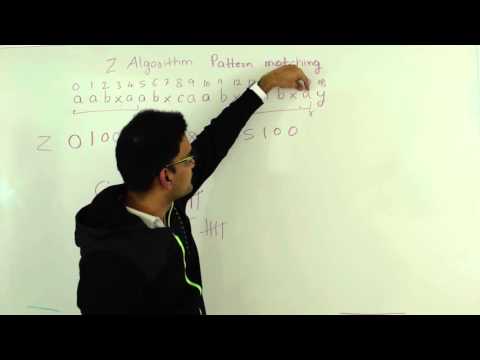
So, what exactly makes the Z Algorithm tick? The heart of it lies in something called the **Z-array**, which is an array that tells you how many characters match from the start of the string compared to its suffixes. It’s like a cheat sheet that helps you figure out where patterns sit without going through each character one by one.
Let’s say you’re trying to find the word “cat” in a sentence: “The cat sat on the mat.” Instead of checking every single position, the Z Algorithm lets you jump around based on previous matches. It makes searching way more efficient—kind of like knowing where all your shoes are without having to dig through every box!
Here’s a brief rundown of how it works:
- Input String: You begin with your main string and what you’re searching for.
- Create Z-array: Calculate this array which contains lengths of matched prefix substrings.
- Pattern Matching: Use the Z-array to quickly identify where your pattern appears.
This approach is not just for fun; its applications stretch into various fields. For example, in **bioinformatics**, researchers can use it to find sequences within DNA strands. Imagine trying to locate a specific gene among millions of nucleotide sequences! Without efficient algorithms like this, that task would be overwhelmingly slow.
Another area where this algorithm shines is in **search engines** and text processing software. Whenever you search for something online or even in documents on your computer, algorithms like Z help deliver results lightning fast. That means less time waiting and more time getting things done!
Now, there’s also something cool about how this algorithm can handle large datasets too. Since it’s linear in complexity (O(n)), this means its speed scales well with larger inputs. So, if you’re working with gigantic texts or databases, using the Z Algorithm means you’re not pulling your hair out waiting for results.
A little anecdote here: I remember using string matching algorithms during college while working on my first coding project. The frustration was real when things didn’t work as planned! But once I figured out how powerful tools like the Z Algorithm could be – wow! It was like flipping a switch from dim light to bright sunshine.
To wrap up, the Z Algorithm isn’t just about fancy code; it’s about making lives easier across various fields by speeding up essential tasks. Next time you search for something online or analyze genetic data, remember there’s some incredible science behind those quick results!
Exploring the Z-Function Algorithm: Insights and Applications in Scientific Research
The Z-Function algorithm is one of those hidden gems in computer science, especially when it comes to string matching. If you’ve ever played around with text search, using something like Google or even looking through your phone contacts, you can appreciate how important these algorithms are. Basically, the Z-Function helps us figure out how similar parts of strings are to one another.
So, what exactly is the Z-Function? Well, for a given string, it creates an array that indicates the length of the longest substring starting from each position that matches the prefix of the string. You get this array by comparing each character from a given position to the beginning of the string. It’s kind of like a digital detective looking for clues!
Key insights about the Z-Function include:
- Efficiency: The Z-Algorithm runs in linear time, O(n), meaning it can handle large strings quickly without getting bogged down.
- Applications: Beyond simple text search, it’s used in DNA sequencing, plagiarism detection, and even spam filtering.
- Pattern Searching: This algorithm allows you to find patterns within texts efficiently. Imagine searching your favorite book for all instances of “adventure”; this is how it happens behind the scenes!
Now let’s talk about applications. Think about health research. Scientists often deal with massive amounts of data. For instance, when analyzing genetic sequences, they need to identify specific patterns repeatedly throughout millions of base pairs. The Z-Algorithm steps in here as a powerful tool to streamline this process.
There’s also another side to this story: its role in computational biology. One time I read about researchers studying a certain gene linked to a disease; they used techniques involving string matching algorithms like Z to pinpoint variations that might affect protein folding. Seriously cool stuff! You just see how these algorithms can literally help save lives.
But wait—there’s more! The beauty of the Z-Function lies in its versatility; it’s not just limited to medical research but also extends into things like natural language processing (NLP). You know chatbots? They rely on understanding language patterns and meanings rather than just raw data input—this is where fast pattern searching becomes essential.
In short, exploring the Z-Function algorithm opens up so many doors in scientific research. Whether you’re digging into genetics or analyzing text data for sentiment analysis, knowing how this algorithm works means you’re equipped with an essential tool that handles complexity without breaking a sweat! So next time you search for something online or look at genetic sequences under a microscope, remember: there’s a bit of magic happening behind those digital curtains thanks to algorithms like this one!
Exploring the KMP Algorithm: A Scientific Approach to Efficient String Matching
String matching is one of those topics that can seem super dry at first. But think about it: it’s like when you’re searching for your favorite song on your playlist or looking for a specific name in a long list. It happens every day, and you hardly think about the magic behind it! Well, the KMP (Knuth-Morris-Pratt) algorithm is one of those clever tricks programmers use to make searching through a string way more efficient.
So, here’s the deal: the KMP algorithm was created back in 1977 by Donald Knuth, Vaughan Pratt, and Joseph Eugene Morris. The cool thing about KMP is that it’s designed to **avoid unnecessary comparisons** when you’re trying to find a substring within a string. Imagine if you were trying to find “cat” in “concatenate.” Instead of starting all over again after each mismatch, KMP remembers what it has matched so far and leverages that information. It’s like having a little helper that says, “Hey! I’ve seen part of this before!”
Now, let’s break down how this works. KMP uses something called a partial match table (or failure function). This table tells the algorithm where to continue searching after a mismatch based on previous matches. So imagine you’re looking for “ana” in “banana.” When you match the first ‘a’ but then hit an ‘n’, instead of resetting entirely, KMP knows that “a” has appeared before and can skip ahead while keeping track.
Now onto another heavy hitter in string matching—the Z Algorithm. Similar to KMP but with its own twist, the Z Algorithm constructs an array called a Z-array for a given string which represents the length of substrings beginning at each position that match the prefix of the string. Picture it like this: if you know how many characters from each spot match up with the start of your string, you can zero in on potential matches super fast!
When these two algorithms work together—KMP and Z—you get some serious speed boosts in string matching operations! Research around these algorithms keeps evolving too; scientists are constantly finding ways to optimize them further or apply them to new problems, like text editors or even bioinformatics where DNA sequences are analyzed.
Both algorithms shine particularly well when dealing with large data sets where efficiency matters—you don’t want to be wasting time comparing every character again when you’ve already put in some effort figuring out where things line up.
In short, whether you’re coding up an app or just curious about how searches work under the hood, understanding these algorithms can definitely give you insights into tackling similar challenges efficiently. They’re not just math concepts; they have real-world applications that help us find things faster every single day!
You know, string matching might sound super technical and kinda dry at first, but it’s actually a pretty fascinating area of computer science. I mean, think about how often we deal with strings in our daily lives. Text messages, social media posts, search engines—it’s all about matching those pesky bits of text together!
So, let’s chat about the Z Algorithm. This method is like a secret weapon in the world of string matching. Imagine you’re looking for a short phrase in a long book. Instead of reading every single word one by one—because who has time for that?—the Z Algorithm lets you jump around and find what you’re looking for much faster.
What it does is create a “Z-array” based on the input string. Each entry in this array tells you how many characters match the beginning of the substring from that position onwards. It’s like getting little hints throughout the text that make your search quicker and less painful! But I’ll tell you something: when I first encountered this algorithm back in my college days, it felt like cracking a code; it was both thrilling and confusing at once.
I remember sitting with my friend late one night over coffee, trying to wrap our heads around it. Adding sugar to my cup, I could feel the caffeine surge through me as we scribbled notes everywhere. It was exhilarating yet daunting to see how math and logic came together to solve real-world problems. And honestly? That moment made me realize there’s so much more than meets the eye when you dive into algorithms.
So anyway, back to string matching—this algorithm plays an important role not just in searching text but also in fields like DNA sequencing where searching for patterns can make or break research breakthroughs! Just think about how many lives are affected by understanding genetic sequences better because we have tools like this at our disposal.
In short, even though algorithms can feel complex or abstract sometimes, they’re really just clever ways humans have devised to tackle everyday problems—like finding your favorite quote without sifting through a mountain of text! So next time you send that text message or scroll through your feed, remember: there’s some serious brainpower behind making sure everything fits just right! That’s science for ya!