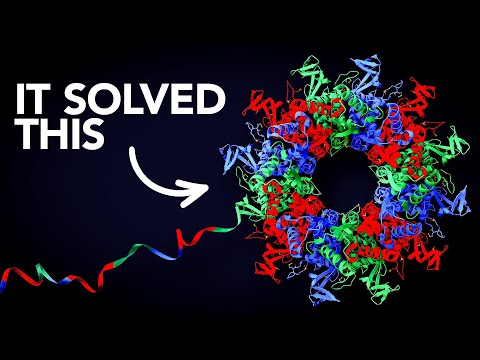
So, you know how sometimes you try to assemble a jigsaw puzzle, and all those pieces look the same? Yeah, protein folding is kind of like that, but way more complicated. Picture it: billions of tiny pieces all scrambling around, and somehow they need to figure out how to fit together perfectly.
Well, the story of AlphaFold is like someone finally finding the cheat sheet for that puzzle! Seriously. It’s one of those breakthroughs that makes you go “Wow!” This AI marvel has been shaking things up in the science world by predicting protein structures with mind-blowing accuracy.
Imagine being able to peek into the intricate dance of proteins as they twist and turn into their functional shapes. It’s like having a backstage pass to nature’s coolest show! So grab your favorite snack because we’re about to dive into this wild ride of science and discovery. You’ll want to stick around for this one!
Exploring the Breakthrough Achievements of AlphaFold in Protein Folding and Molecular Biology
Alright, let’s chat about AlphaFold, the impressive tool that’s making waves in the world of protein folding and molecular biology. Seriously, it’s like something out of a sci-fi movie, but it’s totally real.
What is AlphaFold? Well, think of it as an AI program developed by DeepMind. Its job? Predicting protein structures. You see, proteins are these long chains made of amino acids that fold into specific shapes. Their shape is super important because it determines how they function in our bodies. But figuring out these shapes has been a big puzzle for scientists for years!
Now, you might be wondering: why care about protein folding? Imagine trying to solve a Rubik’s cube in your head while blindfolded—it’s tough! But if someone told you the exact moves to make or even showed you how it looks when it’s done, well, that would change everything. That’s what AlphaFold does for proteins.
So how does it work? It uses deep learning—a type of machine learning that mimics how our brains work—to analyze massive datasets of known protein structures. Then it takes this info to predict how new proteins will fold from just their amino acid sequences. Pretty cool, right?
Notable Achievements:
- In 2020, AlphaFold rocked the scientific community with its performance at the CASP (Critical Assessment of Techniques for Protein Structure Prediction) competition. It was able to predict protein structures with incredible accuracy.
- This breakthrough allows researchers to unlock mysteries behind diseases caused by misfolded proteins like Alzheimer’s or cystic fibrosis.
- It’s also speeding up drug discovery! By predicting how proteins interact with potential medications, scientists can find promising candidates faster.
Speaking of speed—can you imagine being a scientist and waiting years to determine a structure? With AlphaFold, what once took ages can now happen in days or even hours. Totally mind-blowing!
But here’s another thing: AlphaFold isn’t just helping us understand human biology; it’s got implications across various fields like agriculture and environmental science too! For instance, think about creating better crops that can withstand climate change by understanding plant proteins better.
Still skeptical? There was this one time when researchers used AlphaFold to predict the structure of a previously unsolved protein related to tuberculosis. They literally didn’t know what this thing looked like! And then bam—AlphaFold stepped in and revealed its structure. That discovery could lead to new treatments for TB.
And sure, there are limitations—like not being perfect every time and struggling with certain complex interactions—but the revolution it has sparked is undeniable.
So there you have it! AlphaFold isn’t just tech wizardry; it’s opening doors we’ve only dreamed about in biology and medicine. The way we study life on a molecular level is changing right before our eyes! Isn’t that exciting?
Exploring AlphaFold’s Capabilities in Predicting Protein Structure: A Scientific Analysis
Well, let’s talk about AlphaFold! If you’re not familiar, it’s this super cool AI program developed by DeepMind that predicts how proteins fold. You might be thinking, “Why should I care about protein folding?” Well, you follow me? The way a protein folds is crucial because it determines its function in the body. Think of a protein as a complex origami figure; if it’s not folded correctly, it’s not going to do its job right.
Now, when we say **“predicting protein structure,”** we’re diving into something pretty complex. Proteins are made up of amino acids, which are like the building blocks. They line up in a specific order and fold into shapes that allow them to perform specific tasks—like enzymes speeding up chemical reactions or antibodies fighting off infections. So understanding how they fold can help scientists figure out what they do.
AlphaFold is groundbreaking because it uses machine learning to predict these structures based on the amino acid sequences. Here’s how it works:
- Input Data: It starts with a sequence of amino acids—just a long string of letters representing each acid.
- Multiple Sequence Alignments: The AI looks at similar sequences from other organisms to find patterns and relationships.
- Building Models: Using these patterns, AlphaFold constructs possible shapes for the protein. It’s sort of like taking guesses based on clues.
- Refinement Process: After making initial predictions, it refines them by assessing the physics of molecular structures—basically checking if they can exist in real life.
The level of accuracy is seriously impressive! Many studies have shown that AlphaFold can predict structures with an accuracy comparable to experimental methods that require lots of time and resources. This means researchers can spend less time trying to figure out these shapes themselves and more time using this info to develop drugs or study diseases.
Ever heard about diseases like Alzheimer’s or cystic fibrosis? These conditions often relate back to misfolded proteins, where they don’t take their proper shape and thus can’t perform their jobs correctly. By using AlphaFold’s predictions, scientists might pinpoint exactly where things go wrong in these folding processes. Like solving a big jigsaw puzzle!
Some experts worry about the implications too—like could this lead us down rabbit holes where we think we understand everything when we really don’t? But at the same time, others see this as an opportunity for breakthroughs in drug design and understanding biology better than ever before.
AlphaFold’s capabilities keep growing as researchers keep feeding it new data and improving algorithms further. It’s astounding how quickly things can change in science! Imagine walking into your lab one day with new insights just waiting there because AlphaFold helped you get there faster.
So yeah, AlphaFold isn’t just some flashy tech—it could change our approach to biology and medicine significantly. Isn’t science just amazing sometimes?
Exploring the Advancements of AlphaFold 3: Transformations in Protein Folding and Scientific Research
AlphaFold has really shaken things up in the world of protein folding. You know how proteins are crucial for so many biological processes in our bodies? Well, understanding their structure is key to grasping how they function. AlphaFold 3 takes this to a whole new level—so let’s break it down a little.
The major thing to know about AlphaFold is that it predicts protein structures with astonishing accuracy. This is no small feat since proteins are made up of long chains of amino acids that can fold into complex shapes. For context, think about trying to fold a piece of fabric. It’s not just about crumpling it up; you’ve got to get the right dimensions and creases to make it look good and serve its purpose!
In the past, figuring out a protein’s structure could take years of tedious lab work, using methods like X-ray crystallography or NMR spectroscopy. But now, with AlphaFold 3, researchers can get results much faster—sometimes even instantly! This means that scientists can move on to studying how these proteins behave and interact without getting stuck on folding puzzles.
Here’s what makes AlphaFold 3 stand out:
- Improved Accuracy: The latest version really ups its game in predicting structural details that past models sometimes struggled with.
- Broader Range: It tackles not just single proteins but also complex interactions among multiple proteins.
- Easier Accessibility: With its capabilities shared openly, more researchers around the globe can tap into this powerful tool.
You might be wondering why this matters so much. Well, let’s say you’re working on finding treatments for diseases like cancer or Alzheimer’s. Having accurate models of the involved proteins means you can identify potential drug targets faster and design therapies more effectively—not something you want to be slow about!
And there have been some seriously exciting applications already! For instance, scientists are making strides in understanding how certain viruses behave by modeling their protein structures. This helps immensely in vaccine development and disease prevention strategies.
It’s pretty wild thinking that in just a few years since AlphaFold burst onto the scene, we’ve seen such huge shifts in how we approach biology problems. Anyone who thought science was a slow-moving beast must be taking another look now! So, whether you’re a student or totally into science fiction plots where biology meets technology, AlphaFold 3 is definitely one of those moments we’ll remember as pivotal.
Oh! And here’s an interesting tidbit: while all this tech is amazing, it’s also important for researchers to keep validating predictions through experimental data. That way they ensure everything lines up correctly—you know what I mean? It’s all about striking that balance between computational predictions and real-world applications.
So yeah, that’s AlphaFold 3 for you—a real game changer in our quest to understand life at the molecular level!
Okay, so let’s talk about AlphaFold and why it’s kind of a big deal in the scientific community. You know how proteins are like the little workers in our cells? They do everything from building structures to speeding up reactions. But, figuring out their shapes is like trying to solve a really complex puzzle.
A while back, I remember watching a documentary about scientists working tirelessly to understand diseases at a molecular level. They were spread out across labs with models and sketches, looking completely worn out but so passionate about what they did. It hit me how crucial protein shapes are for understanding life itself!
Then along came AlphaFold, which is basically this super smart AI developed by DeepMind. Think of it as that friend who just gets things right without even trying. Instead of spending years painstakingly analyzing proteins, AlphaFold can predict their structures in just a fraction of that time. It’s like having access to this magical cheat sheet for biology!
What’s wild is that AlphaFold was trained on massive amounts of data, learning from the protein structures that scientists had already figured out. It’s not just guesswork; it uses patterns and relationships derived from existing knowledge to create predictions that are often spot on. That means researchers can focus on applying this information rather than spending ages figuring it out themselves.
But here’s where it gets even cooler: the implications are huge! With better knowledge of protein structures, we could potentially speed up drug discovery or even design new proteins for all sorts of applications—think medicine or sustainable energy solutions.
Of course, there’s still so much to learn—life is complex, right? And while AlphaFold doesn’t solve every problem (it may mess up with some more unusual proteins), it gives us an incredible tool that’s pushing the boundaries of science forward.
So yeah, it’s pretty amazing stuff what AI can help us with nowadays! Just imagining how far we’ve come makes me excited for what else might be around the corner in science and technology.