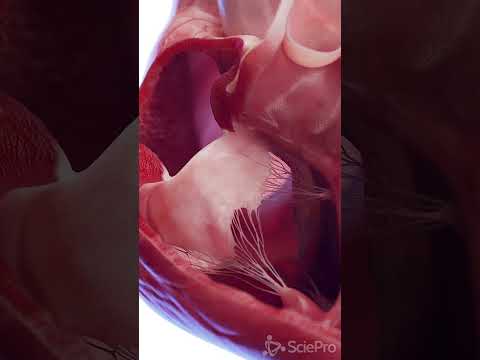
You know that moment when you try to explain something complicated, like the human heart, and it feels like you’re tossing around a bunch of fancy words? Yeah, I’ve been there too. It’s wild how something so vital can be so tricky to talk about.
So, imagine for a second holding an actual model of a heart in your hands. A squishy, 3D replica that’s not just for decoration but helps us understand how this amazing organ works. Pretty cool, right?
These anatomical heart models are seriously changing the game. They’re not just for med students or scientists—they’re opening up new ways for everyone to get involved in science. Whether it’s sketching out blood flow or just getting acquainted with what goes on inside us.
Let’s dig into how these models are helping us learn more about our hearts and maybe even save some lives along the way!
Exploring the Benefits of Heart Models in Science Education: Enhancing Understanding of Human Anatomy and Physiology
Understanding the heart is a big deal in science education, right? I mean, this organ is literally at the center of what makes us tick. When it comes to teaching about human anatomy and physiology, heart models are total game-changers. They help students grasp complex concepts in a way that textbooks just can’t match.
So why are these 3D heart models so beneficial? Well, for starters, they provide a visual and tactile experience. You can look at diagrams all day long, but when you hold a model in your hands, it’s like the information clicks into place. The spatial relationship between different parts of the heart really comes alive. You see where the atria are located compared to the ventricles or how blood flows through the valves.
Then there’s engagement. Imagine being in class and seeing a 3D heart model rather than just reading about it. It’s way more interactive! Students can explore structures from all angles, which is super helpful for visual learners. They might even mix things up by simulating blood flow or trying to identify parts of the heart themselves. It makes learning feel more like an adventure than just another lesson.
Another thing that models bring to the table is enhanced retention. Studies show that people remember information better when they engage with it physically or visually. So using these models during lessons could really boost how much students retain about anatomy. Think about it—the more senses you activate while learning, the stickier that info becomes!
Let’s not forget about disease education. Heart models can illustrate conditions like congenital defects or other issues that arise over time—like plaque buildup in arteries—much more effectively than traditional methods. When students see what an unhealthy heart looks like next to a healthy one, it drives home why good habits matter.
Here are some key benefits summed up:
- Tactile learning: Hands-on experience helps solidify understanding.
- Interactive exploration: Makes lessons engaging and fun.
- Better retention: Visual aids enhance memory recall.
- Disease illustration: Helps explain complex health issues.
Oh! And there’s something kind of cool about getting into those tiny details too—like valve functions or electrical signals controlling heartbeat patterns—it all becomes much less abstract when you’re looking at it up close.
So yeah, 3D heart models do more than just sit there; they’re dynamic tools that breathe life into science education. By bridging gaps between theory and practical understanding, they help pave the way for budding scientists to deepen their knowledge of our most vital organ—and who knows what spectacular discoveries might come out of that!
The Most Accurate Heart Models in Science: A Comprehensive Analysis
Heart models are pretty incredible when you think about them. They help us understand how this vital organ works, what can go wrong, and how to fix it. Scientists have been creating models of the heart for years, but advancements in technology have taken things to a whole new level. Let’s explore some of the most accurate heart models out there and see why they matter.
First off, **3D anatomical heart models** are game-changers. These aren’t just simple diagrams; they’re detailed representations made from actual medical imaging data like CT scans and MRIs. This means you get a model that closely resembles a real human heart in shape and size. Research has shown that using these models can improve surgical planning and outcomes, which is pretty neat if you ask me.
Another exciting advancement comes from **bioprinting**. You know how printers squirt ink onto paper? Well, bioprinters lay down living cells layer by layer to create tissues or even small organs—like hearts! So far, we haven’t fully printed a human-sized heart yet, but scientists are making progress on *mini-hearts* that can mimic some functions of real hearts. Imagine being able to test drugs on these miniatures before trying them on actual patients!
On top of that, researchers have developed **computer simulations** of the heart’s electrical activity. These simulations help to predict how different conditions affect heart function. For example, when a person has arrhythmia (that’s an irregular heartbeat), these models can show how various treatments might work or identify new ways to approach it!
And let’s not forget about **in vivo studies** where researchers look at hearts in live animals (like mice). This gives insights into real biological processes happening in a functioning body. While it feels different from 3D models or computer simulations, it adds another layer of understanding that’s crucial for developing treatments.
So why are all these advanced heart models important? Well, **they improve patient outcomes**! Surgeons can practice complex procedures beforehand using 3D printed models tailored to the individual patient’s anatomy. That way, they’re more prepared when they actually get into the operating room.
In summary:
- 3D anatomical heart models allow for precise surgical planning.
- Bioprinting holds potential for future organ transplantation.
- Computer simulations help predict responses to treatments.
- In vivo studies provide insights into real-time biological processes.
All this stuff shows us that science is constantly evolving! Each new model or technique adds depth to our understanding of hearts and helps tackle various conditions affecting millions worldwide. It’s like piecing together a puzzle where each advancement brings us closer to seeing the full picture—and maybe even finding better solutions along the way!
Step-by-Step Guide to Creating 3D Heart Structures: Techniques in Biomedical Science
Creating 3D heart structures is one of those cool things that can really change how we understand and treat heart diseases. The idea of making a tiny replica of the heart helps scientists study its complexities without being right inside a real one. Let’s walk through some techniques used in biomedical science to make these impressive models.
First off, you gotta know what kind of materials you’ll need. The typical choices include things like hydrogels and biocompatible polymers. These materials are super important because they mimic the properties of actual heart tissue, helping researchers see how cells will behave.
Next up, we jump into **3D printing**. This technique has gained a lot of traction in recent years. Basically, you start with a digital model created using computer software. Then, a 3D printer lays down layer after layer of material until—voila!—you have a physical model of a heart structure. Different printers can use various materials, which means you can control texture and stiffness.
Another interesting method is **bioprinting**. This is like regular 3D printing but way cooler because it uses living cells! You mix cells with bio-inks—these are like the “ink” that holds everything together and allows those cells to grow. Over time, the cells multiply and create actual living tissue that resembles heart structures.
There’s also something called **molding techniques** that come into play often. In this approach, you create a mold based on your desired shape—think silicone molds or even more complex materials like alginate gel. After making your mold, you pour in your material to set and cure it inside the mold shape which ends up giving you an organ-like structure!
Now let’s chat about **scaffolding**. This concept involves creating a support structure where you allow cells to grow. It acts as a framework for tissues to form around it and is often made from biodegradable materials so it won’t stick around forever once the tissue develops.
But wait! It’s also crucial to consider **cell types** during this process because not all cells behave the same way or perform the same functions in the heart. For instance, cardiac muscle cells are essential for mimicking true heart function when creating these models.
Lastly, don’t forget about **imaging techniques.** These help visualize what you’ve created at different stages so adjustments can be made along the way! Methods like MRI or ultrasound play key roles here—allowing scientists to monitor how closely their 3D models resemble real hearts over time.
So there you go! Building 3D heart structures involves clever techniques from materials selection to intricate bioprinting methods that make science even more exciting! Getting these models right can pave new paths for understanding treatments for conditions that affect one of our most vital organs—the heart!
So, you know how when you were a kid, you’d get those little plastic models of the human body? You could pop off the limbs and see all the organs inside? Well, it’s kind of like that but way cooler now! Nowadays, scientists and medical folks are using 3D models of hearts—like, actual anatomical models that look super realistic.
I remember this time I visited a science fair and saw a girl demonstrating one of those heart models. She was explaining how they could show different layers of tissue and even blood flow in real-time. It was mesmerizing! People were gathered around her booth, wide-eyed, soaking in every detail. It made me realize just how much these 3D creations can capture our imagination while teaching us serious science.
These heart models aren’t just for show though. They’re practically revolutionizing medical education! Imagine being a med student and getting to study anatomy by holding a lifelike heart in your hands rather than just staring at textbook diagrams. You get to see how the valves work and understand the structure up close—it’s like having a mini-heart workshop right in your palm!
But it goes beyond just learning, right? Surgeons are now using these models to plan complex surgeries. They can visualize what they’re about to work on before ever stepping into an operating room. It’s kind of mind-blowing when you think about it: surgeons practicing their moves on 3D replicas reduces risks and improves outcomes for patients.
And here’s something else: these advancements aren’t just limited to fancy hospitals or universities anymore. With technology getting more accessible, even smaller clinics are starting to use them too! This might sound cheesy, but it’s exciting knowing that more people can benefit from better healthcare thanks to tech innovations.
Honestly, it feels like we’re standing on the edge of something big here with 3D modeling in medicine. It’s merging art with science in this beautiful way that brings hearts—literally—to life! Who knows where this will take us next? The possibilities seem endless as we unlock more secrets about our bodies while making science relatable and fun for everyone involved. So cool!