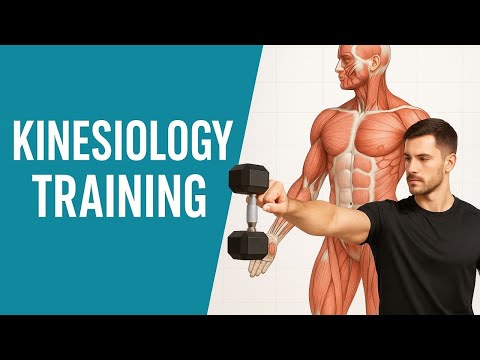
So, picture this: you’re at the gym, trying to lift weights like a champ. Suddenly, your buddy next to you is doing these crazy moves that make it look effortless. You can’t help but wonder, “What’s his secret?” Well, my friend, that’s where biomechanics comes in.
Biomechanical kinesiology is like the science behind the magic of movement. It’s what makes your buddy look all smooth and graceful while you’re over there struggling like a newborn giraffe on roller skates. Seriously!
Imagine understanding how muscles work together when you run or jump or even just bend down to tie your shoes. It’s not just about breaking a sweat; it’s about knowing how our bodies are designed to move.
And let me tell you, it’s not all serious science stuff. This field is filled with cool insights that can make exercising way more fun and effective! Stick with me, and we’ll break it down together!
Exploring the 7 Fundamental Principles of Biomechanics in Science
So, biomechanics is like the study of how our bodies move, right? It takes a closer look at the mechanics of human motion. When you think about it, we’re constantly dancing through life — walking, running, jumping. All these actions depend on some pretty fundamental principles. Let’s break down these 7 fundamental principles of biomechanics, shall we?
1. Force: This is the push or pull that can make an object move or change direction. Imagine trying to slide your couch across the floor—you’re applying a force to get it moving! In biomechanics, understanding how muscles generate force helps us know how to enhance movements in sports or recovery.
2. Motion: This is all about movement. Whether you’re jogging or reaching for something on a high shelf, motion involves speed and direction. Just like when you throw a ball; you’ve got to consider the angle and speed to reach your target.
3. Leverage: Think about using a seesaw as an example of leverage where you can lift heavier things by placing weight farther from the pivot point. Our bones work similarly! The longer the bone lever arm, the more force can be generated with less effort from muscles.
4. Energy: This principle covers how energy is transferred during movement. For instance, when you run and then jump, your body converts kinetic energy into potential energy at the peak of your jump—like a slingshot ready to spring back!
5. Stability: We all have that one friend who seems like they can balance on anything! Stability in biomechanics relates to maintaining control over body position while moving or standing still—it’s what helps prevent falls when you trip over an invisible crack in the pavement.
6. Timing: Movement isn’t just about doing things right; it’s also about timing! For instance, think about catching a ball—it requires precise timing to align your hand with its path at just the right moment.
7. Coordination: Finally, this principle refers to how different parts of your body work together with harmony while moving—like when you ride a bike; it’s all about synchronizing pedaling and steering!
These principles are vital not just for athletes but for everyone engaging in physical activity every day—even if it’s just running after your dog who spotted that squirrel again! Understanding these concepts helps bridge science with movement and shows us why our bodies do what they do.
And hey, if you’ve ever tried yoga or dance classes and wondered why certain movements feel easier than others—it likely comes down to these principles playing out in real life! Basically, biomechanics helps us appreciate our human capabilities and maybe even gives us tools to improve them too!
Exploring Kinesiology Movement Science: Understanding the Foundations and Applications in Human Performance
Kinesiology is all about movement. It’s like the backstage pass to understanding how our bodies work when we run, jump, or even just walk to the fridge. Basically, it’s a cool blend of biomechanics, anatomy, and physiology—all those fancy words that tell us how muscles and bones play together to create motion.
When you think of **biomechanical kinesiology**, picture it as the bridge between pure science and everyday activities. It studies how forces interact within the human body, looking at things like muscle contractions, joint angles, and even balance. You know how sometimes you trip over your own feet? Well, that’s all about biomechanics—how your body moves (or doesn’t move) in space.
So why is this stuff so important? Well, for one thing, understanding kinesiology can help improve human performance in sports and fitness. Coaches use this knowledge to tweak athletes’ techniques. It’s like having a secret weapon! A runner might adjust their stride based on biomechanical insights to run faster while using less energy. Pretty neat, huh?
Let’s break down some key components of kinesiology:
- Muscle Mechanics: This is all about muscles and how they contract to produce movement. When you lift weights, your muscle fibers shorten in response to signals from your brain.
- Joint Dynamics: Joints are where bones meet, and they allow movement in various directions. Understanding their range of motion helps prevent injuries.
- Force Production: Every time you push off the ground while running or jumping, you’re applying force. Kinesiologists study how much force is needed for specific movements.
- Posture and Balance: Good posture keeps everything aligned correctly. If you ever watched a gymnast balance on a beam or seen someone juggle while standing on one leg—yeah, that’s all about balance!
And hey, let’s talk applications! Kinesiology isn’t just for elite athletes; it’s super useful for anyone looking to maintain an active lifestyle. Physical therapists rely on these principles to help patients recover from injuries or improve mobility after surgeries.
Ever heard of gait analysis? It’s a technique used by kinesiologists to assess how someone walks or runs. They look at everything from foot placement to arm movements. Imagine seeing a video of yourself running—that’s what they do! By spotting inefficiencies or potential problems early on, they can suggest changes that minimize injury risks.
In summary (not that I’m wrapping things up just yet!), kinesiology connects science with our daily lives through movement understanding. Whether you’re trying out for a sports team or just want to get back into shape without hurting yourself, knowing the basics of biomechanics can really help.
So next time you’re moving around—running errands or even dancing at a party—think about what’s happening under the hood! Your body is this amazing machine that scientists are still learning from every day.
Exploring Scientific Advancements at San Diego State University: A Hub for Innovation and Research
San Diego State University (SDSU) is a pretty exciting place, especially when it comes to advancements in the field of Biomechanical Kinesiology. This area blends science and movement together, helping us understand how our bodies work while we’re doing all sorts of activities. You know, like running, jumping, or even just walking.
So, what’s the deal with Biomechanical Kinesiology? It’s all about studying the mechanics of body movements. Imagine you’re throwing a ball—there’s a ton happening with your muscles, joints, and bones. Researchers here look at how that motion happens. They analyze forces and the way energy moves through our bodies. Pretty cool, huh?
At SDSU, one big focus is on improving athletic performance. Athletes are always looking for that edge to do better. The folks involved in this research use high-tech equipment to examine movements closely. They might use motion capture technology, which captures and analyzes every little detail of how an athlete moves. This isn’t just neat tech; it helps coaches and trainers tailor specific workouts or techniques to each athlete’s needs.
But wait! It’s not just about athletes; this research extends to everyday people too! Think about someone recovering from an injury. Researchers can develop personalized rehabilitation programs based on biomechanical data. That means using science to help folks get back on their feet after tough situations.
And here’s something interesting: biomechanics also dives into ergonomics, which is basically figuring out how we can design tools and workspaces that fit us better. You feel me? Take office workers for instance—studying their movements can lead to better chair designs or keyboard layouts that reduce strain and make working less painful over time.
The thing is, exploring biomechanics isn’t just academic; it has real-life applications everywhere—from sports to healthcare! There have been instances where studies at SDSU led to innovations in prosthetics too. Think about it: creating artificial limbs that move more naturally can really change lives!
In a nutshell, Biomechanical Kinesiology at SDSU represents a vibrant mix of science and practical movement applications that help both athletes and regular folks alike. It’s revolutionary stuff! So next time you think about the mechanics behind movement, remember there are whole teams working tirelessly in places like SDSU to make sure we understand our bodies better than ever before!
You know, we often take our ability to move for granted. Every step we take, every stretch we make, it all seems so effortless. But there’s a whole world of science behind it that’s pretty mind-blowing. Biomechanical kinesiology is like this incredible bridge connecting the physical bits of how our bodies work with the movements we experience every day.
So, picture this: I once went hiking with a friend who was training for a marathon. We were out on this trail, and while I was just enjoying the view, she was calculating her stride length and analyzing her foot placement as if she was on some sort of movement stage! It made me realize how deeply intertwined science and movement really are. She said something like, “Every movement has a purpose; you just have to feel it.” And that got me thinking about biomechanics.
Biomechanics focuses on understanding the forces acting on our bodies during movement. It’s not just about muscles; it dives into joints, tendons, ligaments—everything! The way your knee bends or how your hip rotates while running sounds technical but think of it as choreography. Each part has its rhythm and role.
When you’re walking or running or even dancing (if you’re brave enough), your body is working like a finely tuned machine. But unlike machines that can be perfected to work only one way, our bodies are wonderfully complex and adapt in real-time. That’s where kinesiology comes into play—it studies those adaptations and how to use them to improve movement efficiency.
For athletes or anyone trying to get fit, understanding biomechanics can help prevent injuries too. Like when my friend tweaked her knee because she wasn’t using the right technique while sprinting—it made me realize that even small adjustments can save you from bigger problems later on.
The beauty of biomechanical kinesiology lies in its real-life application. Coaches use these principles to train athletes better; therapists help patients regain mobility after injuries by understanding muscle patterns; even choreographers design routines that align with how our bodies naturally want to move.
And here’s the thing: whenever you think about those daily movements—getting up from a chair, throwing a ball, or even picking up groceries—there’s so much happening under the surface! It reminds me that each small motion carries its own story backed by science—a story that many of us might never consider in our rushed lives.
Ultimately, biomechanical kinesiology teaches us not only about movement but also about ourselves—how we adapt and grow through every motion we make. So next time you stretch out after sitting all day or lace up those running shoes, give yourself a little nod for being part of this incredible dance between science and movement!