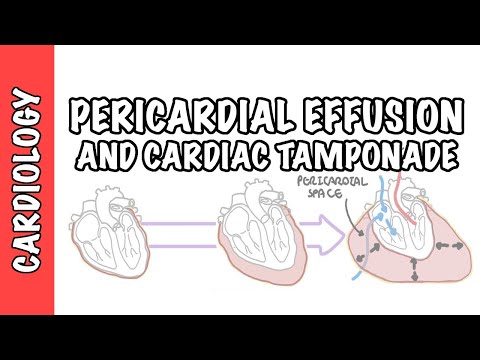
Imagine this: you’re at a party, and suddenly someone’s squeezing the life out of you in a bear hug. Not fun, right? That’s kind of what happens in cardiac tamponade—your heart gets literally squeezed by fluid.
Yeah, seriously! Your heart’s like that partygoer trapped in the corner, trying to keep the beat going while surrounded by all this pressure.
It can be wild when you think about how much pressure affects our body, especially that all-important pump we call the heart. So let’s break down cardiac tamponade, what it is, and why it matters. It’s not just doctor talk; understanding this can help save lives! You with me?
Distinguishing Cardiac Tamponade from Pericardial Effusion: Key Differences and Clinical Implications
So, let’s jump right into this important topic: distinguishing cardiac tamponade from pericardial effusion. Both involve fluid around the heart, but they’re not quite the same thing. Imagine you have a bubble around your heart. In pericardial effusion, that bubble just has some extra water, while in cardiac tamponade, that bubble is squeezing your heart and causing some serious issues.
Now, what exactly is pericardial effusion? It’s when fluid builds up in the pericardial cavity, that space between the heart and its protective sac—the pericardium. This can happen for various reasons like infections, trauma, or inflammation. You might think of it like a balloon slowly getting filled with water. Initially, the heart can still beat just fine because it has space to function.
On to cardiac tamponade. Here’s where things get trickier. When that fluid buildup gets too much—like if our water balloon suddenly starts squeezing tight—that’s where cardiac tamponade kicks in. The excess fluid puts pressure on the heart, preventing it from filling and pumping effectively. It’s like trying to squeeze toothpaste out of a tube when someone is pressing on it—nothing good comes out!
Let’s break down some key differences:
- Symptoms: With pericardial effusion, symptoms may be mild or even non-existent at first. But with cardiac tamponade? You can experience low blood pressure, difficulty breathing (dyspnea), and rapid heartbeat (tachycardia). Imagine feeling super anxious or faint—those are signs to look out for.
- Diagnosis: Doctors use imaging tests like an ultrasound to see how much fluid is there. In pericardial effusion, there might be a lot of fluid but no major issues yet; with cardiac tamponade, the doctor will see how it affects the heart’s ability to fill.
- Treatment: Mild pericardial effusion may need little more than monitoring; sometimes it’s just a waiting game. Cardiac tamponade usually requires urgent intervention because of its threatening nature—it often means draining that fluid quickly!
Now let’s get into why knowing the difference matters clinically! If you mistake cardiac tamponade for pericardial effusion and take your time treating it—or worse yet—ignore it completely? That can lead to complications like shock or even death! That sounds intense because it is!
So really understanding these conditions helps healthcare folks make quick decisions about care plans and treatments so patients can feel better sooner rather than later.
It’s all about keeping an eye on how that pesky fluid interacts with our hearts—too much drama there can lead to big trouble! Keeping it simple? One condition impacts function significantly while the other might not bother you much at all until it’s too late.
In summary: awareness of these differences might save lives one day! So next time you hear about these terms or imagine that squishy bubble around your heart? Remember: understanding is key if someone needs help fast.
Understanding the Causes of Cardiac Tamponade: Insights from Cardiology and Medical Research
Cardiac tamponade is one of those medical phrases that can sound super intimidating, but let’s break it down a bit, okay? It’s all about pressure, fluid, and the heart not being able to do its thing properly.
So, what is cardiac tamponade? Basically, it happens when fluid builds up in the space around the heart, called the pericardial cavity. This excess fluid puts pressure on the heart, making it tough for the heart to fill with blood and pump it out efficiently. Imagine someone squeezing a balloon too tightly—what happens? The balloon can’t expand! That’s kind of what’s going on here with your heart.
Now, let’s talk about why this fluid might build up in the first place. Here are some common causes:
- Trauma: If you get hurt or have surgery near your chest, blood can leak into that space.
- Cancer: Tumors can press on or invade the pericardium or cause inflammation in it.
- Infections: Some infections like viral or bacterial ones can lead to pericarditis—the inflammation of that protective sac. That inflammation could bring about extra fluid.
- Autoimmune diseases: Conditions like lupus or rheumatoid arthritis might also trigger inflammation and fluid accumulation.
- Kidney failure: When kidneys aren’t working well, they might cause increased fluid retention throughout your body including around your heart.
The symptoms of cardiac tamponade can be pretty challenging. You might feel short of breath or dizzy; your heart may race; and sometimes there’s swelling in other parts of your body, like legs or abdomen. It’s like a bad mix tape—each symptom just adds to the overwhelming feeling of discomfort!
If you think about it emotionally for a second: putting yourself in that situation where every heartbeat feels cramped is no joke! I once knew someone who felt like they were constantly running out of air—turns out they had an undiagnosed case of cardiac tamponade due to cancer. Just imagine how terrifying that must have been for them!
The diagnosis usually involves some imaging tests. Echocardiograms, often referred to simply as “echo,” are super helpful here because they use sound waves to create images of your heart and can show how much fluid is actually surrounding it. There are also CT scans or MRIs that might be used for more detailed images if needed.
Treatment mainly focuses on relieving that pressure because preserving proper blood flow is essential! Doctors often perform a procedure called pericardiocentesis, where they use a needle to remove extra fluid from around the heart. It’s kind of like letting air out of that squished balloon—releasing tension helps everything work better again!
In some cases where there’s chronic buildup or recurrent issues, a surgeon may need to create an opening in the pericardium through something called pericardial window surgery. That way, any excess fluid has a place to escape rather than piling up again.
The thing is—a lot goes into understanding cardiac tamponade from both clinical viewpoints and research angles! Clinicians focus on immediate treatment while researchers dig into underlying causes and preventative measures. Both paths are crucial because knowing what triggers these events means we could potentially save lives down the road!
So there you go; that’s cardiac tamponade for you! Understanding its causes isn’t just about science—it touches lives too! If you’re ever in doubt about something like this happening with yourself or someone else, don’t wait too long to seek help. Better safe than sorry!
Understanding Cardiac Tamponade: A Comprehensive PPT Guide for Medical Science Professionals
Cardiac tamponade is, like, a serious condition. It happens when fluid builds up in the space around the heart. This pressure can prevent the heart from filling properly, which is a big deal because your heart needs to pump blood effectively to keep everything running smoothly.
What causes cardiac tamponade? Well, there are several reasons. You might find it due to trauma, cancer, infections like tuberculosis, or even post-surgery complications. It’s basically any situation where fluid—blood or other stuff—starts accumulating in that pericardial space.
Now, you may be wondering about the physiology behind it. Think of your heart as a balloon inside a tight container (the pericardium). When that container starts filling up with fluid, the balloon can’t expand as much as it needs to. This leads to problems like reduced stroke volume (the amount of blood pumped out with each beat) and lower cardiac output.
The clinical implications are pretty significant. Patients may present with symptoms like shortness of breath, rapid heartbeat, and even chest pain. The classic triad associated with cardiac tamponade includes:
- Hypotension: Low blood pressure due to decreased cardiac output.
- Muffled heart sounds: Sounds might be quieter because of the fluid layer.
- Jugular venous distension: Increased pressure in the veins around the neck due to backflow.
You know what’s crazy? Sometimes these signs can be subtle and easy to miss! That’s why if you suspect cardiac tamponade in a patient, quick evaluation is key. A simple echocardiogram can show that extra fluid very clearly.
Treatment usually involves draining that excess fluid through a procedure called pericardiocentesis. Imagine sticking a needle into that container and letting it all out! In severe cases or recurrent issues, doctors may opt for surgery.
But here’s something really important: time matters! The longer you let this condition go unchecked, the more damage could happen to your heart muscle and overall health.
So next time you hear about cardiac tamponade or come across someone who might have it, remember how crucial awareness and quick action are! The fluttering feeling in your chest shouldn’t mean disaster; it should remind you of importance of understanding what’s actually going on inside that amazing organ!
Alright, let’s talk about cardiac tamponade. Now, I know the term sounds super serious, but it helps to break it down a bit. Imagine your heart is like a rock star in a tiny auditorium. There’s only so much space for it to perform its amazing show. Cardiac tamponade happens when fluid builds up in the space around the heart, kind of like someone keeps pouring water into that little auditorium until there’s no room for the rock star to breathe and do its thing.
When this happens, the heart has a hard time pumping blood effectively. It’s like trying to sing when someone’s holding your throat! You end up feeling weak and dizzy because your body isn’t getting enough oxygen-rich blood. It can get pretty serious, really fast.
I remember hearing about a friend who had this condition after a bad car accident. He was shaken up physically and emotionally, but what struck me was how quickly his doctors figured things out. They could literally see that his heart was struggling during tests—a clear sign that something wasn’t right. The medical team acted fast; they drained the excess fluid and voilà! He felt so much better afterward. It was incredible how quick intervention made such a difference.
Now, in clinical terms, this whole thing boils down to understanding pressures in the heart chambers and how they affect circulation. When fluid accumulates in the pericardial sac—the thin layer around your heart—it increases pressure on the heart itself, limiting its ability to fill with blood between beats.
So what’s really wild is knowing that this can be caused by various things—trauma, infections or even cancer! Detecting it early can save lives since doctors often look for symptoms like shortness of breath or swelling in legs.
The implications here are huge for medical professionals too; knowing how to manage cardiac tamponade can make all the difference between life and death for patients who come into hospitals with rapid deterioration.
It just goes to show you how well our bodies are designed but also how fragile we are at times. Each heartbeat is precious, you know? The more we understand conditions like this one, the better we can care for ourselves and each other.