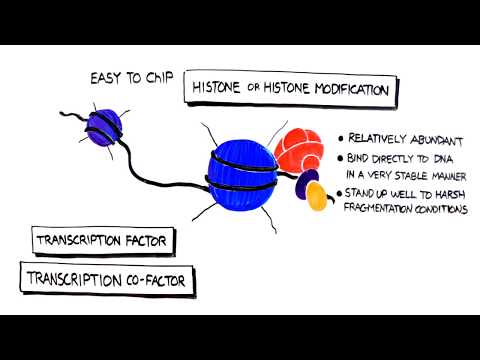
So, picture this: You’ve got a giant bowl of spaghetti in front of you. But instead of noodles, it’s packed with genes and proteins all tangled up together. Crazy, right? That’s kind of what chromatin is like in our cells, all twisted and tied up.
Now, if you want to figure out who’s doing what in that mess, that’s where Chromatin Immunoprecipitation Sequencing comes into play — or ChIP-seq, for short. Yeah, I know it sounds super technical and a bit like a sci-fi gadget. But stick with me! It’s actually pretty cool how scientists use it to understand gene regulation and discover what makes cells tick.
So why should we care about this whole ChIP-seq thing? Well, think about it: unlocking the secrets of DNA can lead to breakthroughs in medicine, genetics, and even how we treat diseases. It’s like peeking behind the curtain to see the wizard at work! And trust me, the journey into this world is nothing short of fascinating. Ready to dig in?
Advancements in Chromatin Immunoprecipitation Sequencing: Applications and Innovations in Modern Research
Chromatin Immunoprecipitation Sequencing, or ChIP-seq for short, is like a backstage pass to the concert of our genes. It allows researchers to see not just which genes are being expressed, but also how they’re regulated. The whole process is all about understanding the complex world of DNA and its interactions with proteins.
So, what’s the deal with it? When we talk about advancements in ChIP-seq, we’re really diving into new techniques and applications that have emerged recently. You know how technology evolves? Well, ChIP-seq has seen its fair share of innovations that make the analysis faster and more accurate.
Applications of ChIP-seq are pretty wide-ranging. For starters:
- Investigating gene regulation: Researchers can pinpoint specific regions in the genome where proteins bind to DNA. This is like figuring out which parts of a recipe are most important for baking a cake!
- Studying diseases: Some studies focus on cancer cells to see how gene expression gets thrown off balance. By understanding these misregulations, scientists can develop targeted therapies.
- Comparative genomics: Scientists can compare ChIP-seq data across species to learn about evolution and conserved regulatory elements.
Let’s not forget about innovations. The field is constantly evolving! Here are a few cool things happening:
- Single-cell ChIP-seq: Instead of averaging data from a bunch of cells, researchers can now look at gene regulation on an individual cell level. This helps us see the diversity within tissues!
- Improved antibodies: The quality of antibodies used in immunoprecipitation has gotten way better! This means more specific binding and less background noise in experiments.
- Data analysis tools: With the rise of AI and machine learning, new software has been developed that helps researchers make sense of vast amounts of sequencing data more efficiently.
An example that really showcases these advancements comes from research involving mouse embryonic stem cells. In this study, scientists applied single-cell ChIP-seq technology to unravel how specific transcription factors dictate cell fate decisions during development. It was kinda like watching a movie where you can slow down time and see every detail!
In modern research, ChIP-seq is not just limited to studying individual genes or pathways. It’s now integrated with other sequencing technologies like RNA-seq or ATAC-seq (which focuses on chromatin accessibility). Combining these methods opens up even broader insights into how genes work together in networks.
So to wrap it up—advancements in ChIP-seq are paving new paths for understanding biology at granular levels. Whether it’s through innovative techniques or applications in various fields, this technology is helping scientists decode life’s mysteries one sequence at a time!.
Advancements in Chromatin Immunoprecipitation Sequencing: Insights for Modern Research [PDF Guide]
So, let’s talk about Chromatin Immunoprecipitation Sequencing, or ChIP-seq for short. If you’re curious about how scientists study gene expression and regulation, this is a pretty cool technique that plays a big role in modern research.
ChIP-seq basically helps you find out where proteins bind to DNA in the cell. You know how proteins are like the superheroes of the cell? They do all the heavy lifting—like helping to turn genes on or off. When scientists want to know which proteins interact with which parts of DNA, ChIP-seq is their go-to tool.
Here’s the lowdown on how it works. First off, researchers cross-link proteins to DNA in cells. It’s like taking a snapshot of a moment in time when these proteins are hanging out with DNA. Then they break the DNA into smaller pieces and use antibodies—kind of like special keys—to fish out those specific protein-DNA complexes from the mix.
After that, they sequence the captured DNA using high-throughput sequencing technology. It’s like reading a book super-fast! This gives them tons of data about where each protein was sitting on the DNA.
Now onto some advancements that have made ChIP-seq even more powerful!
- Improved Antibody Specificity: Recent developments have led to antibodies that are better at targeting specific proteins without hitching rides on other ones.
- Reduced Input Material: Scientists can now work with much smaller amounts of starting material. This is great for studying rare cell types or tissues.
- Single-Cell ChIP-seq: This fancy new method allows researchers to perform ChIP-seq on individual cells! Imagine being able to see how every single cell behaves differently.
- Integration with Other Techniques: Combining ChIP-seq with RNA sequencing (known as ChIP-seq/RNA-seq) helps researchers understand not just where proteins bind but also how they affect gene expression.
Each of these advancements opens new doors for research. For example, taking that antibody specificity up a notch has allowed scientists to get cleaner data without all that background noise that used to muddle results.
I remember reading about a study where researchers used single-cell ChIP-seq to learn more about immune cells in response to infection. It was groundbreaking! They could see distinct patterns of gene regulation in individual cells rather than just averaging everything out.
But there are challenges too, you know? Data analysis can be quite complex since it generates massive datasets full of information. Finding bioinformaticians who can make sense of it all is crucial for moving forward.
So yeah, advancements in ChIP-seq have revolutionized our understanding of gene regulation and cellular behavior over time. It feels like we’re just scratching the surface here—who knows what other insights will come from this amazing technique? The journey is still unfolding, and it’s super exciting!
Advancements in Chromatin Immunoprecipitation Sequencing: Essential Insights for Modern Research
Chromatin Immunoprecipitation Sequencing, often called ChIP-seq, is like an advanced detective tool for scientists diving deep into the world of gene regulation. It helps unravel how genes turn on and off by looking at how proteins interact with DNA. You know, it’s amazing how much information can be hidden in our cells!
To break it down a bit, ChIP-seq combines two major techniques: **chromatin immunoprecipitation** and **sequencing**. Here’s what goes down:
- Chromatin Immunoprecipitation: This step is where researchers use antibodies to target specific proteins that are linked to DNA. Think of antibodies as special keys that unlock certain doors in the DNA world.
- Sequencing: After pulling out those protein-DNA complexes, scientists sequence the DNA to see what parts are actually being read by the cell. It’s like reading a book but only focusing on paragraphs highlighted by a specific color!
Now, let’s talk about why this matters in modern research. For one, advancements in ChIP-seq have made it way more accurate and efficient. Early methods were kinda clunky and required lots of starting material. With newer techniques, even tiny amounts of sample can produce big results! Imagine finding a needle in a haystack; now you have a super magnet that pulls it out almost effortlessly.
Another significant insight from these advancements is understanding diseases better. For example, researchers use ChIP-seq to explore cancer biology by seeing how tumor cells regulate their genes differently from normal cells. By pinpointing exact genetic switches involved in cancer progression, they’re paving the way for tailored treatments and therapies.
But here’s where things get interesting: ChIP-seq isn’t just about identifying problems; it also opens doors to finding solutions! Think about it—once you can see how things go wrong at a molecular level, you can also start thinking about how to fix them.
Besides health research, this technique plays a role in studying various biological processes like development or responses to environmental changes. For instance, you could look at how plants adapt their gene expression when exposed to drought conditions. Seriously impressive stuff!
Then there’s the tech side of things! Improvements in sequencing technologies mean we get more data faster than ever before—like switching from dial-up internet to super-fast fiber optic! This speed allows researchers to analyze vast datasets and draw conclusions without having to wait eons.
So yeah, while all these advancements might sound technical and scientific (which they totally are), they ultimately boil down to better understanding life at its most fundamental level—and that’s pretty cool if you ask me! It’s this ongoing journey into our genetic blueprint that keeps pushing science forward.
In short, advancements in ChIP-seq remove barriers that once held back discovery and allow modern researchers to tackle big questions about life itself with precision and flair!
So, you know how sometimes you feel like your life is a big tangled mess? All those chores, work deadlines, and social commitments can leave your head spinning. Well, in the world of genetics, there’s this similar concept with DNA and proteins that’s just as complicated. And that’s where things like Chromatin Immunoprecipitation Sequencing (or ChIP-seq for short) come into play.
Imagine chromatin as the messy closet of our cells. It’s a combination of DNA and proteins—somewhere between a party and a disaster zone! This structure holds the secrets of how genes are turned on or off. ChIP-seq is kind of like having a magic pair of glasses to see exactly what’s happening in there. By using antibodies to target specific proteins that bind to our DNA, we can pull them out of this chaotic closet and analyze what parts of our genetic makeup are being used at any given time.
I remember sitting in my biology class when our teacher explained how this method is used to study diseases like cancer. It blew my mind! Here’s something that stays humdrum until it isn’t: scientists use ChIP-seq to understand not just where proteins hang out in the genome but also what they’re doing when they’re there. It’s like finding clues in a detective story; each piece gives insights into cellular processes or disease progression.
What really strikes me about ChIP-seq is how it underscores the beauty of collaboration between technology and biology. With advancements in sequencing technology, researchers can gather more data faster than ever before—it’s pretty cool! We’re talking about peeling back layers upon layers of genetic information to see which genes are playing along nicely and which ones are throwing tantrums.
But it’s not all sunshine and rainbows. Analyzing this data can be super tough due to its complexity. You need an expert eye—or maybe even several—to untangle these threads. The hope, though? That through all this hard work, we might find better ways to tackle diseases or even understand human evolution.
In the end, ChIP-seq feels like one big family reunion—you’ve got all these crazy characters in one place trying to tell their stories. Each tiny bit reveals something profound about who we are at a molecular level: our environment, health, and history written right there in our DNA.
So yeah, while chromatin may be tangled up like your old high-school notes—and let’s be real; I have no idea how I survived those classes—researchers keep unraveling its secrets with tools like ChIP-seq. And honestly? That gives me hope for tomorrow’s science and the possibilities that lay ahead!