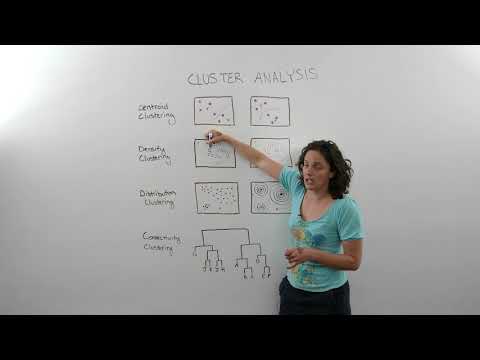
So, picture this: You’re knee-deep in a mountain of data. It’s like staring at a jumbled puzzle with half the pieces missing. Frustrating, right?
Now imagine if there was an easy way to see the big picture, to group things that kinda go together. That’s where ClustVis swoops in like a superhero—seriously!
ClustVis is all about making sense of those massive datasets. It lets you visualize clusters, which is just a fancy way to say it helps you see patterns you might’ve missed otherwise. It’s like getting the cheat codes to your data!
And honestly, once you start seeing those clusters pop up, it’s kinda like fireworks going off in your brain! So let’s chat about how this cool tool works and how it can totally change the way you look at your data!
Enhancing Scientific Data Analysis: Visualizing Clusters with ClustVis PCA Techniques
Alright, let’s chat about visualizing clusters in scientific data using PCA techniques with ClustVis. You know, data analysis can be kinda dry sometimes, but when you throw visualization into the mix, it really livens things up. So, where do we begin?
PCA, or Principal Component Analysis, is like a magic trick for data. It helps you take a ton of variables and squish them down into fewer dimensions without losing the essence of the data. Think about it like this: if you’ve ever tried to pack for a trip and ended up with way too much stuff, PCA is that friend who says, “Hey! Just take the essentials.”
Now, imagine you have this huge dataset filled with all sorts of measurements from an experiment. The thing is, it might be tough to see patterns or groups just by looking at numbers on a page. That’s where ClustVis comes in. It’s this nifty tool that lets you visualize your clusters easily.
So when you’re using ClustVis with PCA techniques, what are we actually doing? Here are some key points:
- Space Reduction: As mentioned earlier, PCA reduces the number of dimensions. Instead of staring at a million columns in your data table, you’ll get a couple of principal components that highlight the most important information.
- Clustering: With reduced dimensions, it’s easier to identify groups or clusters within your data. These clusters represent similar observations which can tell you something interesting about your experiments.
- Visual Representation: ClustVis helps create scatter plots from these principal components. This means you can visually inspect where your data points fall and how they group together.
- Interactivity: One fun feature is that ClustVis allows interaction—like clicking on points to see more details about specific samples!
To give you an example: let’s say you’ve been looking at different plant species under various growth conditions and measuring multiple traits like height, color intensity, leaf size—lots of variables! By applying PCA through ClustVis, you’ll simplify all those traits into two or three key components while still maintaining the relationships between them.
You might find that some species cluster closely together—it could indicate they’re responding similarly to those growth conditions! If one species stands out far away from others? Well then maybe it’s doing its own thing under those conditions.
And here’s where it gets kind of cool: as scientists analyze their clustered visualizations over time or across different experiments, they might discover trends or unexpected relationships. Like that one quiet little plant that’s thriving while others are struggling—what’s its secret?
In short, using PCA techniques in ClustVis isn’t just about making pretty pictures—it’s about giving researchers powerful insights into patterns and relationships buried deep within their data sets. It opens doors for new discoveries and enhances our understanding of complex datasets.
So yeah! When you’re elbow-deep in scientific data analysis next time and feeling overwhelmed by figures and spreadsheets, just remember: using tools like ClustVis with PCA can really help bring clarity to chaos!
Enhancing Scientific Data Analysis with ClustVis PCA: A Guide to Principal Component Analysis in Research
So, let’s say you’re diving into some big data project. You’ve got a mountain of numbers, maybe from an experiment or a survey, and you want to make sense of it all. That’s where Principal Component Analysis (PCA) comes into play, especially when you’re using tools like ClustVis.
Now, if you’ve ever felt overwhelmed by data—like you’re lost in a maze of spreadsheets and graphs—you’re definitely not alone. I remember working on a project once where I was drowning in statistics. It was like trying to find my way through a foggy forest. But then I learned about PCA, and it felt like someone turned on the lights!
So let’s break it down:
PCA is basically a technique that helps reduce the number of dimensions in your data while still keeping those important bits of information. Imagine you’ve got tons of variables—maybe hundreds!—and trying to analyze all of them at once is just bonkers. PCA helps by transforming these variables into new ones called principal components. These new components are like summaries of your data that capture the most variance.
Here’s how PCA works:
- Standardization: First, we center the data (subtracting the mean) and scale it (dividing by standard deviation). This ensures that each feature contributes equally.
- Covariance Matrix: Next up is creating a covariance matrix to understand how different features relate to each other.
- Eigenvalues and Eigenvectors: Here’s where it gets math-y! You derive eigenvalues and eigenvectors from that matrix. The eigenvectors tell you the direction of your principal components, while eigenvalues tell you how much variance there is along those directions.
- Selecting Components: Choose the top principal components based on their eigenvalues. Usually, you grab enough to explain a good chunk of variation—like 70-90%.
- Your New Data!: Finally, transform your original dataset using these selected components. Voilà! You have simplified your data!
Okay, but what does ClustVis do? Well, think of it as your friendly visualization companion for clustering analysis using PCA results. It takes those principal components and helps you create stunning visualizations where…wait for it…you can see groups or clusters within your data!
Using ClustVis can feel like having superpowers for spotting patterns. You can choose how many clusters to visualize or play with different options to customize your plots—the whole thing feels pretty smooth.
And guess what? Depending on your research area—like biology or social sciences—you might encounter different types of clustering methods within ClustVis too! For instance, if you’re studying gene expression data, clustering can reveal which genes behave similarly under certain conditions.
But here’s the kicker: Like with any tool or method in science, PCA has its limitations too. For example:
- PCA assumes linear relationships among variables; sometimes they’re not.
- If important information is contained in lower-variance dimensions, PCA might miss it.
- The interpretation of principal components can be tricky since they are combinations of original features.
So yeah, after wrestling through this complexity with just numbers swirling around in my head during my early research days—I realized that tools like ClustVis make life so much easier when analyzing datasets with PCA.
In summary: If you’ve got complicated data needing some clarity—or if you just want to see what’s hiding beneath the surface—consider stepping into this world with PCA and ClustVis! They might just help clear out some fog and light up those pathways for discovery.
Mastering ClustVis: A Comprehensive Tutorial for Data Visualization in Scientific Research
So, you’re curious about using ClustVis for data visualization? Well, let’s break it down. ClustVis is a handy tool that helps scientists and researchers visualize clusters in their data. It’s like giving your raw numbers a cool jacket that makes them pop! Seriously, seeing your data visually can reveal patterns you’d totally miss just by looking at spreadsheets.
First things first, what is clustering? In simple terms, it’s a way of grouping similar objects together based on their characteristics. Imagine you have a bunch of fruits—apples, bananas, and oranges—and you want to group them by type or color. That’s clustering! With ClustVis, you can do this with complex datasets in science.
To start using ClustVis, here are some easy steps:
- Upload Your Data: You need to prepare your dataset in a tabular format—think rows and columns. Each row usually represents an observation (or sample), while each column typically represents features (or variables).
- Choose Your Parameters: Once uploaded, you’ll pick the right settings for visualization. You can select the type of clustering algorithm or distance metric based on your data’s nature.
- Visualize! Now comes the fun part! Hit that button and watch your clusters appear on the screen—like magic!
The awesome thing about ClustVis is how it lets you play with different visualizations. You can use heatmaps or principal component analysis (PCA) plots to see how data points relate to one another visually. That way, if two samples are clustered closely together in the plot, they’re probably similar in characteristics.
Sometimes when I’m working with clusters, I remember this one time in college where we were trying to find patterns in microbial datasets. We visualized our results using various methods, and suddenly it was like we had x-ray vision into our data! Patterns emerged that were totally unexpected but made perfect sense.
Don’t forget about customizing your plot! You can change colors or labels to make things clearer or more appealing visually. This is super important because good visualization isn’t just about being pretty; it’s also about being understandable.
When you’re done visualizing and happy with how everything looks, you can easily download those awesome graphics for reports or presentations. It’s like having a polished product ready to showcase!
In summary:
- Clustering helps group similar data based on features.
- ClustVis makes visualizing those clusters straightforward.
- You upload your data and customize settings according to what works best.
- The right visualizations reveal hidden patterns effectively.
So there you have it—you’re now equipped with some insider knowledge about using ClustVis for cluster visualization! The more you practice with it, the better you’ll become at making sense of complex scientific data through clear visuals. That’s pretty cool if you ask me!
You know, there’s something really intriguing about how we can take a mess of numbers and turn it into something that we can actually see and understand. ClustVis is one of those tools that helps scientists do just that. It’s like an artist turning a chaotic splash of paint into a beautiful landscape.
I remember this time in college when my professor handed me a dataset filled with tons of different variables—like I’m talking hundreds of rows and columns. My eyes crossed trying to make sense of it all. But then, we got to use clustering and visualization software. It felt like finally turning the lights on in a dark room; patterns started popping out where I didn’t even know they were hiding.
With ClustVis, you can take your data, throw it in there, and get these colorful visualizations that show you clusters—groups of similar items or data points. Imagine looking at all those numbers as stars in a night sky! You start noticing which stars are together, creating constellations—no longer just random dots but meaningful shapes woven together by their similarities.
What’s cool about this is it lets researchers see relationships they might’ve missed before or even leads them to new questions. Like, why are certain species grouped closely together? What environmental factors are influencing this? It’s kind of mind-blowing when you think about how visualizing data can spark fresh ideas or new hypotheses!
But honestly, it’s not just scientists who benefit from this stuff; anyone dealing with heaps of information can find clarity through visualization tools like ClustVis. It’s almost poetic: taking raw chaos and finding order within it. And hey, isn’t that part of what makes science so exciting? The ability to unveil stories hidden beneath the surface?