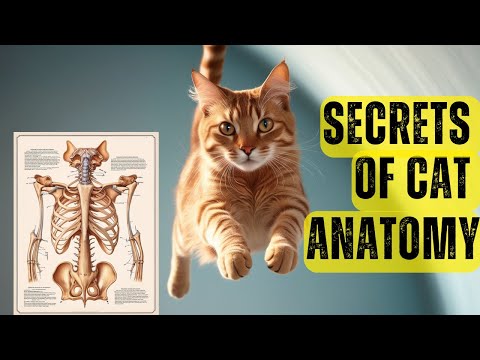
You know how cats always seem to fit into the weirdest spots? Like, I once saw a cat jam itself into a shoebox that looked half its size. It’s honestly mind-boggling!
Well, there’s a lot more going on with these little furballs than just their stretchy abilities. Did you know they actually have 230 bones? That’s about 24 more than us humans. Crazy, right?
Cats are these incredible creatures with unique anatomy that helps them be the agile hunters they are. Let’s take a closer look at what makes them tick—or purr, in this case! Whether they’re lounging in the sun or plotting their next mischief, there’s some serious science behind their cute antics. So grab your favorite snack and let’s unwrap the fascinating anatomy of domestic cats!
Exploring Scientific Insights: What Research Reveals About Cats
So, cats, right? They’re these little furry enigmas that have totally captured our hearts. But beyond their cute demeanor, there’s a whole world of science that reveals just how fascinating these creatures are. Let’s dig into some scientific insights about our feline friends.
First things first: the anatomy. Cats have some pretty unique physical traits that help them thrive. For instance, did you know they have a flexible spine? It allows them to twist and turn their bodies mid-air when they jump or fall. This flexibility is part of what gives cats their amazing agility. If you’ve ever watched your cat leap onto a high shelf in one smooth motion, you know what I mean!
- Whiskers: These aren’t just for show! Whiskers are highly sensitive and can detect changes in your cat’s environment, helping them navigate tight spaces and land safely.
- Claws: A cat’s claws are retractable. This means they can keep them sharp for hunting or climbing while retracting them when it’s not needed.
- Ears: Cats have 32 muscles in each ear! That gives them incredible hearing ability, allowing them to pinpoint sounds from multiple directions.
Their senses are also super impressive. Like, cats can see in low light thanks to something called a tapetum lucidum, which reflects light within their eyes. This means if you’ve ever seen those glowing eyes peering at you from the dark, they’re actually enhancing their night vision!
You might be interested to learn that cats communicate differently than dogs. While dogs wag their tails to show excitement, cats use subtle body language and vocalizations—think purring or gentle meowing—to express themselves. Oh man, have you ever had a cat come up to you and start “talking”? It’s like they’re trying to share secrets!
- Purring: Often associated with contentment but can also be a way of self-soothing when they’re stressed or hurt.
- Tail position: A high tail usually means they’re feeling friendly and secure—but if it’s puffed up? Yikes! That shows fear or aggression.
Cats also exhibit some pretty intriguing behavior patterns driven by instincts from their wild ancestors. For example, those little “hunting” games where your cat pounces on imaginary prey? It’s not just play—it mimics their natural hunting techniques!
You know what strikes me as really cool? The social structures among feral cats show complex relationships too! They live in groups called colonies but still maintain independence—kind of like your friend who insists on doing everything alone but still joins everyone for pizza on Friday nights.
If we think about health aspects, understanding feline anatomy helps us recognize common health issues as well—like diabetes or hyperthyroidism—which is super important for keeping our furry pals happy and healthy.
The thing is: while our beloved cats may seem like aloof creatures most times, their world is rich with science just waiting to be explored! Each little quirk and feature serves a purpose rooted deeply in survival strategies honed over thousands of years.
Cats might seem like they own the house (and maybe they do), but understanding more about them can really strengthen the bond between you two—even make life together easier and more enjoyable!
Exploring the Anatomy of Domestic Cats: A Scientific Analysis PDF
Sure! Let’s chat about the anatomy of our furry friends, the domestic cats. You know, these little creatures are more than just cute faces and soft paws. Their bodies tell a pretty unique story about evolution, adaptation, and survival. So, let’s break it down!
First off, let’s talk about the skeletal system. A cat’s skeleton is super flexible and lightweight. They have around 230 bones compared to humans who have about 206. This extra flexibility helps them jump high and land softly. Imagine watching your cat leap from a counter to a windowsill like it’s nothing—pretty amazing, right?
Next up is muscle structure. Cats are like mini athletes! Their muscles make up a huge part of their body weight—about 40%. Those powerful leg muscles? They help them sprint at speeds up to 30 miles per hour! And here’s something cool: their shoulder blades aren’t attached to their collarbones like ours are. This gives them greater freedom of movement.
Now let’s peek into the respiratory system. Cats breathe differently than we do; they have a more efficient way of getting oxygen in and carbon dioxide out. This means they can take quick breaths while they’re stalking prey or playing around. A cat’s nose also has an extraordinary sense of smell—up to 200 million scent receptors compared to our measly 5 million! Talk about powerful sniffers!
When it comes to dental anatomy, cats have a set of sharp teeth that are designed specifically for hunting and tearing meat. They have 30 adult teeth in total: those pointy canines help grip their prey while the molars crush food. Ever seen your cat munching on kibble? It kind of looks like they’re on a mission with those gnarly teeth.
Moving on to the digestive system, cats are obligate carnivores, which means their diet mainly consists of meat. Their intestines are shorter than ours because they don’t need as much time to break down protein and fat from animal sources. If you’ve noticed how picky your cat can be with food—well, it all connects back to their evolutionary path as predators.
Don’t forget those magnificent eyes! Cat eyes are designed for low-light vision because they’re crepuscular hunters (active during twilight). The structure includes a layer called the tapetum lucidum that reflects light back through the retina, making it easier for them to see in dim conditions.
Finally, we can’t miss out on the skin and fur. Cats have fur that serves various functions—it provides insulation, helps with temperature regulation, and even acts as camouflage when they’re sneaking up on unsuspecting toys or bugs. The texture and length vary widely among different breeds; ever snuggled with a fluffy Persian? That’s some serious soft fur right there!
So there you go! Understanding the anatomy of domestic cats gives you a glimpse into why they behave so uniquely and how they’ve adapted over millions of years alongside us humans—or maybe we adapted alongside them? Either way, these little beings continue to charm us every day with their quirks and athleticism.
Exploring Female Cat Anatomy: A Comprehensive Scientific Overview
So, let’s chat about female cat anatomy. It’s pretty cool, and understanding it can help you care for your furry friend better. You know how cats are, right? They’re a mix of grace and strength wrapped up in a tiny package. But beneath all that fluff lies some fascinating biology.
First off, let’s talk about the **external anatomy**. Female cats have some distinct features that set them apart from their male counterparts. One of the most noticeable differences is the **vulva**, which is located just below the base of their tail. This area plays a key role in their reproductive cycle, which we’ll get to in a bit!
Next up is the **internal structure**. Female cats have a pair of ovaries where eggs are produced. These tiny organs are about the size of a pea! When they’re ready, an egg gets released during what’s known as **ovulation**. This usually happens when they’re in heat—more on that later.
Moving deeper into their bodies, we have the **uterus**, which is where kittens develop during pregnancy. It’s shaped like an inverted Y, kind of like two branches coming together into one trunk. What’s interesting is that all cats (both male and female) are born with this uterus but only females use it when they reproduce.
Now let’s dig into something many cat owners might find intriguing—the **estrous cycle**, or simply put, their heat cycle. Female cats typically come into heat every few weeks during certain seasons. During this time, you’ll notice changes in behavior—like increased vocalizations and affectionate behavior—that can make your kitty seem super needy!
Oh, and here’s another curious fact: female cats can mate with multiple males during this period! That means if they do get pregnant, the litter can have different fathers. Isn’t that wild? It’s nature being nature.
Let’s wrap up with a few things worth noting about health issues related to female anatomy:
- Pyometra: This is an infection of the uterus that can be life-threatening if not treated.
- Ovarian tumors: Just like people, female cats can develop tumors on their ovaries.
- Spaying: This procedure removes reproductive organs and helps prevent health issues as well as unwanted litters.
Caring for your female cat includes being aware of these aspects of her anatomy and health needs; it helps ensure she lives a happy life along with you! So next time your kitty curls up next to you purring away or maybe strutting around like she owns the place, remember—there’s so much more going on inside her than meets the eye!
Cats are just the best, aren’t they? I mean, whether they’re purring on your lap or knocking things off shelves for no apparent reason, there’s a certain charm about them. So, you might think you know a lot about your feline friend, but let’s take a quick stroll through the anatomy of domestic cats and see what makes them so special.
First off, their bones are super interesting. Cats have around 230 to 250 bones in their bodies—like, seriously, that’s more than we have! It’s all those tiny little bones in their tails that give them that fabulous flexibility. If you’ve ever seen a cat leap effortlessly onto a high shelf or twist mid-air during a drop, you’ve witnessed what those unique skeletal structures can do.
And don’t even get me started on their muscles! A cat’s body is like an incredible spring. They’ve got more fast-twitch muscle fibers than us humans do, which means they can dash from zero to sixty in just seconds. I once had a friend who owned a cat named Whiskers. One day we were hanging out when suddenly Whiskers spotted a fly. In the blink of an eye, he was off the couch and up the wall! It was like watching an action movie unfold in slow motion—one second he was chilling and the next he was part of some high-speed chase.
Now let’s chat about those famous whiskers. These aren’t just for show; they’re like built-in radar systems! Cats use them to gauge narrow spaces and detect nearby objects in low light. So if your cat seems to be moonwalking around furniture at night? Yep, he’s feeling his way through with those whiskers like an expert navigator.
Let’s not forget about their eyes; oh man, cat eyes are something else! Their pupils can expand wide to capture as much light as possible—they really excel at being nighttime hunters. I remember one evening sitting with my cat Luna while we watched the stars twinkle outside. Her eyes sparkled back at me in the dim light—it almost felt magical.
Of course, we can’t overlook their digestive systems either; cats are obligate carnivores, which means they need meat to thrive—no salad bars for these little guys! Their stomachs are designed to digest protein efficiently but struggle with carbs (sorry kitty!). This makes feeding time kinda important; you wouldn’t want to mess up snack time with something that doesn’t sit well!
So yeah, when you think about it, everything from their flexible spines to intricate inner workings makes cats both fascinating and adorable companions. Whether they’re zooming around your living room or curling up next to you after what feels like Olympic-level acrobatics, there’s so much more beneath that fluffy exterior than meets the eye—and honestly? That just adds to their charm!