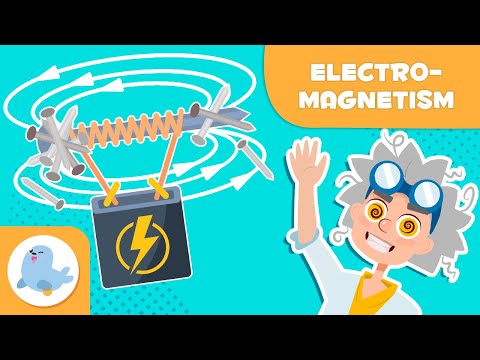
So, picture this: you’re at a fair, and there’s a giant magnet game. You know the one—stick your hand in, grab whatever metal prize you can find! It’s like magic, right? Well, that magic is all thanks to something called electromagnets.
Now, what’s really cool is that these magnets aren’t just sitting there like your grandma’s fridge magnet. They’re powered by electricity! Yeah, that’s right. You flip a switch and—bam!—you’ve got yourself a magnetic field just waiting to pull in all sorts of metal goodies.
But wait, there’s more! Ever thought about how they’re used in everything from your phone to fast trains? Seriously! Electromagnets are everywhere, and they make our modern world a whole lot easier. So let’s unpack this nifty science behind them a bit more!
Exploring the Science Behind Electromagnetism: Principles and Applications in Physics
Electromagnetism is like one of those cool superhero teams in physics. It combines electricity and magnetism, showing us how they work together in the universe. Let’s break down the essentials.
So, what’s going on with electromagnetism? Well, at its core, it’s all about charged particles. When you have a charge—like an electron—it creates an electric field around it. Imagine a friendly little bubble that gets bigger the closer you get to the charged particle. And then, here’s the fun part: when those charges move—like when they flow through a wire—they produce a magnetic field too. It’s like they’re double-dipping into the physics cookie jar!
Now, think about Faraday’s Law of Induction, one of the key principles in electromagnetism. Basically, this law tells us that if you change the magnetic field around a conductor (that’s any material that lets electricity flow), it can generate an electric current. Picture this: you’re spinning a loop of wire in a magnetic field, and bam! You’ve got electricity flowing through that wire just from moving it around. Pretty neat, huh?
Next up is Ampère’s Law. This principle explains how magnetic fields are created by electric currents. If you have a straight wire carrying current, it produces a circular magnetic field around it. Imagine wrapping your arms around your friends while holding hands—it spreads outwards just like that magical magnetic field.
And then there’s Maxwell’s Equations. Oh man, these equations are like *the* ultimate mixtape of physics! They bring together all those earlier ideas and show how electric and magnetic fields interact with each other and with matter over time. They tell us about electromagnetic waves too—think radio waves or light! Without Maxwell, we wouldn’t have half the tech we do today.
But what do these principles mean for real life? Well, electromagnetism isn’t just theoretical; it’s all over our daily routines!
- Electric Motors: These suckers use electromagnetic principles to convert electrical energy into motion. You know those fans that blow air on hot days? Yup!
- Transformers: Ever wonder how your phone charger works? Transformers rely on Faraday’s law to step up or step down voltage so your devices can charge safely.
- Magnetic Resonance Imaging (MRI): In hospitals, MRIs use strong magnets and radio waves to create images inside our bodies—thanks to those nifty electromagnetic principles.
You see? Electromagnetism isn’t just some dusty old science concept; it plays an essential role in our everyday lives—from our morning coffee maker to high-tech gadgets.
To wrap this all up… Electromagnetism ties together electric charges and magnetic fields in ways that not only explain fundamental forces but also lead to amazing technologies we encounter daily. This blend of science is what helps push humanity forward while keeping things connected—in more ways than one!
So next time you flip that light switch or listen to music on your phone, remember: there’s some incredible electromagnetism magic happening behind the scenes!
Understanding the Three-Finger Rule in Electromagnetism: A Fundamental Concept in Physics
The Three-Finger Rule is, like, this cool trick to help you remember how electric current and magnetic fields interact. It’s all about orientation and direction, which can sound tricky at first, but stick with me.
Basically, when a current flows through a wire, it creates a magnetic field around it. You can visualize this using the three fingers of your hand. Here’s how it works:
1. Position Your Hand: Hold your right hand out in front of you. This is the part where most people do some head scratching—just bear with me.
2. Fingers for Direction: Extend your thumb straight up. That represents the direction of the **current** flowing through the wire.
3. Curling Fingers for Magnetic Field: Now, curl your other fingers around that thumb; they show the direction of the **magnetic field** produced around the wire.
This three-finger method gives you a mental picture that links current flow to its magnetic effect. It’s super handy when you’re dealing with electromagnets or any electrical devices!
Oh, speaking of electromagnets—remember that fridge door magnet? It’s not just sticky because it’s made of metal; it relies on this science! When electricity runs through coils of wire wrapped around a core (often iron), it generates a strong magnetic field thanks to that Three-Finger Rule. If you’ve ever seen an old-school train lift or an electric bell ringing, you’ve seen electromagnetism in action!
Now, things get even cooler when we talk about Faraday’s Law. This nifty principle explains how changes in magnetic fields can create electric currents! Imagine you’re spinning a magnet in a loop—a good ol’ generator scenario there. According to Faraday’s Law, as you change that magnetic field inside those coils you’ve got going on, it induces an electric current.
But hold up—how can we connect this back to our three-finger friend? When you’re winding those wires around something like iron (which amps up magnetism), and electricity zips through them, just remember: your thumb is still showing current flow while your fingers indicate the swirling magnetic field hugging around!
So really, whether you’re powering up cool gadgets or trying to explain why certain metals are attracted to magnets but others aren’t (talking about ferromagnetism here), everything comes back to understanding these relationships and maintaining clarity with tools like the Three-Finger Rule.
In summary:
- Thumb = Current Direction
- Curling Fingers = Magnetic Field Direction
Remember that fridge magnet next time you snag something from there—it’s powered by some seriously fundamental physics!
If anything ties this all together nicely, it’s realizing how interconnected concepts are in physics—like how one simple rule helps explain lots of electrifying phenomena in our day-to-day lives! How awesome is that?
Understanding Electromagnetism: How Electromagnets Generate Magnetic Fields in Scientific Applications
Electromagnetism is one of those super cool areas of science that show us how electricity and magnetism are actually two sides of the same coin. You know, it’s like they’re best friends or something. So, let’s break it down.
When you’re talking about electromagnets, think of them as fancy magnets that you can turn on and off. They work by using electricity to create a magnetic field. Seriously, just by running an electric current through a wire, you can generate a magnetic field around it. Pretty neat, right?
So picture this: if you wrap that wire into a coil—like a little spring—you enhance the magnetic field even more. That’s the secret sauce! The more loops or coils you have, the stronger your electromagnet gets. If you add a ferromagnetic material (like iron) inside that coil, you’re really cranking up the power because now you’ve got something amplifying that magnetic field.
Now, with scientific applications, electromagnets are everywhere! You find them in:
- Motors: These suckers convert electrical energy into mechanical energy—think of all your gadgets whirring and spinning!
- Magnetic Resonance Imaging (MRI): Those big machines doctors use to take pictures of the insides of your body? Yup, they rely on powerful electromagnets.
- Speakers: Ever wondered how music comes blasting from your speakers? Electromagnets vibrate to produce sound waves!
- Trains: Magnetic levitation trains use these to float above tracks and zoom around without touching them!
Did I mention how versatile these pieces are? When I was in school, our physics teacher had us create our own little electromagnets with copper wire and batteries. It was like magic watching paperclips get pulled towards our contraptions! It really made me appreciate how simple things could lead to such powerful concepts.
But here’s where it gets even cooler: when you switch off the current, boom! The magnetic field disappears almost instantly. It’s like having a light switch for magnetism!
In essence, understanding electromagnetism not only helps us grasp fundamental physics but also fuels innovation across various fields. Whether it’s powering up massive machines or simply enjoying some tunes at home, electromagnets change the game.
So there you have it—electromagnetism is all about connections between electricity and magnetism in a way that’s not just fascinating but totally practical too!
So, electromagnets, huh? They’re pretty cool if you think about it. Like, just by running electricity through a wire, we can create a magnetic field strong enough to lift heavy stuff. Seriously! I can’t tell you how many times I’ve been amazed watching those giant cranes at construction sites lifting steel beams with the help of electromagnets.
Let’s break it down a bit. An electromagnet is basically just a coil of wire wrapped around a metal core—like iron. When you send an electric current through that wire, voila! You generate a magnetic field. It’s wild to think that something as simple as turning on a switch can create such power. But here’s where it gets interesting: the strength of that magnetic field depends on several factors, including how many times the wire is wrapped around the core and how much current is flowing through it.
Think of it this way: imagine holding a magnet in one hand and watching how it attracts paper clips or nails. Now picture taking that magnet and supercharging it with electrical power! That’s pretty much what an electromagnet does; it’s like turning up the dial on your favorite tunes. More windings, more current equals more oomph!
But here’s the kicker: electromagnets aren’t just about big cranes or fridge magnets that stick to your door. They’re used in all sorts of technology around us—like in your headphones and computers. Yup! Those tiny speakers in your earphones work because of electromagnets making sound waves dance through the air.
And speaking of dancing waves, when you wrap your head around electromagnetic fields, it’s like realizing there’s this invisible force pulling things together or pushing them apart—kinda magical if you ask me! Just think about how we rely on these fields every day without even noticing: from charging our phones to keeping our data safe.
You know what’s funny? When I first learned about this stuff in school, I thought magnets were little miracles from another world—until I realized there was science behind them all along! It just goes to show how much wonder lies beneath everyday objects if we take a moment to peek inside their workings.
So next time you see an electromagnet at work—or maybe even one lifting those heavy loads at a scrapyard—think about all the science swirling around it. It’s not just metal and wires; it’s an incredible dance between electricity and magnetism that shapes our modern world in ways we often take for granted. Pretty neat, huh?