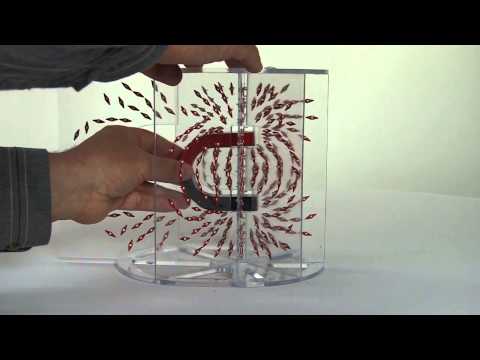
Ever tried playing with a horseshoe magnet? It’s kind of like magic, right? You bring it close to a bunch of paper clips, and suddenly, they’re dancing toward it like they’ve got no willpower. Seriously, how cool is that?
But wait! What’s going on here? Why does that funny-shaped magnet have such a pull on metal objects?
Well, let’s chat about the science behind those magnetic fields. You might be surprised by just how awesome and complex it really is. You follow me? Grab a comfy seat; we’re about to dig into some seriously captivating stuff!
Understanding the Magnetic Field Generated by a Horseshoe Magnet: Insights from Physics
Understanding the Magnetic Field Generated by a Horseshoe Magnet
So, you’ve got a horseshoe magnet, right? Those things are pretty iconic with their U-shaped design. The thing is, they create magnetic fields that are fascinating to explore. Let’s break it down.
First off, the basic idea. A horseshoe magnet works by having two poles: a north pole and a south pole. This is where the magic happens! A magnetic field is generated around these poles. You can think of it like an invisible blanket of force that affects things made from iron or steel nearby.
Now, how does it do that? Well, every magnet has something called **magnetic field lines**. These are like arrows pointing away from the north pole and curling around back towards the south pole. When you bring something metal close enough to these lines, it gets excited and can be pulled toward the magnet. If you’ve ever felt that sudden tug when you try to stick something to your fridge? Yup, that’s your horseshoe magnet in action.
To visualize this better, imagine dropping some iron filings on a piece of paper placed over the magnet. As you sprinkle them on, you’ll notice they align along those field lines! It’s like they’re following a hidden path drawn in space. You probably remember doing this experiment back in school; it’s such a cool way to see physics at play!
Looking closer at how strong these fields can get: they depend on several factors—like how far away from the magnet you are and how strong the magnet itself is. Generally speaking, the closer you get to either pole of your horseshoe magnet, the stronger those magnetic forces will feel.
And here’s something neat: not all magnets are created equal! Horseshoe magnets are great because their shape allows for a concentrated magnetic field in a relatively small area compared to other kinds of magnets like bar magnets or disks. Those curves at the ends really enhance their strength!
But wait—what if I told you that each of those poles doesn’t just sit there quietly? If you were able to slice through the magnetic field with your hand (though don’t try this for real!), you’d find that it’s constantly interacting with other objects around it! Seriously—you’re creating a dynamic environment whenever you’re using one.
Now let’s chat briefly about applications. These guys aren’t just for fun experiments; you’ll find them used in electric motors and generators too! They help convert electricity into motion and vice versa by interacting with wiring loops in innovative ways—you know?
If you’re wondering what happens if you flip your horseshoe magnet upside down or switch its poles around—that’s where things can get wild! It would still have a magnetic field but could change how it interacts with objects nearby depending on where they’re positioned relative to those poles.
So there it is—the dance of physics behind your simple yet mighty horseshoe magnet! Next time you play with one or watch its interactions, just remember all this amazing science buzzing beneath its surface and connecting everything together! Isn’t it cool how something so ordinary hides such fascinating principles?
Exploring the Strength of Horseshoe Magnets: A Scientific Analysis
Horseshoe magnets are pretty cool, right? They’re these U-shaped magnets that have a strong magnetic field. You can usually find them in classrooms or even as toys. But there’s a lot more going on under the hood with these things than just their neat shape.
So, what’s the deal with horseshoe magnets? Well, they’re designed to concentrate the magnetic field at their poles. You know how some magnets have a “north” and “south” pole? Horseshoe magnets are no different, and their unique shape helps create a stronger attraction between those poles. This is because the magnetic field lines are forced to come together in a smaller area when you bend it into that horseshoe shape.
Now, let’s break down how magnetic fields work. When you think of a magnet, imagine invisible lines reaching out from its poles. These lines represent the magnetic field—kind of like how you can feel wind blowing even if you can’t see it. The closer those lines are together, the stronger the magnetic force you’ll feel. With horseshoe magnets, those lines get super close to each other at the ends. That’s why they seem to have such intense pulling power!
Here’s an interesting fact: The strength of a magnet is measured in something called teslas. A typical refrigerator magnet might be around 0.001 teslas, while horseshoe magnets can reach around 0.5 teslas or even more! Imagine picking up a bunch of paper clips or nails with just one of these bad boys!
Oh! And here’s where it gets all science-y for a sec: The material used in making magnet matters too. Most horseshoe magnets are made from iron alloys like neodymium or alnico (which stands for aluminum, nickel, and cobalt). These materials help boost their strength significantly compared to regular steel.
But what really keeps me fascinated is how these little guys interact with various materials. They’ll stick to ferromagnetic materials—like iron and steel—but just watch them fizzle when they meet copper or wood! It’s like having superpowers but only for certain folks.
You might be curious about practical applications too! Horseshoe magnets are used in devices ranging from motors to generators and even scientific equipment like particle accelerators (which sound all futuristic!). They help create motion and energy in ways we often take for granted.
And here’s something fun I remember: In science class as a kid, we did this experiment where we lined up paperclips on a table and then brought the horseshoe magnet close to them. The way they jumped towards it was nothing short of magical! I mean, who doesn’t love watching physics in action?
In essence, exploring horseshoe magnets opens up this whole world where science meets everyday life. Their unique shape provides some serious clout when it comes to sticking things together—or pulling them apart—based solely on powerful unseen fields at play.
So yeah, next time you come across one of these U-shaped wonders, just know there’s quite a bit more magic happening right there than meets the eye!
Exploring the Disadvantages of Horseshoe Magnets in Scientific Applications
Horseshoe magnets are pretty cool, right? They’re often used in classrooms and some simple scientific applications. But there’s a flip side to those horseshoe-shaped beauties. Let’s talk about the *disadvantages* of using them in scientific settings.
First off, horseshoe magnets can be bulky. Compared to other types of magnets, their shape makes them less convenient for tight spaces or portable labs. Imagine trying to fit one into a backpack filled with delicate equipment. Not ideal!
Another thing is their magnetic field strength. Horseshoe magnets generate a strong magnetic field at their poles, but it drastically drops off even just a little distance away from those poles. So if you need something consistent over a larger area, they might not do the trick. You might end up with areas that are weakly influenced by the magnet, which can really mess up experiments requiring uniform fields.
Then there’s the issue of stability. Horseshoe magnets tend to lose their magnetism more easily if they get knocked around. Picture this: You’re conducting a detailed experiment and—bam! – that clumsy lab assistant bumps into your setup. Suddenly, your magnet isn’t as effective anymore.
Also, horseshoes are made from ferromagnetic materials which can be affected by temperature changes. If it gets too hot or cold, well, the magnetic properties can alter significantly! Think about this—you conduct an experiment at room temp only to find that when you move it outside during winter, your results change because your magnet is weaker now? That just stinks!
Now let’s not forget about cost-effectiveness. Sometimes these magnets can be more expensive than other options available on the market like neodymium magnets. When budgets are tight—especially in academia—this can be a real issue.
Lastly, they’re kind of hard to manage when it comes to orientation. With other types of magnets like bar magnets or discs, you have more control over how you position them in relation to whatever you’re working on. Horseshoes are limited by their shape and aren’t as versatile for certain experiments.
So yeah, while horseshoe magnets do have some fun uses—like showing off magnetic fields in classrooms—they come with some baggage when it comes to serious scientific applications. Definitely something worth considering if you’re diving deep into any experimental setup!
You know, I’ve always been a bit fascinated by magnets. I mean, who doesn’t love watching stuff stick together? But when I started thinking about horseshoe magnets—those classic, C-shaped wonders—I realized there’s actually some pretty cool science going on behind them.
So here’s the deal. A horseshoe magnet gets its name from its shape, which kinda looks like a horseshoe (shocking, right?). It’s designed that way for a reason! The thing is, this design helps create a stronger magnetic field compared to other types of magnets. Why? Well, because the two poles (north and south) are really close together. This proximity amplifies the magnetic force, making it more effective at attracting or repelling other magnets or metal objects.
I remember as a kid playing with one of those magnets and being totally amazed at how it could pick up paperclips and even little nails! I was like some kind of magician in my own backyard! But what really got me was how understanding the science behind it opened up a new world. You see, each magnet has these invisible lines called magnetic fields that radiate out from its poles. If you were to visualize it, they’d look something like curved lines flowing out into space.
The strength of these fields isn’t uniform; it actually varies depending on how far you are from the magnet. So close to the poles? Boom! Strongest attraction! But move away just a bit and those forces start to weaken. It’s almost like playing tag—if you’re too far away from your friend who’s “it,” they can’t catch you!
And honestly, thinking about all this makes me wonder about those moments in life when we feel drawn to certain things or people—kind of like magnetic attraction on an emotional level. Ever had that moment when you meet someone and just click? It’s wild how much parallels there are between science and our everyday experiences.
Anyway, learning about horseshoe magnets finally gave me some insights into not just physics but also how connections work in life—fluid yet powerful in their own ways. It’s neat how something so simple can unveil layers of meaning and complexity if we just take the time to explore them!