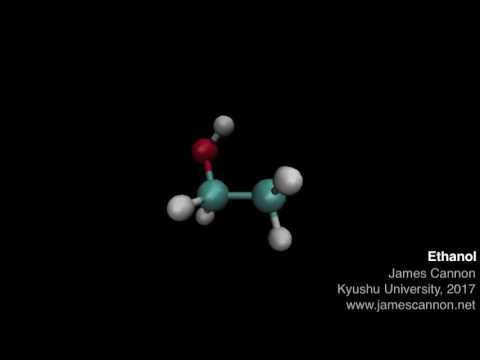
So, picture this: you’re at a party, and someone spills a drink on the carpet. Everyone gasps. But wait! That drink has ethanol in it, which is pretty cool because it’s not just in your cocktails.
Ethanol is like the rockstar of molecules in the science world. Seriously! It’s in hand sanitizer, fuel, and yes, your favorite beverages. You can even find it in that bubbly stuff we call champagne.
But what’s behind all this? Like, what makes ethanol tick? As we break down its molecular structure, you might find yourself thinking about how something so small can pack such a punch.
Trust me; this isn’t just nerdy science talk—it’s actually super interesting! So grab a drink (preferably one without any spills), and let’s dive into the molecular magic of ethanol!
Exploring the Molecular Structure of Ethanol: A Scientific Analysis
So, let’s talk about ethanol. You know it better as the stuff found in alcoholic drinks, but it’s way more interesting than just that! Ethanol is a simple molecule yet plays a big part in chemistry and biology.
First off, what exactly is ethanol? Well, its chemical formula is **C₂H₅OH**. This means each molecule of ethanol contains two carbon atoms, six hydrogen atoms, and one oxygen atom. Pretty simple, right? But the magic happens when you look at how these atoms are arranged.
Ethanol’s molecular structure can be visualized like this: there are two carbon (C) atoms connected to each other. One of these carbons has three hydrogen (H) atoms attached to it—so yeah, that’s where the “C₂H₅” part comes from. The second carbon is linked to an -OH group (which is a hydroxyl group). This -OH group is what gives ethanol its alcohol properties.
Let me break that down a bit more. The **hydroxyl group (-OH)** makes ethanol an alcohol because it can dissolve in water and interact with other molecules differently than pure hydrocarbons would. This ability to mix with water is super important for how we use ethanol in various applications—from making drinks to biofuels.
One cool thing about ethanol’s structure is that it can form hydrogen bonds with water. You see, when you mix vodka into your OJ or use rubbing alcohol for cleaning cuts, it’s those hydrogen bonds doing their thing! They allow the molecules to mingle nicely instead of just floating around independently.
Also, because of its molecular arrangement, ethanol behaves differently than other compounds like methanol (which has one carbon instead of two). Methanol can be toxic and doesn’t work quite the same way when metabolized in the body.
To picture ethanol better in your mind, think about this: Imagine the two carbon atoms holding hands while they invite their hydrogen buddies over for a party by attaching themselves here and there! It creates a sense of community within that tiny molecule.
Now let’s consider why this matters scientifically. Ethanol isn’t just some random compound; it’s essential for processes like fermentation—where yeast converts sugars into alcohol—and even in energy production through biofuels. So understanding its structure helps scientists design better methods for creating energy or even medication!
In summary:
- Chemical formula: C₂H₅OH – Two carbons, six hydrogens, one oxygen.
- Hydroxyl group: Makes it an alcohol that mixes well with water.
- Hydrogen bonding: Helps it interact with water and other substances.
- Importance: Plays key roles in fermentation and biofuel production.
It’s wild how something as small as an ethanol molecule can have such huge effects on our lives! Who would’ve thought chemistry could be so cool?
The Science Behind Ethanol: Exploring Its Chemical Properties and Applications in Modern Research
So, let’s talk about ethanol. It’s this magical compound you might know as the stuff in alcoholic drinks, but really, it’s way more than that! Learning about its chemical properties is kinda like peeling an onion; there’s always another layer to discover.
First off, ethanol is a simple molecule. Its chemical formula is C2H5OH. What does that even mean? Well, it has two carbon (C) atoms, six hydrogen (H) atoms, and one oxygen (O) atom. This combination gives it some really interesting properties. For example, it’s a colorless liquid at room temperature and smells a bit like… well, you guessed it—alcohol!
When we dig deeper into its molecular structure, you see that the two carbon atoms are bonded together in a chain. One of those carbons is connected to three hydrogens and the other to two hydrogens plus that hydroxyl group (-OH). That -OH part is super important because it makes ethanol polar. Basically, that means it has a slight positive charge on one side and a slight negative charge on the other which allows it to mix well with water.
You know how sometimes things just go together? Like peanut butter and jelly? That’s kinda what happens with ethanol and water. Their molecules can form hydrogen bonds, which is why ethanol can dissolve in water easily. This property makes ethanol really useful in everything from beverages to industrial applications.
Now here’s where things get exciting! Ethanol isn’t just chilling on bar shelves; it’s used in modern science too! Researchers are exploring its potential as an alternative fuel source. You see, when burned or used in engines, ethanol can produce less pollution compared to gasoline. Plus, since it’s renewable—made from plants like corn or sugarcane—it could help reduce our reliance on fossil fuels.
Another area where ethanol shines is in biomedical research. Scientists use it as a solvent for drugs during experiments because of its ability to dissolve many organic compounds without messing them up too much. And because it’s relatively safe compared to other solvents out there, it’s often preferred in labs.
And hey! Here’s something that might make you smile: think back to those wild nights out with friends or even just chill sessions at home watching movies with a drink in hand—ethanol plays a role while also reminding us about moderation and responsibility when using alcohol!
In summary:
- Ethanol’s molecular formula: C2H5OH.
- Polar molecule: Makes it mixable with water.
- Used as fuel: Less pollution than gasoline.
- Solvent for drugs: Important in biomedical research.
So there you have it! Ethanol is more than just party fuel; it’s got some serious science behind it too!
Exploring the Molecular Structure of Ethanol: A Scientific Overview
So, ethanol, huh? It’s that friendly little molecule you find in alcoholic drinks, and it actually has some pretty interesting science behind it. Let’s break down its molecular structure and see what makes ethanol tick.
First off, ethanol is a simple organic compound. Its chemical formula is C2H5OH, which tells you it’s made up of two carbon (C) atoms, six hydrogen (H) atoms, and one oxygen (O) atom. If you imagine the molecule like a little LEGO tower: the carbon atoms are the base blocks, and they have hydrogen atoms sticking out from them like spiky little arms.
When we talk about the structure of ethanol, we’re really talking about how these atoms are arranged. Ethanol is classified as an alcohol because of that -OH group at the end of its formula. This hydroxyl group is what gives it some of its unique properties—like being able to mix really well with water! That’s due to something called hydrogen bonding.
But wait, let’s get into how these atoms connect. The carbon atoms in ethanol form a chain. The first carbon atom (let’s call it C1) has three hydrogen atoms attached to it and connects to the second carbon atom (C2). This second carbon holds two hydrogen atoms and also connects to that hydroxyl group (the -OH).
- C1: Connected to three Hs.
- C2: Connected to two Hs and one -OH.
This specific arrangement gives ethanol its special characteristics. For example, because of those bonds and the presence of oxygen in the molecule, ethanol has a lower boiling point compared to many other alcohols—around 78 degrees Celsius. It also means it’s more volatile than many compounds with similar structures.
Now let’s talk properties for a sec! Because ethanol can form hydrogen bonds with water molecules, it’s super soluble in water. That means when you mix it with water for your cocktails or whatever else, they blend together smoothly without separating—a total party favorite! But this also means once you spill some on your shirt? Good luck getting that stain out!
You might find this interesting too: when considering its use as fuel or an antiseptic on our skin—yeah—it actually works well due to its molecular structure too! Ethanol can disrupt cell membranes because it’s both hydrophilic (loves water) and hydrophobic (repels water), which means it can interact with both kinds of molecules in your body or engine effectively!
So there you have it! Ethanol’s structure isn’t just about carbons and hydrogens—it plays a huge role in its behavior and uses in our daily lives. Who knew something so simple could have such complex implications?
Alright, so let’s chat about ethanol for a minute. You know, that stuff that’s in your favorite drinks? It’s kind of fascinating once you dig into the science behind it. Ethanol, or ethyl alcohol, has this super interesting molecular structure that I think is worth unpacking a bit.
Picture this: ethanol is made up of two carbon atoms, six hydrogen atoms, and one oxygen atom. Basically, if you were to draw it out, you’d see a carbon chain with these hydrogen atoms hanging off of it like little party balloons. Then there’s an OH group—called a hydroxyl group—stuck on one end. This little group is what makes ethanol an alcohol, and it also gives it those unique properties that let us enjoy our cocktails.
I remember the first time I learned about molecular structures in school. It was one of those eye-opening moments! You know when something just clicks? I was sitting there staring at these diagrams thinking how tiny and invisible these molecules are yet how they have such a massive impact on our lives—like in fuels, beverages, and even hand sanitizers.
But let’s not get lost in the complexities; the fun part is how this structure influences its behavior. Ethanol can dissolve in water because of that hydroxyl group—it loves to mingle with water molecules! And that’s why we can mix drinks so easily; they blend together like old friends at a party.
So yeah, when you sip that drink or maybe use some hand sanitizer after getting groceries, you’re interacting with these tiny structures doing their thing. It just makes you appreciate the science behind everyday life a bit more, doesn’t it? Ethanol isn’t just another chemical compound; it’s like this tiny miracle worker wrapped up in its cozy little molecular shell. It’s pretty neat when you think about it!