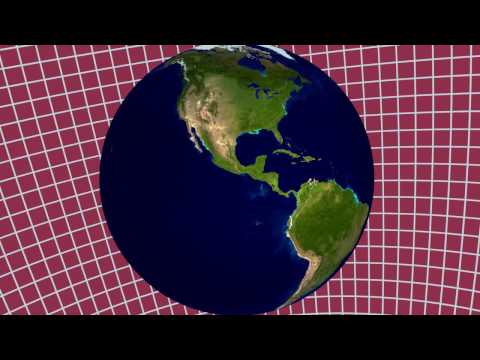
You ever notice how one day it’s sunny, and the next it feels like you’ve jumped straight into a snow globe? Weather can be so unpredictable, right? Well, scientists are totally on it with tools called Global Circulation Models.
These nifty models are like crystal balls for climate. They help us understand how air moves around the Earth and how that affects everything from your summer vacation plans to polar bears in the Arctic. It’s wild stuff, really.
Imagine sitting down with a cup of coffee and chatting about what makes storms tick or why some places seem to be heating up faster than others. That’s what we’re diving into here!
So, grab your favorite snack, and let’s unravel the mysteries of our climate together!
Understanding the Global Circulation Model: Key Insights into Climate Science
Alright, let’s break down this whole global circulation model thing. It sounds fancy, but at its core, it’s just a way scientists figure out how air and water move all around the planet. So, you with me? Cool.
The Basics of Global Circulation Models (GCMs)
Think of GCMs like a big puzzle. The Earth is this giant ball, and it has different pieces like oceans, mountains, forests, and cities. Each piece interacts with the others in really complex ways. What GCMs do is simulate those interactions using tons of data on temperature, humidity, wind patterns—you name it.
In a nutshell, these models help us understand how climate systems work. They show us how changes in one part of the world can have ripple effects everywhere else. For example, if a forest gets chopped down in Brazil—where rainforests generally help stabilize the climate—it could affect weather patterns thousands of miles away.
Why They Matter
You might be wondering why you should care about these models. Well, here’s the deal: GCMs are crucial for predicting things like global warming, extreme weather events, and even where to grow crops in the future. With all that information at hand, countries can prepare better for shifts in climate.
- Modeling Weather Patterns: Want to know where that hurricane will hit next? GCMs give us a heads-up by predicting storm paths based on current atmospheric conditions.
- Agricultural Planning: Farmers use insights from these models to decide what crops to plant when—helping them adapt to changing weather.
- Poverty Reduction: Understanding changing climates helps governments provide aid more effectively by identifying areas likely to suffer from drought or flooding.
The Complexity Factor
The tricky part is that everything is interconnected. Picture a web—you pull one string and they’re all going to move. That’s why scientists are always working on improving their models so they can be as accurate as possible. They feed these models with historical data and current observations to make better predictions about the future.
This isn’t just academic mumbo-jumbo either; this stuff impacts real lives! Growing up near the coast myself, I remember the anxiety we felt every hurricane season because we knew storms were getting stronger due to climate change. And that’s where GCMs come into play—by helping folks prepare for what’s ahead.
The Limits of Our Models
No model is perfect—for instance—they sometimes struggle with predicting local weather events accurately because they operate on large scales (think city or country size). That’s why meteorologists often complement GCM data with localized forecasts!
Wrapping It Up
Your takeaway? Global circulation models are absolutely key in understanding our planet’s ever-changing climate system! They give us insights into everything from daily weather forecasts to long-term climate trends. And while they have limitations, continuing advancements allow us not only to learn but also actively respond to our world as it evolves.
No matter where you stand on climate issues—it helps knowing what’s really going on up there in our atmosphere!
Exploring Scientific Methods for Modeling Global Warming and Climate Change
So, let’s talk about modeling global warming and climate change! It’s a big topic, and you might think of it like trying to predict the weather but on a much larger and longer-term scale. Basically, scientists use different methods to understand how our planet’s climate is changing due to human activities and natural processes.
One of the main tools in this field is something called **Global Circulation Models (GCMs)**. These models are like super-advanced simulations of the Earth’s atmosphere and oceans. They take into account a ton of data—like temperature, wind patterns, humidity, and more—to show how different parts of the world interact with each other.
You can think of GCMs as a high-tech weather forecast that spans decades or even centuries. They help predict future scenarios based on current trends. So let’s break down how these models work:
- Data Inputs: First off, scientists gather loads of data from satellites, ocean buoys, weather stations—you name it! This data helps create an accurate picture of current conditions.
- Physical Processes: Next up, they incorporate physics into these models. Things like heat transfer between the earth’s surface and atmosphere play huge roles in predicting climate behavior.
- Mathematical Equations: GCMs use complex equations to simulate everything from wind flow to ocean currents. It’s like solving a massive puzzle where every piece influences another!
- Scenarios: Then come the “what if” scenarios. What if we keep burning fossil fuels at this rate? What if we switch to renewable energy? Models can help visualize the impacts based on various choices we make now.
- Validation: Finally, researchers test their models against real-world observations to see how accurate they are over time. If the predictions match up with reality (or at least come close), that boosts confidence in those models.
But here’s something interesting: while GCMs provide critical insights into long-term climate trends, they aren’t perfect. There are some uncertainties involved because—let’s be real—the climate system is super complex! Even small changes in inputs can lead to different outcomes.
For instance, consider feedback mechanisms like ice melting or cloud formation. When ice melts due to rising temperatures, it exposes darker land or water underneath which absorbs more heat—this is called the **albedo effect**! It creates a kind of vicious cycle that can be hard for models to capture accurately.
Also worth mentioning are regional models that focus on smaller areas within those global patterns. Localized predictions can offer insights that GCMs might not fine-tune correctly due to their broader scope.
And here’s a personal touch: I remember reading about how one community used these modeling techniques after severe flooding caused by unexpected rainfalls linked to changing weather patterns. They actually adjusted their infrastructure plans based on model projections for future rain events! It really brought home just how vital this science is for various aspects of life.
In short, while exploring scientific methods for modeling global warming and climate change might sound super technical—and it definitely can be—the basic idea is just figuring out how our world works in response to human actions over time! And with tools like Global Circulation Models at our disposal, we’re better equipped than ever to make informed decisions about our planet’s future.
Exploring the Three Types of Climate Models: Insights into Climate Science and Prediction
So, climate models, huh? They’re like the magic crystal balls we use to peek into our planet’s future. Basically, scientists have developed these models to understand how our climate works and how it might change. There are three main types of climate models: energy balance models, simple climate models, and global circulation models. Let’s break them down, shall we?
Energy Balance Models (EBMs)
These are like the simplest versions of climate models. Imagine you’re trying to keep track of your calories: what goes in versus what comes out. In EBMs, the focus is on the balance between the energy Earth receives from the sun and the energy it radiates back into space. If more energy comes in than goes out, things heat up; if it’s the other way around, it cools down.
- Example: Think about a pot of water on a stove. If you keep heating it without letting any steam escape, eventually it boils over! That’s sort of like Earth’s energy balance.
Simple Climate Models (SCMs)
Now we’re stepping things up a bit. SCMs are still kind of basic but include more factors than EBMs do. They look at things like greenhouse gases and how they trap heat. Think of these as more detailed snapshots where temperature changes can be predicted based on different variables.
- Example: Imagine you’re baking a cake and you have to adjust ingredients based on whether you want it fluffier or denser. SCMs help tweak those “ingredients” in our atmosphere to see what happens.
Global Circulation Models (GCMs)
This is where things get really exciting! GCMs are super complex and simulate Earth’s atmosphere through massive grids that cover the entire globe. They take into account factors such as air movement, sea surface temperatures, ice sheets, and even human activities—like burning fossil fuels!
- The size of GCMs: These models can have grid sizes ranging from 100 km down to just 10 km! That means they can capture local weather patterns much better than simpler models.
- Anecdote: I remember watching a documentary showing how GCMs predicted El Niño events before they happened. It was so cool seeing satellites zooming around Earth while scientists tracked all this data!
The thing is, each model has its own strengths and weaknesses, depending on what you’re trying to study or predict. EBMs are great for long-term trends but can miss regional details; SCMs fill in some gaps but still lack depth; while GCMs provide incredibly detailed insights yet require massive computing power.
A quick note: Climate modeling is not just about understanding our past; it’s also crucial for anticipating future scenarios—like extreme weather or rising sea levels—that could affect countless lives!
The bottom line? Climate models offer us invaluable tools for navigating an uncertain future by helping us grasp how various factors interact with one another within our climate system.
You see? Each type of model has its role in weaving together a bigger picture—so if you ever hear someone talking about them at parties (you know they will!), now you’ll be ready to jump right into the conversation!
So, let’s chat about global circulation models, or GCMs, which might sound like something straight out of a sci-fi movie. But seriously, these are powerful tools that help scientists understand climate change and predict future weather patterns. And, honestly? They’re a bit like sophisticated crystal balls for meteorologists.
You know when you’ve got a big idea and you don’t really know where to start? That’s kind of how the climate works too! There are tons of moving parts—oceans, winds, ice caps—all intertwined in this delicate dance. GCMs take all these elements and simulate them on a computer, painting this vast picture of how the Earth’s atmosphere behaves over time. It’s a little like trying to figure out the best way to bake a cake with different ingredients (some sweet, some not so much) but on a global scale.
I remember chatting with my cousin who lives in Florida. She was telling me how unpredictable the weather has been there lately—like one minute it’s sunny and warm and then suddenly there’s a storm rolling in. It’s wild! When I told her about GCMs and how they can forecast these shifts by analyzing data from different parts of the world, she was fascinated. It was as if we were bridging science with her everyday experiences—not just numbers on a screen but real-life implications.
But here’s the catch: while GCMs are incredibly useful, they’re still only models based on current knowledge. They can’t perfectly predict every little thing because they’re based on assumptions that might change as new data comes in—or as our climate continues to evolve unexpectedly! And this is where it gets tricky; we trust them for insights on future climates but also have to remember they’re not foolproof.
Sometimes I think about how people respond differently to climate information. Some feel empowered to take action while others might feel anxious or even skeptical about what those predictions mean for their lives or our planet’s future. That emotional response is super important because it shapes what we do next.
So yeah, looking at climate insights through global circulation models is both enlightening and daunting. They open up discussions that matter deeply for everyone—from farmers planning their harvests to city planners figuring out how best to prepare for heavy rains or rising sea levels. It’s science at its finest—complex yet totally essential—and absolutely worth keeping an eye on as we go forward together into an ever-changing world!