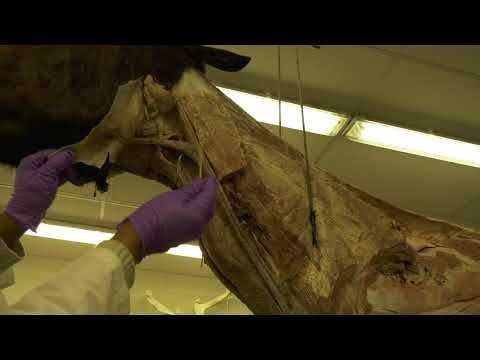
You know, I once heard someone say that a horse’s neck is like its mood ring. Seriously! It can show so much about what’s going on with them. If they’re feeling relaxed, their neck is all soft and loose. But if they’re tense or in pain, it can get all rigid and stiff. Kinda wild, right?
So, let’s chat about equine neck anatomy. There’s more to it than just looking pretty when they gallop around. The structure of a horse’s neck plays a huge role in, well, everything they do! From grazing to racing across fields, that neck’s got some serious responsibilities.
And it’s not just about looks either; understanding how it works helps us keep our four-legged friends healthy and happy. So stick around as we break down the nuts and bolts—well, not literally! We’ll explore the cool stuff behind those long, graceful necks of our equine pals. Sounds fun? Let’s go!
Comprehensive Guide to Equine Neck Anatomy: Structure and Function Explained (PDF Download)
So, let’s talk about equine neck anatomy. Horses have pretty fascinating necks that play a big role in their overall function and health. You’ve probably seen them lifting their heads high or stretching down to graze—there’s a lot happening there.
The Structure
The horse’s neck is made up of several important components. It includes bones, muscles, ligaments, and nerves. Here’s a quick breakdown:
- Cervical Vertebrae: Horses typically have seven cervical vertebrae (the bones in the neck). These are quite flexible but also strong, allowing for a good range of motion.
- Muscles: There are many muscles in the neck that help with movement and support. Key ones include the splenius, which helps lift the head, and the trapezius, which stabilizes it.
- Ligaments: Ligaments connect bones to other bones. The nuchal ligament, for instance, runs along the top of the neck and helps keep everything steady while they move.
- Nerves: The neck has important nerves that control movement and sensation. These nerves send signals from the brain to muscles throughout the body.
The Function
Now, let’s get into why all this matters. The neck plays a crucial role in how horses interact with their environment.
- Maneuverability: A flexible neck allows horses to bend and turn easily, whether they’re grazing or navigating obstacles.
- <b<balance:The way a horse moves its head affects its balance. For instance, lowering the head can lower their center of gravity.</b<balance:
- <b<communication:A horse’s expression often comes from its neck position; whether they’re alert or relaxed can be read through how high or low their head is held.</b<communication:
You know what’s really interesting? When I was at a local stable last summer, I watched a mare gently nuzzle her foal while keeping her head low. It was such an adorable moment! But it also reminded me how much trust and connection can be expressed through body language—neck movements included.
The Importance of Health
Keeping your horse’s neck healthy is super important. Issues like stiffness or injuries can affect not just movement but also behavior. Regular check-ups with your vet should include examining this area because prevention is key!
So there you go! Equine neck anatomy may seem like just another part of biology, but its structure and function are essential for these majestic animals’ overall well-being!
Exploring the Anatomy and Function of Human and Equine Neck Structures: Insights from Comparative Anatomy
Comparing the neck structures of humans and horses is pretty cool! It’s like looking at two different designs that serve similar purposes. Let’s break it down.
The Structure of the Neck
Both humans and horses have necks made up of vertebrae. In humans, there are **seven cervical vertebrae**, while horses have **eight**. This extra vertebra gives the horse a longer neck, which is super useful for grazing and reaching for food in high places.
The neck is covered by muscles and tendons, which help in movement and support. In humans, major neck muscles include the sternocleidomastoid and the trapezius. These help us turn our heads and lift them up. For horses, muscles like the cervical trapezius are key for carrying weight on their backs while still being able to look around.
Functionality: Movement and Flexibility
When we think about moving our necks, it’s about flexibility. Humans can tilt their heads back and forth or side to side thanks to these nifty joints between the vertebrae called facet joints. Horses also enjoy this flexibility but in a different way! Their necks can stretch out quite far forward and even arch beautifully when they gallop.
But wait! There’s more than just looks; the design helps both species with various activities:
- Feeding: Horses reach down while grazing; their long necks let them munch without bending too much.
- Communication: Both species use head movements to express feelings—think of a horse nodding or a human shaking their head!
- Bending: Bending is essential for both to perform tasks—humans for looking around, horses for spotting predators.
Nervous System Connection
Did you know that the spinal cord runs through each vertebra? That’s important because it allows signals from the brain to communicate with the body! The neck region has lots of nerves branching out that control everything from breathing (super crucial!) to muscle actions.
In horses, there’s a bundle of nerves called the **cervical plexus** that coordinates movement and feeling in their front legs. Humans have something similar but slightly different based on our anatomy.
The Importance of Comparative Anatomy
When we study human and equine anatomy together, it tells us interesting things about evolution! Both species developed traits that allowed better survival: strong muscles for support and flexible joints for movement.
You might even think about how these differences influence activities like horseback riding! Horse riders need to understand how a horse’s neck moves when directing it to jump or turn. It’s all interconnected!
In summary, exploring human and equine neck structures reveals fascinating similarities and differences shaped by each species’ needs. Who knew our necks could tell such an engaging story?
Understanding Horse Neck Anatomy: A Comprehensive Guide to Equine Physiology in Veterinary Science
So, you want to get into horse neck anatomy, huh? Well, let’s break it down and keep it simple. Horses have some really impressive necks—seriously! It’s not just for show; their neck structure plays a huge role in their movement and overall health.
First off, let’s talk about the **structure** of a horse’s neck. The neck is made of several parts:
- Cervical Vertebrae: Horses have seven cervical vertebrae, similar to humans. These vertebrae are quite flexible, which allows the horse to move its head and neck with ease.
- Muscles: There are powerful muscles running along the neck that help support the head and help control movement. Some key muscles include the trapezius, which helps raise the shoulder, and the brachiocephalicus, which assists in pulling the head forward.
- Tendons and Ligaments: These tissues connect muscles to bones or other muscles. They’re super important for stability and strength when a horse is moving around or rearing up.
- Nerves and Blood Vessels: The neck has lots of nerves that control movement and sensation. And don’t forget about blood vessels; they supply oxygen-rich blood to those hard-working muscles!
So why does all this matter? Well, let’s put it this way: If a horse has an injury or pain in its neck area, it can affect its ability to perform tasks like jumping or racing. That can be frustrating not just for the horse but also for the rider who wants their equine friend at peak performance.
Now picture this: one time I watched a beautiful Arabian mare named Jasmine struggling a bit during training. Turns out she had some tightness in her neck muscles because she wasn’t getting enough stretching exercises after workouts! It was such an eye-opener seeing how even something like that could impact her whole performance.
On top of structure, you’ve also got **function** to consider. The horse’s neck isn’t just there for decor; it’s fundamental for various activities:
- Balance: The long neck helps with balance while galloping or making sharp turns. Think of it as a counterweight!
- Communication: Horses use their heads and necks to communicate with each other—like lowing or nuzzling.
- Foraging: A flexible neck allows horses to graze on grass easily without straining too much.
Understanding how these parts work together also goes hand-in-hand with veterinary science. If you ever have to deal with issues like colic or laminitis (that means inflammation), knowing how all these systems interact can really help with diagnosis and treatment.
In short, understanding equine neck anatomy means you’re better equipped to care for these magnificent creatures! So remember: every part—from bones to muscles—plays an essential role in keeping your horse happy and healthy!
So, horses are these magnificent creatures, right? And if you’ve ever watched them galloping or grazing peacefully, you might have noticed that long neck. But there’s so much more going on there than just looks. The neck of a horse isn’t just a pretty sight—it’s a complex structure with some serious functions.
First off, let’s talk about anatomy. A horse’s neck is made up of seven cervical vertebrae. That’s right! Just like humans have seven neck vertebrae. But here’s the thing: those bones are arranged in a way that allows for great flexibility and movement. When you think about it, horses use their necks not only for eating and drinking but also for communicating with other horses or even you! Ever notice how they lift their heads to check out something odd in the distance? Those muscles and joints are working together in harmony.
Now imagine riding a horse. Your horse’s neck helps balance its entire body while it sprints forward or takes a sharp turn. It’s like they’re maneuvering through an obstacle course without even breaking a sweat! Ever tried to balance on one leg while reaching your other arm out? It’s kind of tough, isn’t it? Well, horses have this down to an art form.
I remember the first time I got close to a thoroughbred at an equestrian center. The way the horse nuzzled against me with that long neck was just heartwarming but also fascinating! It was like we shared this unspoken connection. You could see those powerful muscles rippling beneath its coat as it turned its head to look at me—almost like it was showing off its strength and grace all at once.
That muscular development doesn’t just help with movement though; it plays a role in speech too—if you can call it that! Horses communicate through various sounds and body postures, including how they position their heads and necks, which is super interesting when you think about the social dynamics among them.
So yeah, next time you see a horse trotting around or munching on hay with that elegant curve of its neck, just remember there’s an entire world happening under the surface—a balance of anatomy and function that’s truly remarkable! It’s more than just muscle and bone; it’s about interaction, grace, and sheer athleticism in one beautiful package. Pretty cool stuff if you ask me!