So, picture this: you’re scrolling through photos on your phone, and suddenly you see that blurry shot of your cat trying to jump onto the kitchen counter. It’s a mess, right? But you can still make out those adorable whiskers and big eyes. That’s kind of like what Hough Transformation does—turning jumbled pixels into shapes we can understand!
Now, that might sound a bit techy, but hang tight. The magic happens when you want to find patterns in images—like circles or lines—in all sorts of places, from selfies to satellite images. Seriously! It’s like giving a pair of glasses to a detective looking for clues in fuzzy evidence.
Whether we’re spotting traffic signs in autonomous vehicles or detecting circles in medical scans, Hough Transformation is kind of everywhere in image analysis. And trust me, once you get the hang of it, you’ll start seeing its impact in everyday life more often than not! So let’s break it down together.
Exploring Hough Transformation Applications in Image Analysis: Insights and Advances in Scientific Research
So, let’s talk about the Hough Transformation. It sounds fancy, right? Well, it’s a powerful technique used in **image analysis** to detect shapes. Basically, it helps us find lines, circles, and even more complex shapes in images. This method is super useful in various fields. Here’s what you really need to know.
What is Hough Transformation? It’s a way of transforming points in an image into a different space to make it easier to identify shapes. Imagine you have a messy drawing with lines all over the place. The Hough Transformation helps you pick out those lines and organize them into something meaningful.
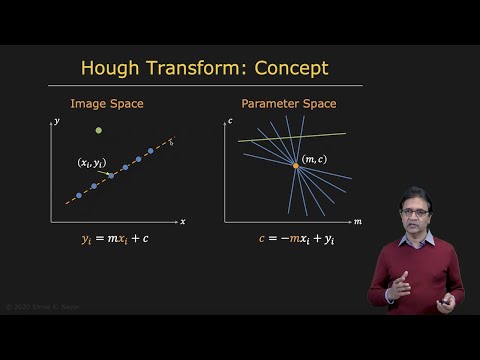
So how does it work? When we look for lines, we can use something called the “parameter space.” Each point in the image is converted into a combination of parameters that represent possible lines. The cool part? These combinations are plotted in this new space! When multiple points align together in this space, they signal the presence of a line in the original image.
Applications are vast and quite exciting:
- Traffic Monitoring: In smart cities, it’s used for detecting lanes or vehicles on roads. Those cool traffic cameras don’t just snap pics; they analyze shapes on the go!
- Medical Imaging: Doctors can spot tumors or blood vessels with ease thanks to Hough Transformation helping to outline these structures.
- Robotics: Robots use this technique for navigation by identifying physical boundaries and obstacles around them.
- Astronomy: Telescopes utilize advanced imaging techniques where Hough can help identify celestial objects based on their shape.
When I think about Hough Transformation, I remember watching my friend try to draw a circle freehand while we were playing Pictionary. She got really frustrated because she couldn’t figure out where to start or end her strokes! If only she had some neat algorithms behind her art skills!
Now let’s dig deeper into some advances and insights. Researchers are consistently improving how this transformation works—especially when it comes to efficiency and accuracy. Using machine learning techniques alongside traditional methods has led to impressive results.
For example, some scientists are developing hybrid models that combine deep learning neural networks with Hough Transformation. This means they can automatically learn from data and adapt their shape detection skills without manual tweaking. How cool is that?
Plus, there’s ongoing work on making the algorithms faster so they can process high-resolution images without lagging behind. Think about medical imaging again; doctors need results quickly when analyzing scans!
In summary—Hough Transformation isn’t just some technical mumbo jumbo; it plays an essential role across many domains by making sense of visual data. From traffic systems keeping our roads safe to helping clinicians make quicker diagnoses, its versatility is impressive!
The next time you see an image processed for shape detection or boundary identification, remember there might be a clever little algorithm working behind the scenes like our friend desperately trying to draw that perfect circle!
Exploring Hough Transformation Applications in Image Analysis: Insights from GeeksforGeeks
Image analysis is a cool field, and one of the techniques that can really knock your socks off is the **Hough Transformation**. You might be wondering what in the world that is. Well, it’s a method used to detect shapes in images, especially straight lines and curves. This whole process helps computers analyze pictures the way we do when we look at them—kind of like spotting a friend in a crowded room.
So, the **Hough Transformation** works by transforming points in your image space into a parameter space. Let me explain that a bit. Imagine you’re trying to find all the straight lines in a drawing. Instead of looking for lines directly in the picture, you convert those lines into points based on their angles and distances from the center. This way, you can easily find which ones match up together to form actual lines.
Here are some applications where you’ll see this transformation strutting its stuff:
- Road Sign Detection: In self-driving cars or advanced driver-assistance systems, Hough Transformation helps recognize traffic signs by detecting their shapes.
- Medical Image Analysis: It’s used to identify features like blood vessels or tumors in scans. These systems can help doctors make more accurate diagnoses.
- Shape Recognition: Think of it as recognizing objects like circles or ellipses—super useful for image sorting and classification tasks.
- Astronomy: Astronomers use this technique to identify circular structures like galaxies or craters on planets when analyzing cosmic images.
You might remember one time when you were trying to find shapes inside an abstract painting; maybe you spotted some triangles and circles mixed up with all those colors. The Hough Transformation does something similar but with math! By taking each pixel’s location and translating it into potential line parameters, it’s like creating an abstract map of possibilities.
Now, let’s get technical just for a sec—you follow me? The basic idea involves two main steps: first, edge detection (often using something like Canny filters) and then applying the transformation itself to find those magical parameters that represent straight lines or curves.
And here’s where it gets even cooler: once you’ve got those parameters down pat, you can apply them back onto your original image to draw out those detected shapes! It’s almost like magic as if you’re revealing hidden secrets right before your eyes.
In short: whether it’s helping cars avoid accidents or enabling doctors to save lives through better imaging techniques, the applications of Hough Transformation are pretty amazing when you think about them. Basically, it’s about making sense of visual information—just another step toward smarter technology!
Exploring Hough Transform Applications in Scientific Research and Image Analysis
The Hough Transform is one of those mathematical techniques that sounds all fancy but is actually pretty neat and useful. You know? It’s all about detecting shapes in images, like straight lines or curves. Essentially, it helps us understand and analyze visual data from different angles. So, let’s explore how it’s applied in scientific research and image analysis.
Detecting Lines and Shapes
First off, the core purpose of the Hough Transform is to identify geometrical shapes. Say you have an image of a road with lanes marked by lines. The Hough Transform can help pinpoint those lines even if they’re not perfectly clear due to noise or other distractions. Basically, it maps points in image space to curves in parameter space, which allows it to find the best-fit line or shape.
Medical Imaging
In scientific research, this technique shines brightly in medical imaging. For instance, when scanning X-rays or MRIs, doctors need to detect anomalies like tumors or fractures. By applying the Hough Transform, they can highlight these irregularities more effectively. Imagine flipping through a stack of photos—it’d be a lot easier if you could just spotlight the ones with something unusual happening!
Robotic Vision
Another cool application is in robotic vision. Robots often rely on understanding their environment to navigate effectively. Using the Hough Transform helps robots recognize obstacles by detecting edges and shapes quickly. If you think about autonomous cars, they need to “see” everything around them—stop signs, pedestrians—all while processing tons of data real-time.
Astronomy and Astrophysics
You might not guess this one immediately, but astronomers also use this transform! In astronomy, detecting celestial bodies isn’t always straightforward due to noise from various sources in space. The Hough Transform can help isolate stars or galaxies from background clutter in images taken telescopically. So next time you look up at the night sky, remember there are algorithms helping scientists make sense of what they see!
Image Compression and Enhancement
Beyond shape detection, this technique plays a role in image compression and enhancement. By identifying key features within an image using Hough Transform techniques, we can compress files better without losing important details. You ever notice how some compressed images look blurry? This method aims to retain clarity while saving space.
Noisy Environments
And when working with noisy environments—think crowded scenes where details are obscured—the Hough Transform really shows its strength! It’s robust enough to find structural elements even when there are other distractions present that might confuse simpler filtering methods.
So yeah, whether it’s enhancing medical diagnostics or helping robots navigate our world safely, the applications are diverse and impactful! The next time you hear about shape recognition or image analysis in research papers or conferences, you’ll know that Hough Transform is quietly working behind the scenes making sense of complex visuals for scientists everywhere!
So, let’s chat about the Hough Transformation and how it fits into the world of image analysis. I remember this one time, back in college, when I was trying to piece together an old, blurry photo from my family album. It was a real mess—faded edges and strange colors blending together. I wished for something magical that could help me find shapes and lines in that chaos. Well, that’s where Hough Transformation comes in.
Basically, this technique is like a superhero for images. It helps you detect lines or curves even in noisy pictures. When you take a look at an image, it can be overwhelming because there’s just so much going on. But the Hough Transform simplifies things by converting those pixel values into a different space—a sort of coordinate system where patterns become clearer.
Imagine you’re drawing circles around all the round objects in your photo. The Hough Transform does something similar but in a much smarter way! It transforms points in an image into curves in a new space (often polar coordinates), making it easier to spot straight lines or curved shapes.
But wait—this isn’t just for nostalgic photos! This technique has loads of applications. For example, it’s super helpful in self-driving cars to detect lanes on the road. Imagine zooming down the highway and having your car know exactly where the lanes are, even if they’re not perfectly marked! That’s some serious tech wizardry right there.
Another example is medical imaging; think MRIs or CT scans where doctors need to spot abnormalities. The Hough Transform can help outline tumors or other weird shapes that shouldn’t be there. It’s like giving doctors an extra set of eyes that sees patterns they might miss otherwise.
And don’t even get me started on its use in robotics! Robots often need to navigate spaces with various objects around them—like your messy living room after a weekend party—and identifying those shapes can be crucial for avoiding collisions.
Of course, nothing’s perfect; applying this method requires knowing what you’re looking for and tweaking parameters just right—it’s not all fun and games! But when it works smoothly? Magic happens.
So next time you’re scrolling through photos or thinking about how technology is changing our lives, maybe give a little nod to the Hough Transformation for making sense of chaotic visuals out there—it’s doing some heavy lifting behind the scenes!