Alright, picture this: you’re in high school chemistry class, trying to figure out why your teacher just mixed some strange liquids together and, poof! There was a colorful explosion. Who knew science could look like an epic party, right?
Well, that’s the magic of inorganic chemicals for you! They’re not just stuff sitting on shelves; they’re the backbone of so much we see around us. From sparkling fireworks to vibrant dyes, these little guys pull together all sorts of amazing reactions.
But here’s the kicker: we don’t always pay attention to what makes those reactions happen. You know? Like how hydrogen and oxygen can turn into water or that moment when baking soda meets vinegar and—bam!—you’ve got a mini volcano.
So, if you’ve ever been curious about the unsung heroes of the chemical world, grab a comfy chair! We’re diving into a list of essential inorganic chemicals that are way cooler than they sound. You might even want to take notes!
Understanding Basic Inorganic Chemicals: Definitions, Types, and Applications in Science
Inorganic chemicals play a huge role in our everyday lives and in the world of science. They’re not just some fancy stuff you read about in textbooks. They’re all around us, from the salt on your table to the air we breathe! So, let’s break this down a bit, shall we?
What Are Inorganic Chemicals?
Basically, inorganic chemicals are compounds that lack carbon-hydrogen bonds. While organic compounds mainly come from living organisms and typically contain carbon atoms, inorganic ones come from minerals, metals, and other non-living sources. Think of them as the backbone of chemistry—solid and reliable.
Types of Inorganic Chemicals
Now, when it comes to types of inorganic chemicals, there’s a whole spectrum out there:
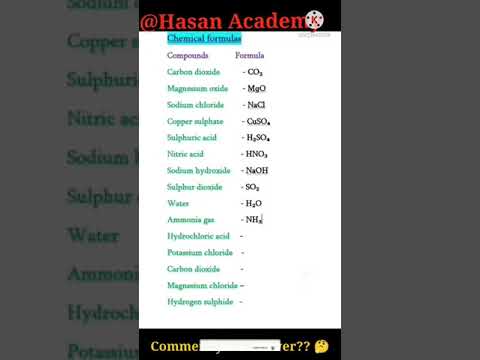
- Salts: These are formed when acids react with bases. Common table salt, or sodium chloride (NaCl), is an everyday example. Not super exciting until you realize it helps preserve your food!
- Oxides: These are compounds made of oxygen and another element. Water (H2O) is actually an oxide! It’s not just vital for life; it also plays key roles in various chemical reactions.
- Amines: Even though they have nitrogen included, amines can be considered inorganic if they don’t have any carbon attached to them. Ammonia (NH3) is a classic example—used extensively in fertilizers.
- Sulfides: Compounds consisting of sulfur associated with other elements like metals. Take iron sulfide (FeS); it’s found naturally in some minerals!
- Nitrates: These contain the nitrate ion (NO3-) and are often found in fertilizers. Potassium nitrate (KNO3) helps plants grow like crazy!
Each type has its unique properties and applications.
Applications in Science
You might be thinking: “Okay cool, but why does this matter?” Well, here’s where things get interesting!
Inorganic chemicals are used in a ton of scientific fields. For instance:
- Chemistry research: They’re fundamental for reactions that lead to new materials or medicines.
- <b environmental science:You’ll find nitrates helping scientists study ecosystems or deal with pollution issues.
- You know electronics?: Inorganic semiconductors like silicon carbide are crucial for making electronic devices!
So every time you see a smartphone or even a clean drinking water source thanks to filtration systems using inorganic materials—it’s these incredible compounds doing their thing!
Think about it: these straightforward substances form complex reactions that fuel everything from industry to nature itself.
In conclusion—or whatever sounds better here—understanding basic inorganic chemicals offers insight into how they shape our world and contribute to countless scientific advancements! Next time you sprinkle salt on your food or see a plant flourish thanks to fertilizer, take a moment to appreciate those little chemical interactions happening behind the scenes!
Exploring the 7 Main Branches of Chemistry: A Comprehensive Guide to the Field of Science
Alright, let’s break down the seven main branches of chemistry. It’s like opening a huge toolbox; each branch has its purpose and tools to get the job done. Here’s a friendly guide through these branches, exploring what they are all about.
1. Organic Chemistry
This one deals with carbon-containing compounds. Think of it as the chemistry of life! Everything from the food you eat to the medicines that help you feel better falls under this category. Organic chemists study how these compounds are structured and how they react. It’s got a lot going on, you know?
2. Inorganic Chemistry
Now, this branch focuses on compounds that don’t mainly involve carbon. That means metals, minerals, and all those cool substances that you might find in your favorite rock collection! Inorganic chemists work with metals and other elements to understand their properties and reactions. A classic example? Well, table salt (sodium chloride) is a simple inorganic compound.
3. Analytical Chemistry
If you love figuring things out, this one’s for you! Analytical chemistry is all about understanding what substances are made of and how much is there in them. Using techniques like chromatography or spectroscopy, analytical chemists can identify components in a sample—kind of like solving a mystery every day!
4. Physical Chemistry
Here we combine physics and chemistry for some mind-blowing stuff! This branch studies how matter behaves on an atomic level and what happens during chemical reactions—like changes in energy or temperature during those wild interactions. Ever seen dry ice sublimating? That’s physical chemistry in action!
5. Biochemistry
This is where life meets chemistry! Biochemists look at living organisms’ chemical processes—from how enzymes help digest food to the way DNA stores genetic information. If you’ve ever been curious about why our cells do what they do, biochemistry’s your go-to path.
6. Theoretical Chemistry
Think of theoretical chemistry as the abstract artist of science—it uses math and physics to explain chemical phenomena. Chemists here create models and simulations to predict chemical behaviors without having to mix stuff together physically first! It’s pretty cool because it paves the way for experimental chemists.
7. Environmental Chemistry
If you’re passionate about our planet, here’s where you’ll want to focus your attention! This branch studies chemical processes occurring in the environment—like how pollutants behave in water or air quality assessments for cleaner cities. It’s crucial for tackling climate change issues we face today.
So there you go! Each branch has its flavor while working together like a well-oiled machine to advance our understanding of the universe around us—and within us too! Seriously, it’s amazing how everything intersects when we talk about chemistry—each part plays a role in shaping our lives every single day!
- Organic Chemistry: Carbon-based compounds.
- Inorganic Chemistry: Non-carbon compounds like metals.
- Analytical Chemistry: Determines composition.
- Physical Chemistry: Science at atomic levels.
- Biochemistry: Study of chemical processes in living organisms.
- Theoretical Chemistry: Uses models to predict behavior.
- Environmental Chemistry:Selects chemicals’ environmental impact.
Understanding these branches is essential for diving deeper into science’s incredible world!
Exploring 50 Essential Compounds in Chemistry: A Comprehensive Overview
Alright, so let’s chat about **50 essential compounds in chemistry**, especially focusing on inorganic chemicals. You might think of chemistry as this big, scary maze, but really, it’s just a collection of some pretty cool building blocks that make up everything around us. So, here’s a breakdown that makes it easier to understand.
First off, what exactly are these **essential compounds**? Well, they’re the key ingredients that scientists use to explore reactions or create new materials. We’re talking about things like salts, metals, and minerals—basically, stuff you encounter every day but may not even realize it!
Now let’s look at some groups of these compounds. There’s a ton to cover; so here we go!
- Water (H2O): This is like the superstar of chemistry. It’s involved in countless reactions and is vital for life. Without water? No plants or animals!
- Table Salt (NaCl): Not just for flavoring your food! It plays a role in industrial processes and can affect how other chemicals behave.
- Sodium Bicarbonate (NaHCO3): You might know it as baking soda. It’s used in cooking and has an important role in buffering solutions in labs.
- Hydrochloric Acid (HCl): This strong acid is essential for digestion in your stomach and is also used in many cleaning products.
- Sulfuric Acid (H2SO4): A powerhouse in industrial applications. It’s used to make fertilizers and refine petroleum.
And that’s just scratching the surface! The thing with these compounds is that they often work together or influence each other when mixed.
Now, let’s consider the metals:
- Iron (Fe): Super important for construction and also vital for our blood—helps carry oxygen!
- Copper (Cu): Known for its excellent conductivity; it’s used widely in electrical wiring.
- Zinc (Zn): Used mainly as a protective coating for other metals to prevent rusting.
So metals have their own particular importance too! It’s wild how such basic elements can have such varied roles.
Then there are gases:
- Carbon Dioxide (CO2): Critical for photosynthesis. Plants need this to grow; without it? No oxygen for us!
- Nitrogen (N2): Makes up about 78% of the Earth’s atmosphere; it’s key in fertilizers to help plants grow healthy.
And don’t forget about minerals! They rock—literally!
Finally, remember that while these compounds exist mostly independently, when they come together? That’s where the real magic happens! Chemical reactions can lead to new substances with entirely different properties than their individual components.
To wrap things up—even though I gave you a taste of just over ten compounds here—and trust me there are a lot more out there—each one opens doors to countless possibilities within science. So next time you see salt on your dinner table or breathe out carbon dioxide after exercising, give a little nod to the amazing world of chemistry at work all around you!
Inorganic chemicals, huh? They’re everywhere, yet most people don’t even realize how crucial they are to everyday life and science. I mean, think about it. You’ve got metals like iron and copper, gases like oxygen and nitrogen, and a bunch of other compounds that just get tossed around like they’re not even important.
A few years back, I was at this small science fair. There was a kid demonstrating some crazy chemistry tricks with basic inorganic compounds. He mixed a bit of baking soda with vinegar—no biggie, right? But that fizzing reaction blew everyone’s mind! This simple duo showed how acids and bases can create something new. Just seeing the excitement on his face reminded me how fun and powerful these “basic” chemicals can be.
So here’s the thing: inorganic chemicals aren’t just boring formulas you memorize in school. They play key roles in so many processes around us. For example, take water (yeah, H2O). It’s essential for life! Or sodium chloride—good old table salt—it’s vital for our diets but also important in countless chemical reactions.
When you think about metals like magnesium or zinc, they’re not just sitting pretty in the toolbox; they help power batteries or even aid in making certain medicines. And then there are the noble gases—like neon or argon—that seem insignificant but are used to create vibrant lights or protect sensitive materials during experiments.
All these elements interact in ways that shape our world; it’s kind of poetic when you think about it! How something as simple as carbon can combine with others to make diamonds or graphite shows you the magic behind this stuff.
So yeah, while it might feel overwhelming trying to remember all those names and symbols—not gonna lie—it’s super rewarding when you start connecting those dots. Inorganic chemistry is like a silent partner behind the curtain of science—making everything tick without taking center stage. And sometimes it’s those quiet helpers that make all the difference!