Okay, so picture this: you’re at a party, right? Everyone’s chatting, and then someone brings up the coolest game—guess the element from the periodic table! You’re like, “Uhh… is there a prize for getting it wrong?” But seriously, the periodic table isn’t just a bunch of squares with weird letters. It’s like this magical roadmap to understanding everything about elements!
And let me tell you about Lewis Dot Structures. They’re basically these simple little doodles that show how elements like to hang out with each other. Imagine trying to make friends but not knowing who wants to share snacks! That’s what these structures help us figure out.
So, let’s dive into why these dot structures are super important in that colorful world of the periodic table! Plus, they carry some pretty juicy secrets about bonding and reactivity. Stick around!
Understanding the Roles of Lewis Structures in Molecular Chemistry
Understanding Lewis structures can be a bit of a game changer when diving into the world of molecular chemistry. Basically, these diagrams are like little maps that help us see how atoms in a molecule are sharing or trading electrons. You know, those tiny particles whizzing around the nucleus of an atom? Well, Lewis structures give us a visual way to understand how atoms bond and form compounds!
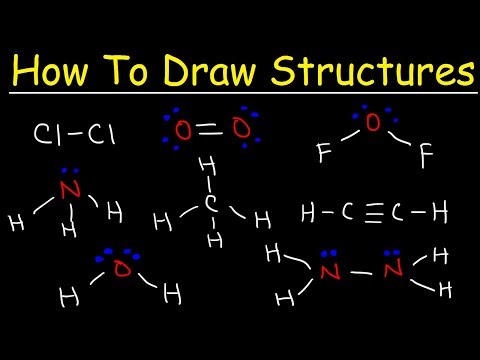
So here’s the deal: when you look at a Lewis structure, you’re seeing dots representing valence electrons—those are the electrons involved in bonding. These dots are placed around the chemical symbol of an element. For instance, let’s take oxygen (O). Oxygen has six valence electrons, so in its Lewis structure, you’d have something like this:
O: ..
That means two pairs of dots (electrons) on one side and single dots on the other to show that it wants to bond with other elements to fill up its outer shell.
Now, why is this important? Well, understanding these structures helps predict how molecules form. For example, if you draw out **water (H₂O)** using Lewis structures:
H: O : H
You can see that oxygen bonds with two hydrogens through single pairs of shared electrons. This visual representation makes it easier to grasp why water has such unique properties—like being liquid at room temperature or having high surface tension.
Let’s not forget about formal charges. Using Lewis structures also allows chemists to calculate formal charges for each atom within a molecule. A formal charge is basically a way to figure out whether an atom is happier or sadder based on the number of electrons it’s holding onto versus what it would normally have. The structure with all formal charges closest to zero is usually more stable!
And speaking of stability—Lewis Structures also help in identifying resonance structures. Some molecules can’t be represented by just one single structure because they have multiple forms that contribute equally to its real structure. Take benzene (C₆H₆), for example; it has three double bonds and three single bonds alternately arranged. Instead of having just one way to draw it, you get several resonance forms showing how those bonds are shared among all six carbon atoms.
Another cool trick with these diagrams is understanding bond types. When making Lewis structures, you get insights into whether bonds are **single**, **double**, or **triple** based on how many electron pairs are being shared between atoms. For instance:
– A **single bond** shares one pair of electrons.
– A **double bond** shares two pairs, while
– A **triple bond** shares three pairs!
This knowledge helps predict things like molecular geometry and polarity—all important factors when studying how molecules interact with each other.
Last but not least—these structures aren’t just for fun! They’re actually tied intimately into the periodic table itself since they reflect the behavior of elements based on their group placement (like alkali metals wanting to lose an electron while halogens want to gain).
So yeah, mastering Lewis structures can really open your eyes to molecular chemistry and illuminate why things react the way they do in nature around us! It’s like having a backstage pass into the electrifying dance that atoms do every time they come together or break apart!
Understanding Lewis Dot Structures: A Comprehensive Guide to the Periodic Table in Chemistry
Understanding Lewis Dot Structures is like unlocking a little secret about atoms and how they play together. They’re a visual way to show how electrons are arranged around an atom, and they’re especially handy when looking at elements on the periodic table. So, let’s break it down!
What are Lewis Dot Structures? Well, these structures are simple diagrams that represent the valence electrons (the ones in the outer shell) of an element. You draw dots around the chemical symbol of an element to illustrate these electrons. Each dot stands for one valence electron, and this helps us see how atoms bond with each other.
Imagine you have a friend who loves stickers—that’s like an atom with its electrons. The more stickers (or electrons) your friend has on their outer layer, the more likely they are to share or trade them with others, which is basically what atoms do when they form bonds.
Now onto the periodic table. This table isn’t just a random assortment of elements; it’s organized in a specific way! Elements in the same column (or group) have similar properties because they have the same number of valence electrons. For example:
- Group 1 elements, like Sodium (Na), have one valence electron.
- Group 17 elements, like Chlorine (Cl), have seven valence electrons.
When you want to create a Lewis Dot Structure for Sodium, you’d put one dot around its symbol: Na•. Chlorine would get seven dots: •Cl• • • • • • •.
So why does that even matter? The number of dots gives us clues about how these elements will react or bond with others. Atoms naturally want to be stable—kind of like trying to organize your closet! Stable often means having eight valence electrons (a full outer shell), which is referred to as the octet rule.
Now here’s where it gets fun: when Sodium and Chlorine meet up, Sodium can give away its single electron while Chlorine can take it! Just like magic (well, chemistry)! In their Lewis Dot Structures:
- Sodium becomes Na+ after losing that one electron.
- Chlorine turns into Cl- after gaining an extra one.
This exchange forms an ionic bond and creates sodium chloride—better known as table salt!
Lewis Dot Structures also help explain covalent bonds—where two atoms share electrons instead of trading them completely. Let’s say we look at two Hydrogen atoms wanting to bond together; each has one valence electron. When you draw their structures:
- H• + H• = H2
They share their single dots so now each Hydrogen has access to two electrons! It’s kind of sweet if you think about it—atoms working together.
In summary, Lewis Dot Structures are super useful for visualizing how atoms interact according to what’s going on in the periodic table. They let you grasp not just individual elements but also how they form compounds—a core concept in chemistry that connects everything together!
So next time you’re looking at that colorful periodic table or drawing out some Lewis structures for fun, remember: it’s all about those little dots bringing atoms closer while keeping our world connected!
Mastering Lewis Dot Structures: A 7-Step Guide for Chemistry Enthusiasts
Alright, let’s break down Lewis Dot Structures. They’re a neat way to visualize how atoms bond with one another. So, if you’re into chemistry, or even just starting out, this can help you get a grip on how elements interact based on their electrons.
What are Lewis Dot Structures?
You know when you think about an atom? It’s like a tiny solar system with electrons orbiting around the nucleus, right? Well, Lewis Dot Structures show us the outermost electrons, called valence electrons. Those are super important because they determine how an atom bonds with others.
Step 1: Identify the Element
Start with figuring out which element you’re looking at. Each element on the periodic table has its own unique number of valence electrons. For example, oxygen has 6 and carbon has 4.
Step 2: Determine Valence Electrons
To find the valence electrons, just look at that group number on the periodic table. Elements in Group 1 have 1 valence electron; Group 2 have 2; Groups 13-18 follow suit up to 8 valence electrons. It’s that simple!
Step 3: Draw the Symbol
Once you know your element and its valence electrons, write down its chemical symbol in the center of your paper or whiteboard. This is where your journey begins.
Step 4: Place Valence Electrons Around the Symbol
Now here’s where it gets fun! You’ll want to draw dots around your element’s symbol to represent those valence electrons. Start placing them one by one—like putting socks in a drawer—until each side of your symbol has a dot or until you’ve placed all available ones.
Step 5: Form Bonds
Okay, now we’re getting to bonding! If you’re drawing a Lewis structure for a molecule like water (H2O), you’ll need to think about how these atoms connect through shared pairs of electrons.
Imagine two hydrogen atoms each sharing one electron with oxygen—you can actually show this by drawing lines between these symbols instead of dots for the bonded pairs!
Step 6: Check Octets
Next up is making sure everyone’s happy—in other words, check if all elements involved have achieved an octet (8 electrons). Elements like carbon and oxygen prefer to have their outer shells filled up! If not satisfied, adjust your bonds accordingly.
Step 7: Finalize Your Structure
Lastly, give it a final look over and make sure everything makes sense! Are all atoms happy with their bonds? Are there any lone pairs left around? If so, great! You’ve got yourself a solid Lewis Dot Structure.
And that’s it—seriously straightforward! The thing is these structures help us understand not just single molecules but also reactions and properties of compounds in chemistry. When you grasp this concept well enough, chemistry starts feeling less like memorization and more like storytelling!
So next time you crack open that periodic table—or gaze at some atoms in action—you’ll have some handy tools in your pocket for visualizing what’s going on beneath it all!
So, you know when you were a kid and you’d doodle on the margins of your school notebooks, maybe drawing little faces or stick figures? I had this friend who was super into drawing these elaborate designs with dots and lines. And honestly, that’s kind of how Lewis Dot Structures work—just with a scientific twist.
Lewis Dot Structures are like these cool visual tools that help us understand how atoms bond with each other. Imagine every element from the periodic table as its own unique character, right? Each one has its personality depending on how many electrons it has in its outer shell—the valence electrons. So, these structures use dots to represent those valence electrons around the symbol of the element. It’s all about showing how elements can share or transfer electrons to create bonds.
You see, if an element has a full outer shell of electrons—like noble gases—they’re chill and don’t really bond with others much. But elements that are missing a few? Well, they’re like that friend who just wants to fit in and will do almost anything to pair up with others to feel complete. That’s where bonding comes in!
I remember giving my younger sibling a hand with their chemistry homework once. They were struggling to grasp how elements interact using Lewis Dot Structures, so I grabbed some candies and showed them how each one could “share” pieces with another candy until they made a pair or two. It clicked! Suddenly, drawing those structures wasn’t just boring schoolwork; it was like creating tiny stories about each element’s quest for companionship.
But it’s not all about the visuals and candy metaphors; there’s some serious science behind this too! Understanding these dot structures lays the groundwork for grasping concepts like ionic and covalent bonds. When you know which atoms are likely to bond together, it opens up a new world in chemistry—and helps you master the periodic table like a pro.
Anyway, I find it pretty wild that something as simple as dots can represent such complex interactions between elements. Every time I look at the periodic table now, I can’t help but think of those little drawings—each dot telling a story about connection, sharing, and even conflicts among elements trying to become stable. It gives me a whole new appreciation for chemistry!