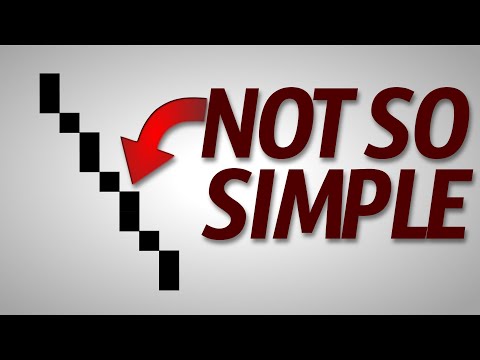
You know that feeling when you’re trying to doodle something cool, and it ends up looking like a stick figure on a bad day? Yeah, we’ve all been there!
But what if I told you that computers can actually create pretty amazing line drawings? Seriously!
These days, innovative line drawing algorithms are changing the game in how we think about art and technology. Imagine software that can sketch like a pro with just a click. Wild, right?
In this chat, let’s explore how these algorithms work and why they’re becoming so important in modern computing. So grab a snack, and let’s jump into this cool world together!
Advancements in Line Drawing Algorithms: A Comprehensive Analysis for Modern Computing
When you think about how computers create pictures, line drawing algorithms come into play. These nifty little tricks help transform mathematical equations and models into visuals we can actually see. It’s wild to think about, right? Let’s break down some of the advancements in this field.
Rasterization is where it all begins. This process converts vector graphics into pixels that we can display on screens. Imagine you’re sketching something with a pencil on a massive piece of paper—every little stroke needs to be mapped out precisely to match what you envisioned. That’s what rasterization does! Algorithms like Bresenham’s line algorithm are classic examples here. They determine how to draw straight lines between two points while minimizing errors, which is crucial for smooth visuals.
Next up is anti-aliasing. This fancy term describes the techniques used to smooth out jagged edges in digital images. If rasterization is like sketching with a pencil, then anti-aliasing is akin to using an eraser and shading the edges to give depth—making everything look cleaner and more natural. Techniques like supersampling or multisampling help blend colors at pixel boundaries, offering a more visually appealing result.
Then there’s stroke-based rendering. Instead of working with pixels directly, stroke-based methods focus on drawing lines as a series of strokes or brush-like sweeps. This approach can give artwork a unique flair, almost as if it were painted rather than drawn digitally. Think about that time when you saw an artwork that had “personality”—that’s often because an artist has skillfully manipulated strokes!
In terms of real-time applications, we have GPU acceleration. With graphics processing units (GPUs) getting super powerful lately, they can handle line drawing tasks much faster than before. Imagine trying to draw a complex scene with thousands of lines on your old computer—it would struggle! But modern GPUs make it possible to render these scenes smoothly and quickly—which is essential for video games and simulations.
Let’s touch on parametric curves too! These are mathematical representations that define curves using equations rather than just linear segments. It allows for smoother transitions between points—even curvier shapes are easier to create without sacrificing quality. You can think of it like driving through winding hills rather than straight roads; both get you somewhere but one feels way more exciting!
Also noteworthy are procedural generation techniques, which automate the creation of line structures based on algorithms rather than manual input. This method finds its place in video games where vast worlds need crafting without draining resources or time.
So basically, there are loads of advancements happening in line drawing algorithms today! Each innovation helps improve visual output quality and efficiency dramatically—making your gaming experiences or digital art creations way better than they were even just a few years ago! Embracing these technologies opens up so many possibilities for artists and developers alike; it makes you wonder what cool tools will pop up next!
Exploring Innovative Line Drawing Algorithms: Transformations in Modern Computing for Scientific Advancements
So, let’s chat about innovative line drawing algorithms. These are basically the techy tricks we use in computers to create images, especially those that involve lines and shapes. You know how when you doodle something simple, like your cat or a flower? Well, computers do something similar but with more precision. They use these algorithms to transform data into visual art.
First off, why are these line drawing algorithms so cool? Well, they can make complex shapes look pretty slick while keeping the processing light. Imagine drawing a fancy curve with just a few calculated points instead of plotting every single tiny detail. Algorithms like Bresenham’s Line Algorithm do this by determining which pixels on a grid should be illuminated to make a straight line appear smooth and continuous. It’s like connecting the dots but way smarter!
Now you might ask: how does this tie into scientific advancements? Good question! Researchers often need to visualize data – think graphs or intricate models of molecules – and efficient line drawing can turn mountains of numbers into something visually digestible. For instance, when scientists analyze protein structures, they use algorithms that not only draw smooth lines but help represent complex structures in 3D space. It’s much easier to understand what’s happening if you can actually see it laid out.
But wait, there’s more! There are numerous other algorithms out there that cater to different needs:
- Anti-Aliasing: This one’s all about smoothing out those rough edges in images so they don’t look jagged. It makes everything look cleaner and more professional.
- Curve Drawing Algorithms: Such as Bezier curves which help create smooth curves through mathematical functions. Think of them as magical strings guiding your pencil across the page.
- Vector Graphics: These algorithms deal with paths instead of pixels. They’re crucial for scaling images without losing quality—perfect for logos or illustrations.
I remember when I had to draw graphs for my science project back in school using just pencils and erasers—it was messy! If only we had access to such smart tools back then! Algorithms handle all that craziness for us now.
Modern computing has given rise to even jazzier techniques like machine learning, which helps refine these line drawing processes by teaching computers what’s aesthetically pleasing over time. So really, you’re seeing art influenced by AI!
To wrap things up (not that I’m trying to rush), exploring innovative line drawing algorithms opens up worlds of possibilities in science and tech. They’re at the intersection where mathematics meets creativity—drawing lines isn’t just about art; it’s about understanding our universe better through visuals that speak louder than words ever could!
Bresenham Line Drawing Algorithm: A Key Computational Technique in Computer Graphics and Scientific Visualization
So, let’s talk about the Bresenham Line Drawing Algorithm. You might think this is just some boring math stuff, but hang on—it’s actually super cool and kinda essential in computer graphics and scientific visualization!
First off, the whole point of Bresenham’s algorithm is to figure out how to draw a straight line on a grid or pixel display. Like, imagine you’re trying to draw on your computer screen, which is made up of tiny squares called pixels. So, how do you get a nice straight line between two points? That’s where this algorithm comes in.
Now, when you think about drawing a line from point A to point B, you could just connect those dots in a really simple way. But here’s the kicker: you want to use as few pixels as possible to make that line look smooth. That’s what Bresenham figured out back in 1962.
Here’s a little breakdown of how it works:
- Integer Math: The algorithm only uses integer arithmetic. This means it avoids complex calculations that can slow things down. Instead of dealing with fractions or floating-point numbers, it works with whole numbers!
- Decision Parameter: Bresenham’s method uses something called a “decision parameter” to decide which pixel should be lit up next. It makes decisions based on the slope of the line you’re drawing.
- Simplicity: The beauty of this algorithm is its efficiency. It reduces the number of operations needed compared to other methods like the DDA (Digital Differential Analyzer). Less processing means your computer can draw faster!
You see? Pretty neat! Now let me throw in an example so it’s clearer. Say you’re going from point (0,0) to (5,3). The algorithm helps figure out which pixels between these two should be turned on, so your line looks nice and smooth rather than jagged.
Imagine trying to sketch something freehand; if you know where each dot goes without having to think too hard about it—that’s what Bresenham’s does for computers! It allows them to visualize lines quickly and accurately.
And listen—this isn’t just for basic drawings; it’s widely used everywhere! From video games and animations to scientific simulations where accurate visual representation is key—like plotting graphs or even modeling complex structures.
Anyway, if you’re ever doodling something on your computer and wonder why the lines look so clean and sharp, there’s a good chance that Bresenham had something to do with it! His work laid down some serious groundwork for modern computing graphics that we often take for granted today. So yeah, next time you see a straight line on screen? Give ol’ Bresenham a nod!
You know, when you think about it, line drawing algorithms are like the unsung heroes of the digital world. I mean, they’re everywhere! From the simple sketches on your phone to those super detailed graphics in video games. It’s all about how we turn those complex mathematical concepts into something visual that we can relate to—pretty cool, right?
I remember, back in high school art class, trying to draw a straight line without a ruler and failing miserably. My lines ended up looking more wobbly than what you’d expect from a toddler with a crayon. But these algorithms? They’ve got it totally covered! They create perfect lines with just a few calculations. I guess you could say they are like magic, but rooted in math.
One of the most famous ones is Bresenham’s algorithm. Seriously, it’s been around since 1962 and is still rocking it today! It takes pixels on a grid and determines the best way to connect two points without driving your computer crazy trying to decide which pixel should be lit up. And the thing is, it’s efficient! Like super-efficient. It minimizes processing time while getting precise results—a win-win if you ask me.
Then there’s Wu’s antialiased algorithm that smooths out those jagged edges that make lines look all rough and not-so-pleasing to the eye—it’s delightful! On today’s computers and screens with high resolutions, this matters even more because you really want those visuals to pop without looking pixelated.
But here’s what gets me; these algorithms aren’t just for artists or designers trying to make their work look sleek. They’re also used in animations and simulations in fields we don’t usually associate with drawing at all—like engineering or even medical imaging! Imagine your doctor looking at an MRI scan where every line looks crisp and clear due to these clever little tricks.
So yeah, next time you find yourself enjoying some digital artwork or playing an engaging video game, take a moment to appreciate those elegant lines on your screen—crafted by innovative algorithms working behind the scenes. They’re not just codes; they’re like brush strokes of an artist painting on an infinite canvas we call technology.