So, picture this: you’re at a party, and someone brings up the whole “which is better, cats or dogs?” debate. Things get heated, right? Some swear by their feline friends while others can’t live without their pooches. Funny how simple preferences can spark such fiery discussions!
Now, imagine something similar happening in the world of science. Yup, it’s true! Researchers often find themselves torn between two heavyweights: logistic regression and linear regression. Both are popular tools for making sense of data, but they’re used for pretty different purposes.
It’s kinda like choosing between a skateboard and a bicycle. One gets you from point A to B fast, while the other might take you on a wild adventure down some tricky trails. You follow me? So let’s break down what makes each method special and how they fit into the realm of scientific research!
Comparative Analysis of Logistic and Linear Regression Techniques in Scientific Research: A Case Study Approach
When we talk about logistic regression and linear regression, we’re diving into two different ways of modeling data that can help researchers make sense of the world. Both are super useful in scientific research, but they apply to different scenarios. Think of them as two tools in a toolbox, each with its unique strengths.
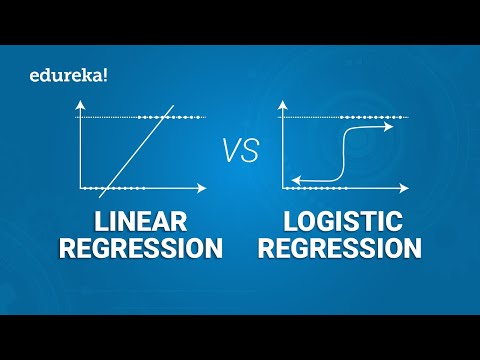
So, linear regression is like trying to predict a friend’s height based on their age. You know, as people grow older, they usually get taller, right? You can plot that relationship on a graph and draw a straight line through the points—it’s all about finding that best-fitting line. The model generates predictions for continuous outcomes, like how much someone might weigh based on their height.
On the flip side, logistic regression is more like predicting whether your favorite team will win or lose a game based on certain stats—like player performance or weather conditions. Here’s where things get interesting: you’re not predicting a number but rather an outcome that falls into categories. It’s either “win” or “lose,” Yes or No; there’s no middle ground! Logistic regression creates an S-shaped curve, which means it deals well with probabilities between 0 and 1.
Now let’s break down some key differences in style:
Okay, so imagine you’re studying whether students pass an exam based on study hours. You’d use linear regression if you wanted to see how study hours correlate with exam scores—maybe plotting hours against percentage scores yields a pretty straight line.
But if you really want to find out if those study hours affect whether students pass (yes/no), then logistic regression is your go-to method! It’ll tell you the odds of passing given different amounts of study time—a whole new perspective!
In practice, researchers often use both methods together to provide complementary insights. For example, let’s say scientists want to measure factors influencing heart disease. They might use linear regression to see how cholesterol levels relate to age while applying logistic regression to examine the likelihood of developing heart disease based on lifestyle factors.
Ultimately, understanding when to use which method can make all the difference in research findings! So next time you’re facing data analysis challenges in science, consider what you’re trying to predict—those choices really drive your research forward!
Understanding the Differences Between Linear and Logistic Regression: A Scientific Example
Well, let’s break down linear regression and logistic regression. Seriously, understanding the difference can really help you grasp how scientists analyze data.
Linear regression is like drawing a straight line through a bunch of points on a graph. It helps you predict a continuous outcome. For example, think about trying to figure out your grade in a class based on the number of hours you study. If you plot hours studied against grades, you’ll probably end up with a straight-line relationship—more studying usually leads to better grades, right? So, in this case:
- The dependent variable (grades) is continuous.
- The model looks for the best-fit line that minimizes the distance from all your data points.
On the other hand, logistic regression is used when you’re interested in binary outcomes—like yes or no questions. For instance, let’s say you’re trying to predict if someone will buy a product based on their age and income level. The outcome isn’t just any number; it’s either they buy it (1) or they don’t (0). Here:
- The dependent variable is categorical (buy or not buy).
- The model creates an S-shaped curve (a logistic curve) that predicts probabilities between 0 and 1.
So now you’re probably thinking: “Why do we need both these things?” Well, each serves its purpose depending on what kind of data you’re dealing with.
Here’s an emotional little story for you: I once helped my niece with her school project where she was analyzing how different factors influenced her friends’ decisions to join after-school clubs. She used linear regression to see if there was an effect of club popularity on attendance numbers—like how many kids show up for chess club compared to soccer practice.
Then we switched gears and tried logistic regression to see if club type influenced whether kids would join at all. Pretty neat! The results showed that fun activities had higher “yes” responses compared to more serious ones like debate club.
In terms of real-life applications:
- Linear Regression: Useful in fields like economics where predicting things like sales revenue works well due to its linear nature.
- Logistic Regression: Commonly used in healthcare for predicting outcomes such as whether patients will develop certain conditions based on risk factors.
Both types of regression give scientists powerful tools to analyze and interpret their data accurately. The choice between them really boils down to the questions you’re trying to answer.
So next time you’re faced with data analysis decisions in research or just exploring facts about life choices, remember this handy distinction! Understanding these concepts can make conversations about data way more interesting—and meaningful!
Understanding the Key Differences Between Linear and Logistic Regression in Scientific Research
So, you’re curious about linear and logistic regression? Let’s break it down, nice and easy. These two methods are like different tools in a scientist’s toolbox. They help us understand how different variables relate to each other, but they’re used for different types of problems.
First off, linear regression is all about predicting numerical outcomes. Picture this: you want to know how studying hours affect test scores. If you plot your data points on a graph with study hours on the x-axis and scores on the y-axis, you could fit a straight line through those points. That’s linear regression in action! It’s great when the relationship looks pretty straight and predictable.
On the flip side, we have logistic regression. Now, instead of predicting a number, it predicts categorical outcomes—like yes or no. Imagine you’re looking at whether students pass or fail based on their study habits. You’d be interested in something like “Will they pass?” which gives you two categories: pass (1) or fail (0). Logistic regression helps model this kind of probability. Instead of fitting a line, it fits an S-shaped curve that shows how likely someone is to fall into one category over the other.
Now let’s get into some nitty-gritty differences:
- Nature of Outcome: Linear is for continuous outcomes; logistic is for binary outcomes.
- Linearity: Linear assumes a straight-line relationship; logistic has that curvy S-shape.
- Error Distribution: In linear regression, we assume errors are normally distributed; logistic works with binomial distribution.
- Interpretation: In linear regression, coefficients tell us how much y changes with x; in logistic regression, we interpret coefficients as odds ratios.
It can feel confusing at first. But think about when you would use each one in real life! For instance, if you’re researching what factors influence people’s decision to buy a new gadget (yes/no), go with logistic regression. If you’re trying to figure out how temperature affects ice cream sales (a number), then use linear regression.
Sometimes, people mix them up because they both can seem so similar when you’re just getting started. I remember when I took my first statistics class—trying to keep track of which one was which made my head spin! It wasn’t until I clicked that they served such different purposes that things got clearer.
Anyway! Those are some key differences between linear and logistic regressions in research. It’s all about picking the right tool for your specific question, you know? So next time someone asks you about these methods at a party or something—just casually drop this knowledge bomb!
Alright, so let’s chat a bit about logistic and linear regression. You know, in the world of scientific research, these two tools come up a lot when we’re trying to make sense of data. They might sound pretty similar, but they actually serve some different purposes.
Let’s start with linear regression. Imagine you’re trying to predict your friend’s test scores based on how many hours they study. You could plot their study hours against their scores and draw a straight line through those points. That line helps you see the relationship; for every extra hour studied, you’d expect a certain increase in scores. It’s all about predicting continuous outcomes, like height or weight—easy peasy!
But then there’s logistic regression, which is like the cooler cousin. Instead of dealing with straight lines and continuous outcomes, it’s all about probabilities. Picture this: you’re figuring out whether it’ll rain tomorrow or not based on various factors like humidity and temperature. Your outcome is categorical—rain or no rain—so you can’t just draw a straight line there.
Here’s where the fun begins! Logistic regression takes those inputs and kind of transforms them into probabilities using a curve called the logit function. It tells us the likelihood of an event happening. So instead of saying “studying four hours will lead to this score,” it’ll say “there’s a 70% chance that if you study this much, it’ll rain.” It’s more about understanding risks rather than exact predictions.
I remember back in college when I was knee-deep in data for my project on plant growth under different light conditions. I thought linear regression would give me all the answers till my professor nudged me toward logistic regression because some plants either thrived or wilted instead of showing a smooth growth pattern. What a game changer that was! Suddenly, I could see not just average growths but also understand the factors influencing survival rates under various light intensities.
So really, both methods have their place in research; it just depends on what type of question you’re asking. Want to predict something continuous? Go linear! Need to understand probabilities for event outcomes? Logistic is your go-to! At the end of the day, they help us uncover insights from data in ways that matter most to our research questions—and isn’t that what science is all about?