So, picture this: you’re in a room full of people, and suddenly someone brings up how your grandma seems to have passed down her wild curls to every single grandkid. It’s like a family trait convention in there!
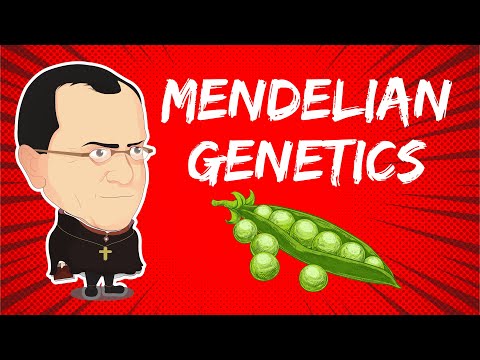
That’s Mendelian genetics for you. You know, the stuff about how traits mix and mingle from one generation to the next? Gregor Mendel, a super-unassuming monk, basically cracked the code on inheritance by experimenting with pea plants. Seriously, who knew peas could reveal so much about life?
Anyway, fast forward to today. His work isn’t just some dusty old textbook material; it’s still shaking things up in modern science. From understanding diseases to breeding better crops—it all traces back to those little green peas!
So grab a seat and let’s dig into this fascinating world of genes and traits! You won’t wanna miss it.
The Importance of Mendelian Genetics in Modern Science: Unlocking the Foundations of Heredity
Mendelian genetics is like the classic recipe for understanding heredity. It all started with this guy named Gregor Mendel back in the 19th century. He was a monk and a scientist, but mostly just a dude who loved working with plants. He’s often called the father of genetics because he figured out how traits are passed down from parents to offspring, which is super important for modern science.
So, here’s the deal: Mendel conducted experiments with pea plants and noticed that certain traits, like flower color or seed shape, followed specific patterns. He proposed three fundamental laws—these are pretty much the foundation of genetics today:
- Law of Segregation: This law says that every individual carries two alleles for each trait (one from each parent), and these alleles segregate during the formation of gametes. So when you make sperm or eggs, you only pass along one allele to your kids.
- Law of Independent Assortment: Here’s where it gets interesting! This law states that genes for different traits are inherited independently of one another. That means whether you get brown eyes doesn’t affect if you get curly hair.
- Law of Dominance: Some traits are dominant over others. If an organism has one dominant allele and one recessive allele, the dominant trait will show up in the offspring. For example, purple flowers (dominant) will show up over white flowers (recessive).
This stuff might sound simple, but it laid down some heavy groundwork for understanding biological inheritance and how traits work. Think about it: knowing how traits are passed on has super practical applications. Agriculture uses this knowledge to breed better crops. Medicine relies on it to understand genetic disorders.
For instance, when looking at diseases like cystic fibrosis or sickle cell anemia—both of which follow Mendelian patterns—we can trace how they’re inherited in families. Imagine sitting down with someone who’s got a family history of these conditions; knowing their genetic background could really help doctors provide guidance on what they might face.
And then there’s modern technology! With things like CRISPR gene editing emerging on the scene, understanding basic Mendelian principles helps scientists tweak genes in ways that could tackle serious diseases or improve health outcomes.
You see where I’m going? The principles laid down by Mendel aren’t just dusty old theories; they’re at the heart of cutting-edge science today! They help us unlock mysteries about heredity and guide research in everything from agriculture to medicine.
But here’s something emotional: think about a parent learning about their child’s genetic predisposition to certain illnesses—and realizing this knowledge gives them tools not just for understanding but also for prevention and care strategies. It’s all tied back to those little pea plants Mendel played around with.
In short, Mendelian genetics forms a crucial part of what we call modern genetics today—not just as some historical footnote but as an ongoing journey into deciphering life itself!
Unveiling Mendel’s Legacy: Key Contributions to Genetics and the Foundation of Modern Science
Mendel’s legacy is like a seed planted deep in the soil of science. Think about it: if that seed hadn’t been sown, our understanding of genetics might look completely different today. This guy, Gregor Mendel, had a knack for figuring out how traits get passed down through generations, and his work laid the groundwork for modern genetics.
You know how when you mix colors in art class? Mendel did something similar, but instead of paints, he mixed peas! Seriously though, he studied pea plants in his monastery garden. These little green orbs weren’t just food; they were part of an experiment that changed everything.
- Basic Units of Inheritance: Mendel introduced the concept of alleles, which are different versions of a gene. He showed that these alleles segregate during reproduction—like dividing candy among friends so everyone gets some.
- Dominant and Recessive Traits: Some traits overshadow others. For example, if you cross a purebred purple flower with a purebred white one, all the offspring will be purple! The purple trait is dominant. It’s like your favorite snack at a party; it just gets all the attention.
- Laws of Segregation and Independent Assortment: These laws say how alleles segregate during gamete formation and how different traits are inherited separately. Imagine juggling; you can throw one ball high without worrying about the others—each allele acts independently.
It wasn’t until years later that scientists realized how crucial Mendel’s findings were. His papers sat in obscurity for decades! It’s almost funny to think about it—like finding an old diary filled with brilliant ideas that nobody bothered to read.
Mendelian genetics became central to biology and medicine over time. Today, we see its impact everywhere—from agriculture to human health. For instance, breeders use Mendelian principles to create disease-resistant crops or animals with desirable traits.
But there’s more! His work helped spark interest in other genetic studies. Enter Watson and Crick—a couple of guys who ultimately unraveled DNA’s structure years later thanks to foundational concepts laid out by Mendel.
Mendel’s legacy goes beyond just science; it reflects curiosity and perseverance. In a world where answers aren’t always easy to find, his methodical experiments remind us that sometimes small steps can lead to big discoveries. You could say he was like the quiet hero in the story of genetics—doing his thing while most people didn’t even notice until much later!
So next time you munch on those peas or admire colorful flowers in your garden, remember that little monk who unlocked secrets hidden within them—you follow me? That’s Mendel’s gift to us: understanding life itself at its most basic level.
Unraveling Genetics: The Impact of Gregor Mendel’s Pioneering Experiments on Modern Science
Have you ever thought about where your eye color comes from? Or why some people have curly hair while others have straight locks? Well, Gregor Mendel is the guy you can thank for laying the groundwork to answer those questions. This Austrian monk conducted some serious experiments with pea plants in the mid-1800s. His work was pretty groundbreaking, even if it didn’t get much love until decades later.
Mendel’s experiments focused on inheritance patterns. He noticed that traits like flower color, seed shape, and plant height followed certain patterns from one generation to the next. Basically, he figured out that traits are passed down through what we now call genes. Isn’t that cool?
His findings led to what we now refer to as Mendelian Genetics. Here’s the deal: Mendel proposed several key ideas. One of his main contributions was the concept of differentiation between dominant and recessive traits. This means that in a pair of alleles (that’s just a fancy word for gene variations), one can mask the other. For example, if you have one allele for brown eyes (dominant) and another for blue eyes (recessive), you’ll likely end up with brown eyes.
Now, let’s break down Mendel’s laws a bit more:
- Law of Segregation: This law states that during reproduction, each parent contributes one allele for each trait. So it’s like flipping a coin—sometimes you get heads, sometimes tails.
- Law of Independent Assortment: Here’s another cool thing—different traits are passed down independently of each other. So whether you get your mom’s green eyes or your dad’s curly hair isn’t influenced by each other.
Imagine being in Mendel’s shoes as he meticulously tracked how these little pea plants were mixing and matching traits! It must’ve been such an eye-opening experience when he started to see those patterns emerge. Sometimes I think about how many peapods he went through!
Now fast forward to today. Thanks to Mendel, modern genetics has taken off like a rocket ship! Researchers now understand DNA—the actual material in our cells that carries genetic information. They’ve also developed tools to edit genes, check for genetic diseases, and even do things like make crops more resistant to pests.
For instance, think about genetically modified organisms (GMOs). Many crops today are engineered with specific traits in mind—like being drought-resistant or having higher yields—and all this boils down to understanding Mendelian principles at their core.
So really, next time you’re munching on a snack or looking at someone with striking blue eyes, take a moment to appreciate how much Gregor Mendel changed our understanding of biology. His work opened up a whole new world of discovery! And though it took time for people to catch on back then, his legacy lives on every time we talk about genes today. Seriously impressive stuff!
You know, genetics is one of those topics that gets me all excited! I mean, it’s like piecing together a giant jigsaw puzzle of life. So, let’s chat about Mendelian genetics and how it has shaped modern science.
First off, Gregor Mendel—this dude was basically the OG of genetics. Picture a quiet monk in the 1800s experimenting with pea plants in his garden. Who would’ve thought those little green pods could change our understanding of inheritance? He discovered how traits are passed down from parents to offspring through what we call genes. It’s kind of amazing that he laid down the foundation for everything we know today without even having fancy lab equipment or modern technology!
Mendel’s findings—like dominant and recessive traits—are still super relevant. Think about it: when you see a child with curly hair and one parent has straight hair, you can bet there’s a fascinating genetic story hidden there! His observations set off a massive wave in biology, leading scientists to explore how traits work at a molecular level.
And honestly, this stuff isn’t just textbook material; it has real-life applications! For example, thanks to Mendelian principles, we can understand genetic disorders better. Imagine being able to predict certain health conditions or even assist couples who want to prevent passing on genetic diseases. That’s pretty powerful!
But here’s where it gets even cooler: Mendel’s work paved the way for advancements like CRISPR technology that allow us to edit genes directly! Can you believe how far we’ve come? It’s like opening up a whole new world where we could potentially eradicate certain illnesses or improve crops for better food security.
In my own life, I remember looking at my family tree and noticing quirks—like my grandfather with his love for gardening and how my mom ended up inheriting that green thumb. It makes you think about all those tiny particles mingling inside us, shaping who we are and what makes us tick.
So yeah, while Mendel might have been tinkering away with peas back in the day, his legacy is so much bigger than that little garden of his. Without him taking those first steps into the unknown realm of genetics, modern science would be missing a huge piece of its puzzle. And that’s something worth celebrating every day!