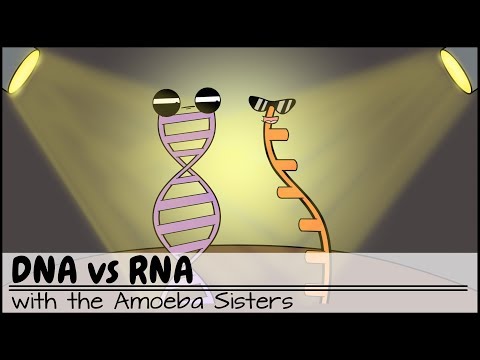
You know what’s nuts? Our DNA is like a super complex puzzle! Seriously, it has these things called complementary strands that are key players in the whole genetics game.
Imagine you’re trying to build a sandwich. You’ve got two slices of bread that fit perfectly together. That’s kind of like how our DNA works! One strand pairs up with another, creating this amazing double helix shape — talk about teamwork!
So, what’s the deal with these complementary strands? Well, they’re not just there to look pretty. They actually help make copies of our genes and ensure everything runs smoothly in our cells. Pretty cool, right?
Stick around, and let’s unravel this DNA mystery together!
Understanding the Role of Complementary Strands in Molecular Biology and Genetics
Molecular biology and genetics can feel a bit like diving into a complex puzzle sometimes. But when you break it down, it’s super interesting! One of the coolest concepts is the idea of complementary strands. They play a big role in how our genetic material works.
So, what are these complementary strands? Basically, they’re pairs of DNA strands that fit together like perfect puzzle pieces. Think of it this way: if one strand has an ‘A’ (adenine), its partner will have a ‘T’ (thymine). If there’s a ‘C’ (cytosine) on one side, then you’ll find a ‘G’ (guanine) on the other. It’s all about that matching game!
When you look at DNA, picture it as a spiral staircase, which is often called a double helix. Each step of that staircase is made up of two complementary bases coming together. This structure isn’t just pretty; it’s crucial for storing and passing on genetic information. Without this match-up system, your cells wouldn’t be able to replicate DNA properly when they divide.
But there’s more! These complementary strands also help in repairing DNA when it gets damaged. Imagine if you accidentally tore a page in your favorite book; you’d want to fix it so you can keep reading, right? Well, cells do just that with DNA. When damage occurs—whether from environmental factors like UV light or from normal wear and tear—repair mechanisms use the undamaged complementary strand as a guide to fix the broken one.
And let’s talk about RNA for a sec! While RNA is single-stranded generally, it can still form some cool structures with itself or with other RNA molecules using similar principles of complementarity. This ability to pair nicely means RNA gets to play roles beyond just carrying messages from DNA; it even helps make proteins!
Another fascinating aspect is gene expression. This process kicks off when an enzyme reads one strand of DNA and makes an RNA copy based on those complementary rules we talked about earlier. That way, the right proteins get produced to perform essential functions within your body.
So basically, without these complementary strands working their magic, life as we know it wouldn’t exist. They’re essential for everything from genetic replication to repair and even gene expression!
In short: think of those pairs as little superheroes holding up the whole genetic storybook we call life!
Understanding the Role of Complementary DNA Strands 5′-3′ in Molecular Biology
So, let’s chat about complementary DNA strands and their 5’-3’ directionality in molecular biology. You know, DNA is like the blueprint of life. It carries all the instructions needed to create organisms, from tiny bacteria to massive whales.
DNA is made up of two strands that twist around each other forming a shape called a double helix. The cool thing is that these strands are complementary. This means that the sequence of one strand can determine the sequence of the other strand. So if one strand has an adenine (A), its partner on the opposite side will have thymine (T). If there’s a guanine (G) on one, you’ll find cytosine (C) on the other. Pretty neat, huh?
Now, here’s where it gets interesting: DNA strands have directionality—like having a start and an end. One end is called the 5′ end (pronounced “five prime”), and the other is the 3′ end (“three prime”). You can think of it like reading a book; you gotta start from page one! In DNA, it’s crucial because enzymes that help copy and read this genetic code work in specific directions.
When DNA replicates or makes RNA from itself, it always goes in this 5’ to 3’ direction. Imagine trying to build a ladder but only being able to put rungs on it by starting at the bottom and moving up—that’s what cells do with DNA!
Why does this even matter? Well, if you mess with this directionality, things can go awry pretty quickly! For instance:
- During **replication**, enzymes called polymerases add new nucleotides only to the growing strand at its 3’ end.
- In **transcription**, when cells make RNA from DNA, they read the template strand in the 3’ to 5’ direction but synthesize RNA from 5’ to 3’. So again—direction matters!
- The proper order of bases along these strands determines how proteins are made through processes like translation.
So now you might be asking yourself: “What would happen if these complementary pairs weren’t correctly aligned?” Well, mistakes—or mutations—can occur. For example, if A pairs with C instead of T due to some error during replication or repair, it could lead to malfunctions later on.
And let’s take a moment for an anecdote! One time in high school biology class, I totally blanked out while trying to explain how mutations could lead to things like sickle-cell disease. I mean, here I was talking about base pairs while everyone else seemed more interested in lunch! But those tiny changes at the level of DNA can really change someone’s life! It just goes to show: even small errors in something as microscopic as DNA can have huge implications.
To sum up all this nerdy goodness: understanding how complementary strands work—from their pairing rules down to their specific directional roles—is fundamental in molecular biology. It helps scientists grasp everything from basic genetics to advanced biotechnological applications!
If you ever think about what makes us who we are at our most basic level—look no further than these tiny complementary strands and their crazy-directional dance!
Understanding the Function of DNA: Key Roles in Genetics and Molecular Biology
DNA, or deoxyribonucleic acid, is like the blueprint of life. It carries all the instructions that an organism needs to develop, survive, and reproduce. You know how a recipe tells you exactly how to make a dish? Well, DNA does the same thing for proteins which perform most of the functions in our bodies.
So, what’s fascinating about DNA is that it comes in pairs. You’ve got these two long strands twisted around each other like a spiral staircase—the famous double helix structure. Each strand is made up of smaller pieces called **nucleotides**, and these are what carry the genetic information. There are four types of nucleotides: adenine (A), thymine (T), cytosine (C), and guanine (G). The order of these nucleotides determines everything from eye color to whether you’ll be tall or short.
Now here’s where it gets interesting: each strand of DNA is complementary to the other. This means if one strand has an A, its partner will have a T; if one has a C, the other will have a G. This pairing is crucial because it helps ensure that when DNA replicates—like when your cells divide—the new strands are perfect copies of the original ones. Imagine trying to make a photocopy but having one half missing; that wouldn’t end up looking right at all!
Another key role DNA plays is in protein synthesis. When your body needs a specific protein—let’s say hemoglobin for carrying oxygen—certain sections of your DNA get activated or “expressed.” The process starts with something called transcription where a single strand of DNA is used as a template to create messenger RNA (mRNA). The mRNA then travels out of the nucleus and into the cytoplasm where ribosomes read it and assemble amino acids into proteins based on that sequence.
You might be wondering what happens when something goes wrong with this process, right? Mutations can occur when there’s an error in copying the DNA strands. These can lead to various issues ranging from harmless variation—like having freckles—to more serious genetic disorders such as cystic fibrosis.
It’s kind of remarkable how much depends on these tiny nucleotide sequences! You can think of them as letters in words; any change can give entirely different meanings or effects.
Also worth noting is how crucial complementary DNA strands are in genetics research and biotechnology. Scientists often use these principles for things like genetic cloning or even CRISPR technology which allows for precise editing of genes.
To sum up:
- DNA contains genetic information essential for life.
- Its double-stranded structure features complementary pairs which ensure accurate replication.
- The process of transcription leads to protein synthesis, vital for function.
- Mutations can affect health, showing how crucial every letter really is.
- Understanding this helps advance fields like medicine and agriculture.
So yeah, next time you hear about genes or DNA, just remember there’s a whole lot happening behind those tiny sequences!
Alright, so let’s chat about complementary DNA strands and why they’re like the best buddies in the world of genetics. You know, DNA is that classic double helix we always hear about, but it’s a bit more than just a twisty ladder. Imagine each rung of that ladder being made up of pairs of molecules called nucleotides.
You’ve got four types of these nucleotides: adenine (A), thymine (T), cytosine (C), and guanine (G). The cool part? A always pairs with T, and C pairs with G. It’s like they’ve got this unbreakable bond or something! So when one strand goes A-T, the other has to be T-A, and when you see C-G on one side, the other side is all G-C. This pairing is crucial because it ensures that when cells divide — like, when you’re growing or healing — they can accurately copy your genetic info.
I remember learning about this in school; I was totally amazed! It reminded me of a time I paired up with my best friend for a science project. We were both super different people but worked perfectly together, combining our strengths to create something awesome. That’s kind of what these DNA strands do—they complement each other perfectly.
Now think about how this works in real life. Say you love to play basketball while your friend prefers soccer. Alone, you’re great at your sports but when you team up on some project for school or whatever? Magic happens! Similarly, during processes like DNA replication or protein synthesis—where the body makes proteins using the directions coded by DNA—these complementary strands ensure everything runs smoothly.
But here’s where it gets even more interesting. This complementary nature isn’t just about pairing; it’s also about correction and stability in genetic information. If there’s a mistake or damage on one strand? No problem! The other strand can help fix it because it knows exactly what should be there because it’s got the right pairings.
So yeah, these complementary DNA strands aren’t just important—they’re essential for life itself! From how we grow and heal to how our unique genetic traits are passed down through generations… they make everything tick smoothly—like that perfect duo ready to tackle any challenge together!