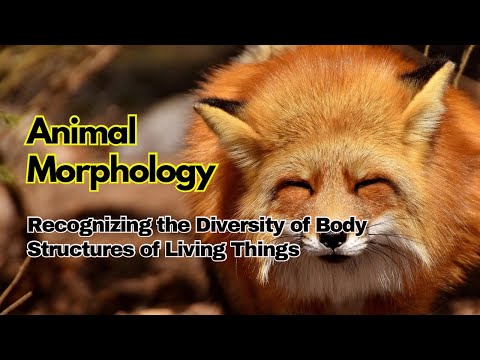
So, you know how some animals have really wild shapes? Like, there’s this fish called the anglerfish that has a glowing lure on its head. Seriously, it’s like nature’s version of a nightlight!
Well, that got me thinking about how body structures just blow my mind, right? I mean, think of all the ways creatures adapt and evolve. It’s like they’re all in this weird game of “who can be the most unique?”
From the spiny armor of a porcupine to the stretchy necks of giraffes, each design has its own story to tell. Sure, we might not be running around with scales or fur. But don’t you think there’s something fascinating in how our bodies work too?
So let’s get into this whole world of morphological body structures and see what makes them so cool!
Exploring Morphological Structures: Key Examples in Biological Science
Sure, let’s talk about morphological structures! This is one of those topics that might sound super technical and all, but it’s really just about how living things are built. So, you know how your body has different parts like arms, legs, and a head? Well, in biology, scientists look at the shapes and sizes of these parts—called **morphological structures**—to understand how different species function and evolve.
Morphology, simply put, is the study of form. It gives us clues about how an organism lives. For example, think about the long neck of a giraffe. That elongated neck is a classic example of morphology at work! It’s built that way mainly to reach high trees for food. Pretty clever adaptation if you ask me!
Now let’s look at some key examples of these structures:
But it gets more interesting than just identifying structures. Morphology also tells us a lot about an animal’s lifestyle or habitat. For example, a cactus has thickened stems instead of leaves to store water in its arid environment—pretty smart design!
Insects are another group where morphology shines brightly. With their different types of mouthparts adapted for sucking or chewing based on their diets, studying these features opens up a whole fascinating chapter in biological science. Ever seen a butterfly up close? Those delicate wings have scales that reflect light beautifully—it’s stunning but also serves particular functions like camouflage!
Honestly, when I was little, I remember staring at ants in my backyard for hours. Just watching them carry food back to their colony fascinated me! Their mandibles were crucial for this task—they’re strong enough to lift much larger items compared to their body size.
So anyway, everything ties back to understanding life on Earth better through morphology. It reveals adaptations that allow organisms to survive their environments—a true testament to evolution in action.
To sum it up: Morphological structures are not just about what things look like; they give us deep insights into how life evolves and thrives out there in nature’s grand playbook! Isn’t that something?
Exploring the Intersection of Mobility and Innovation: Insights from ‘America On Wheels’ in the Science of Transportation
So, let’s talk about the intersection of mobility and innovation, especially as it relates to the fascinating world of transportation. You know, “America On Wheels” is a great place to start if you’re curious about how we move around and the technology behind it all.
The science of transportation is like this huge puzzle. It involves engineering, design, and even a bit of psychology. At its core, it’s about figuring out how people and goods get from point A to point B efficiently. Think about it—every time you hop on a bus or drive your car, a ton of decisions have already been made by engineers, designers, and urban planners to make that ride smooth.
Now, what’s particularly interesting is how we can look at this through the lens of morphological body structures. Whoa—doesn’t that sound all fancy? Basically, it’s about how different shapes and designs affect functionality. Like when you see an aerodynamic car designed to cut through the air with little resistance. That shape isn’t just for looks; it helps save fuel!
- Aerodynamics: Cars like Priuses or Teslas have these sleek bodies that minimize drag. It’s kind of like how birds are shaped for flying efficiently.
- Material Science: The use of lightweight materials—like carbon fiber or aluminum—improves vehicle performance without sacrificing safety.
- User Experience: Think about how designs consider what you want. Ever noticed how some cars are built with high seating for better visibility? That’s intentional!
- Sustainability: Innovation doesn’t just stop at performance; it’s also about eco-friendliness. Electric vehicles are constantly evolving in terms of their design and materials used.
A cool example would be the transition from traditional gas guzzlers to electric vehicles (EVs). These innovations reflect not only advancements in mobility but also our growing awareness about environmental impacts. So imagine a world where your car isn’t just moving you from one place to another but also doing its part in reducing emissions! That’s pretty mind-blowing.
You know what really gets me? The intricate relationship between transportation technologies and societal needs. Take public transit systems; they’re evolving with technology too! We now have apps that track buses in real-time so you don’t have to freeze on a corner wondering if your ride is coming or not.
I mean this whole thing dives deep into how we think about cities! With innovation driving new modes of transport—like e-scooters or bike-sharing programs—it sparks discussions on how urban areas can adapt better for people instead of just cars.
This journey into the world of mobility paints such an exciting picture because there’s still so much room for growth! Each step brings us closer not just to improved transport but also towards smarter cities where tech and human needs harmoniously coexist. So yeah, next time you’re waiting for your bus or zipping down the highway, think about all those people working behind the scenes shaping your journey!
Exploring the Marvels of Morphological Body Structures: A Comprehensive PDF Guide
Morphological body structures are, like, super cool! Basically, they’re all about how the shape and form of living things—plants and animals alike—are designed to fit their environments. You know, it’s like Mother Nature has a blueprint for every creature. Let’s take a closer look at this fascinating topic.
Morphology is the branch of biology that studies the form and structure of organisms. So when you hear “morphological structures,” think about how different life forms adapt to survive. For instance, a cactus has thick, waxy skin and spines instead of leaves because it lives in a dry desert. This helps it retain water. Pretty smart if you ask me!
Now, let’s break down some key structures:
- Body Plans: You’ve got radial symmetry in jellyfish and bilateral symmetry in humans. Radial symmetry means being organized around a central axis; it’s live watching starfish or sea anemones move gracefully in the water.
- Appendages: These are limbs or parts that stick out from the main body. Think about how birds have wings that allow them to fly, while some lizards have lost their legs entirely and glide on air.
- Tissues and Organs: All living creatures are made up of tissues that form organs. From hearts pumping blood to roots sucking up nutrients from soil—everything is interconnected.
- Skeletal Structures: The skeleton provides support to an organism’s body. Look at birds; their lightweight bones help them soar high without dragging them down.
Every structure plays a role in survival—like those colorful poison dart frogs whose bright colors warn predators: “Hey! Don’t eat me!” It’s all about communicating survival strategies.
You might be thinking: “Why does this matter?” Well, understanding morphology helps scientists figure out evolutionary relationships among species. Like piecing together a big puzzle of life on Earth!
But here’s where it gets wild: some species can even change their morphology based on environmental conditions! For example, certain fish can change their body shape depending on whether they’re feeling threatened or not—it’s like having your own superhero costume at your fingertips.
If you get into plants too, consider how rapid changes due to climate shifts could impact their structure over time—you know? It really gives us insight into resilience.
So next time you see an animal or plant, take a moment to appreciate its morphological quirks! Each structure tells its own story of adaptation and survival—a reminder that nature is always innovating, just like us humans do every day. Isn’t that something?
You know, morphology is one of those science words that sounds super fancy but is really all about the shapes and forms of living things. Think about the tiny critters you might see on a walk in the park, or even the big ones like elephants. Each one is shaped in a way that helps it survive in its own special environment. It’s like nature’s little game of design.
I remember going to the beach as a kid and collecting shells. I was always so amazed at how different each one was! Some were smooth, others rough; some were spiral-shaped while others looked like little fan dancers. Those shells weren’t just pretty decorations; their shapes helped them adapt to life in the ocean. Like, a spiral shell can help with buoyancy, while flatter ones might let creatures burrow better into sand. Pretty cool when you think about it, right?
When we look closer at morphology, we’re really looking at how these body structures play a role in survival and adaptation. For instance, have you ever noticed how birds have different beak shapes? A hummingbird has a long, slender beak perfect for sipping nectar from flowers, while an eagle has a hook-shaped beak designed for tearing into flesh. It’s not just random—it’s all about what they need to eat and how they live.
And it’s not just animals! Plants also have their own unique structures that help them thrive. From cacti with their thick skins to hold water, to sunflowers that turn towards the sun—they’re all about using form to respond to their environment.
But look, it’s more than just survival; it’s an ongoing story of evolution and change over time. Every tiny tweak in shape or structure tells us something about where an organism has been and where it’s headed next. So next time you’re out and about—maybe even strolling along that beach—take a moment to appreciate those shapes around you. They’re not only beautiful; they’re like little narratives of life itself!