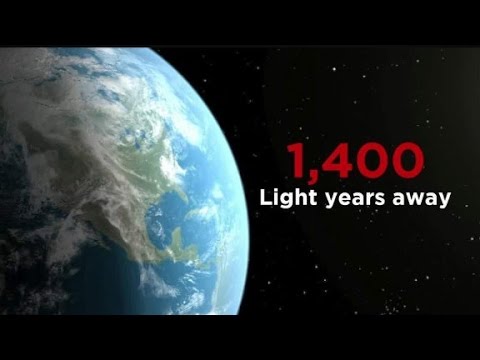
So, picture this: You’re sipping your coffee, scrolling through the news, and BAM! You see that NASA has found an Earth-like planet. Like, how cool is that?
I mean, it’s kinda wild to think there’s a whole other world out there that could feel a bit like home. Seriously—imagine alien neighbors waving at you while you weed your garden!
But wait, there’s more—this planet isn’t just floating around aimlessly. It’s in the habitable zone! That fancy term means it could have liquid water. And we all know what that means: possible life!
So grab your favorite snack and let’s break down what this discovery really means for us Earthlings. Spoiler alert: it could change everything!
Exploring Earth’s Position in the Habitable Zone: Implications for Life and Climate
So, Earth is like this cozy little spot in space, right? It’s perfectly placed in what scientists call the **”habitable zone.”** This zone is that sweet spot around a star where conditions are just right for liquid water, which is super important for life. Too close to the star, and you get a scorched planet, but too far away, and everything freezes.
Now, they recently found an Earth-like planet hanging out in its own habitable zone. That’s exciting stuff! It makes you think about how many other worlds could be similar to ours. But before we jump into daydreaming about alien neighbors, let’s break down what this all means for us here on Earth.
First off, the habitable zone isn’t just about being at the right distance from a star. It’s also about other factors like atmosphere and magnetic fields. Earth has both of those sorted out nicely! Our atmosphere protects us from harsh solar radiation while keeping temperatures comfy enough for life. On the other hand, too thick or too thin an atmosphere can ruin your day—a runaway greenhouse effect or losing all your heat like Mars did.
Now imagine if one of those planets they found has similar conditions to ours—like it has water and maybe even an atmosphere! That could totally change our understanding of life in the universe.
Another thing to think about is how Earth’s position in this habitable zone affects our climate. Being in the sweet spot means we get just enough sunlight to support ecosystems without frying everything up. If we were a bit closer to the Sun, our oceans would boil away! On the contrary, moving farther out would mean being stuck in ice age conditions most likely.
But here comes a twist: climate change isn’t just about being at the right distance anymore. Human actions have thrown a wrench into things with pollution and greenhouse gases messing with our natural balance. So it’s kind of wild how we have this perfect setup in space yet still face major challenges because of what we do here.
You see? The implications are huge—not only does Earth’s position help us understand potential life elsewhere but also forces us to think critically about our future climate and how precious these habitable zones are. After all, wouldn’t it be great to keep living on this beautiful blue planet rather than stressing over finding another one?
So yeah, while we keep searching for other Earth-like worlds out there—it’s pretty clear that taking good care of our own home should be job number one!
Exploring the Evidence: Has Planet 9 Been Debunked in Modern Astronomy?
So, there’s this big question floating around in the astronomy community: Is Planet 9 real, or has it been debunked? To get to the bottom of it, let’s break it down a bit.
First off, what is Planet 9? Basically, it’s this hypothetical planet that’s supposed to be lurking way out in the far reaches of our solar system. Astronomers think it could explain some funky gravitational effects observed on other distant celestial objects. But since no one has actually seen it yet, its existence is kinda like chasing shadows.
Several studies and observations have come out over the years. Some of them suggest that there is a large, undiscovered object influencing the orbits of trans-Neptunian objects (TNOs), while others have looked for signs and come up empty-handed. So you see where this debate gets pretty heated!
Here are a few key points to consider about Planet 9:
- Ongoing Search: Many astronomers are still actively looking for signs of Planet 9 using telescopes and new technology. Just because we haven’t found it yet doesn’t mean it’s not there.
- Gravity Games: Some scientists argue that the strange behaviors seen in TNOs might be explained by other factors—like clusters of smaller objects rather than one massive planet.
- Data Discrepancies: When different teams look at the same data, they sometimes come to totally different conclusions about whether or not there’s enough evidence to support Planet 9’s existence.
- The Habitable Zone Debate: While NASA recently identified an Earth-like planet in a habitable zone around another star, it’s crucial to note that searching for planets like these doesn’t directly affect whether our own solar system has more undiscovered members.
It’s kind of like when you lose something important at home. You check under cushions, around furniture—everywhere! Sometimes you find nothing for ages; then all of a sudden, bam! There it is right where you least expect it.
That’s how many astronomers feel about Planet 9 right now. They’re on the lookout for clues and hoping that one day soon they’ll spot something that makes all those theories click into place.
In summary, while some skeptics argue against its existence based on current observations and data interpretation can be tricky; others are determined not to give up hope. The search continues! So keep your eyes on those night skies and maybe—just maybe—Planet 9 will reveal itself after all.
NASA Discovers Earth-Like Exoplanet: A Breakthrough in Astrobiology and Planetary Science
Hey, so there’s been some super exciting news coming from NASA lately. They’ve just identified an Earth-like exoplanet in what’s called the **habitable zone**. This discovery is like a big deal for astrobiology and planetary science. Let’s break this down, shall we?
First up, what’s an **exoplanet**? Well, it’s just a planet that orbits a star outside our solar system. And when we say “Earth-like,” we mean it has some similar traits to our home sweet home. You know, things like size, composition, and maybe even the right temperatures to support liquid water.
Now, the **habitable zone** is key here. It’s that perfect spot around a star where conditions might be just right for life as we know it—like not too hot and not too cold. Think of it as nature’s Goldilocks zone!
So what makes this new discovery special?
- Size: This planet is about the same size as Earth!
- Temperature: It sits in the habitable zone of its star, which means it could have liquid water.
- Composition: Scientists think it might have a rocky surface (which is good news—we love rocks!).
Just imagine for a sec: if there is water there, who knows what kind of life could exist? That thought gives me chills! When I was a kid, I remember staring up at the stars and wondering if anyone was out there. Now these discoveries make that seem way more possible.
And here’s where it gets even cooler: finding Earth-like planets helps us learn about how planets form and evolve over time. It gives scientists clues about our own planet’s history and what conditions might lead to life elsewhere in the universe.
The tech used to find these bad boys is mind-blowing too! Telescopes like the **James Webb Space Telescope** are designed to take detailed images of distant planets. They can analyze their atmospheres for things like oxygen or methane—molecules often linked with life.
In short? This fresh discovery isn’t just eye candy for scientists; it’s pushing us closer to understanding the universe’s biggest questions: Where else could life thrive? Are we alone out here?
It’s such an exciting time in space exploration! So who knows what we’ll discover next? Just hang tight because cosmic adventures await us all!
So, like, have you heard the news? NASA just spotted this Earth-like planet chillin’ in what they call the “habitable zone.” It’s seriously exciting! Picture this: a place out there that might just have conditions a bit like ours. Space is full of mysteries, and when we stumble upon something that could potentially host life, it gets my mind racing.
I remember as a kid lying in the grass at night, looking up at stars and imagining what it would be like to live on another planet. I mean, just think about it! What if there are people—or beings—out there looking up at their own sky and thinking the same thoughts? It’s kind of mind-blowing.
This new planet’s not just some random point of light in the sky. It’s located in its star’s habitable zone, which means it’s at a distance where temperatures could allow liquid water to exist. Water is like the holy grail for life as we know it. So if this planet has water, who knows what kind of life forms might be swimming around or crawling on land?
But here’s the catch: we’re still talking about a gazillion miles away. Even if there’s something amazing out there, getting to it would take ages. It makes me wonder—if we ever do find extraterrestrial life, how would we even communicate? Would they speak our language? Or have their own version of TikTok?
On top of that, there’s all this talk about whether or not we should try to reach out to other planets or civilizations. There are both sides to consider—like sending messages could be dangerous or super cool. But for now, let’s just appreciate that NASA keeps giving us these glimpses into the cosmos.
At the end of the day, finding an Earth-like planet reminds us how vast and wondrous our universe is. It’s a reminder that we’re all here together, spinning on this tiny blue dot amidst an enormous expanse. And who knows? Maybe one day we’ll take that leap into space exploration and visit one of these places ourselves!