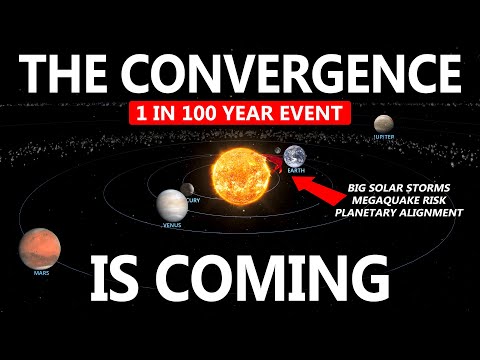
You ever look up at the sky and wonder what’s really going on up there? I mean, besides birds flying around or planes zooming by? Well, the sun—yeah, that big ball of fire—has been busy lately.
NASA just dropped some new findings about solar activity that are totally mind-blowing. Seriously, it’s like the sun has its own kind of drama going on.
You know how when you’ve got a friend who can’t stop talking about their latest obsession? That’s pretty much the sun right now. With all this activity happening, it’s not just fascinating; it actually impacts us here on Earth.
So grab a snack and settle in because we’re diving into what NASA found out about our solar buddy and how it affects your day-to-day life!
Evaluating the Potential Intensity of the 2025 Solar Flare: Scientific Insights and Implications
So, let’s chat about solar flares, shall we? You know, those massive bursts of energy from the sun that can really shake things up for us here on Earth. NASA’s been keeping a close eye on solar activity, and their latest findings hint at some serious stuff expected around 2025. Yeah, that’s not far off!
First off, what exactly is a solar flare? Picture this: it’s like a giant explosion on the sun’s surface. These flares happen when magnetic energy that’s built up in the sun’s atmosphere is suddenly released. When they release this energy, boom! It sends out radiation across the spectrum – not just visible light but also X-rays and gamma rays.
Now, **evaluating the potential intensity of a solar flare** is no walk in the park. Scientists use several tools to gauge how strong these flares might be. They typically measure things like:
- Magnetic Field Strength: Stronger magnetic fields often lead to more intense flares.
- Sunspot Count: More sunspots can indicate higher chances of significant solar activity.
- Historical Data: Analyzing past flares helps predict future ones; patterns sometimes emerge.
But hang on! It’s not just about knowing they might happen; we have to consider what those flares can do to our technology and daily lives.
If you remember back in 1989 when a massive flare knocked out power in Quebec for nine hours? That was wild! Solar storms can mess with satellites, GPS systems, communication networks… you name it. So when NASA talks about potential impacts of a strong flare in 2025, they’re pointing out that we need to be prepared.
Think about it this way: if a gigantic flare does hit us while we’re using our phones or relying on satellite navigation? It could create chaos – from minor disruptions to major issues like blackouts or communication failures.
Another thing worth mentioning is how scientists track these events using satellites specifically designed for monitoring solar emissions. These tools can observe changes well before they reach us here on Earth.
And let’s not forget space weather predictions are getting better every year! With more accurate data, engineers and scientists are being proactive rather than reactive.
To wrap it up: while we’re eager about what 2025 might bring regarding solar activity, staying informed and prepared is key. Who knows? Maybe those advancements will let us blink twice at Mother Nature’s fireworks instead of scrambling to find a flashlight when the lights go out!
Remember—keeping an eye on our friendly neighborhood star isn’t just cool; it’s crucial for all of us living under its rays!
Exploring the Discovery of a Diamond Planet: What NASA’s Findings Mean for Planetary Science
So, let’s talk about this fascinating diamond planet thing. Imagine a planet, like a giant jewel floating in space, made mostly of carbon and oxygen. NASA’s findings suggest that there might be planets out there that are just like that—like the diamond planet named 55 Cancri e. Who wouldn’t want to visit a place where the ground sparkles, right?
Now, this discovery isn’t just about the shiny stuff. First off, it gives us clues about how different types of planets can form. You know how some planets are rocky like Earth, while others are gaseous like Jupiter? Well, 55 Cancri e is something else entirely! It’s twice the size of Earth and eight times its mass, made up of this super exotic material.
Here are some key points:
- Composition: The scientists determined that the planet’s surface is likely covered with graphite and diamond rather than water or dirt.
- Climate: It could have extreme temperatures—around 2,000 degrees Fahrenheit (about 1,100 degrees Celsius). That’s hot enough to melt things!
- Distance: This planet is not even in our solar system; it’s about 40 light-years away in the constellation Cancer. Just a casual stroll through space!
The implications of finding such a unique planet are massive for planetary science. Firstly, it helps researchers understand more about how diverse planetary compositions can be across different systems. When we look at exoplanets (those outside our solar system), it raises questions about what kinds of planets we haven’t discovered yet.
On top of that, studying these unique worlds can give us insights into what makes a planet habitable or uninhabitable. Like—if diamonds are formed under extreme pressure and heat on this planet, could other forms of life adapt to similarly harsh conditions on other planets? Or does diamond-ness count as life-friendly? Not sure I’d want to hang out there!
Also, with NASA unveiling recent findings on solar activity affecting our own solar system, understanding these outer worlds becomes more crucial than ever. We learn so much from comparing them to what we know here at home.
In heartwarming terms—think back to when you found out your childhood dream was real; maybe you wanted to be an astronaut or discover new places! There’s something magical about knowing there are places out there beyond our wildest dreams!
So yeah… diamond planets! They not only dazzle us but also challenge our viewpoints on what exists beyond our little blue dot in the cosmos. And who knows? Maybe one day we’ll stumble across another sparkling gem in the universe waiting for humanity’s footprints—or perhaps our astronauts’ next big adventure!
You know, when I first heard about NASA’s latest findings on solar activity, it hit me in a pretty personal way. I mean, we often think of space as this distant realm and solar flares as just cool visuals in science documentaries. But the truth is, what happens up there can really mess with our lives down here on Earth.
So, NASA’s been keeping an eye on the Sun, which is basically like watching a giant fireball dance through our sky. The Sun goes through cycles of activity—sometimes it’s all calm and mellow, and other times it erupts with solar flares and coronal mass ejections. It’s kind of like your buddy who has chill days but then gets super pumped during a concert. You follow me?
These explosions can send bursts of charged particles hurtling toward Earth at crazy speeds. Like, we’re talking about particles that could disrupt our satellites or even mess with power grids! Remember that massive blackout in the early 2000s? Partially due to a solar storm! Crazy how interconnected everything is!
What I find mind-blowing is how these discoveries constantly change our understanding of space weather. It’s not just about looking up at the stars anymore; scientists are trying to figure out how to predict these solar events so we can prepare for the impact they may have on technology and even communication systems. Think about that next time you enjoy your favorite show streaming online!
Now, I can’t help but feel a mix of awe and unease when thinking about this stuff. On one hand, it’s amazing to see how much we’ve learned; on the other hand, it makes me realize just how fragile our tech-dependent lives can be because of something as awesome—and wild!—as the Sun.
So yeah, NASA’s work isn’t just for nerdy scientists anymore; it’s more like they’re sending us little messages from 93 million miles away saying: “Stay alert! We’re watching over you.” It gives this whole cosmic dance an extra layer of meaning when you realize you’re part of something so vast and unpredictable… Pretty humbling if you ask me!