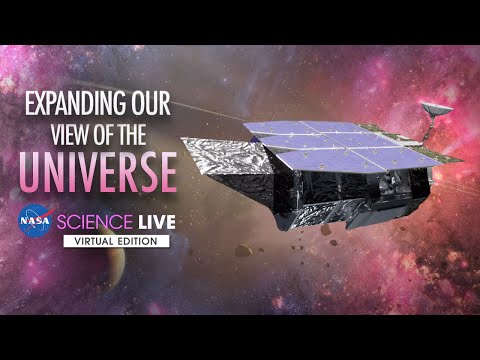
So, picture this: You’re lying on your back in the grass, staring up at the stars, completely mesmerized. Like, there’s a whole universe up there, and it’s kind of mind-blowing when you stop to think about it, right?
Well, fast forward to 2021, and NASA decided to throw down the cosmic gauntlet with a brand new telescope. Seriously! This thing is built to take our view of the universe to a whole new level.
Can you imagine what kinds of secrets it might uncover? Galaxies we’ve never seen? New worlds that could have life? It’s like opening a big window into space and saying, “Hey there! What else do ya got?” I mean, who wouldn’t be curious about that?
So let’s dive into what this fancy piece of tech is all about and how it’s expanding our cosmic horizons!
James Webb Space Telescope: New Insights into the Expanding Universe
So, let’s talk about the James Webb Space Telescope, or JWST for short. It’s not just any space telescope; it’s like a super-powered time machine that lets us peek into the past of our universe. Launched at the end of 2021, it’s already been sending back some jaw-dropping images and data that are reshaping what we know about the cosmos.
Basically, the whole idea behind JWST is to look at things we couldn’t see well before, especially in those far corners of space where light can be really tricky. The telescope uses infrared light to catch images and spectra from galaxies that are billions of years old. This means it’s looking back in time—like a cosmic window into when those galaxies were forming.
One cool thing about JWST is that its mirror is gigantic—about 6.5 meters across! That’s more than two and a half times bigger than the Hubble’s mirror. This larger size means it can collect more light, making it way better at spotting faint objects far away in the universe. You’re probably wondering why this matters? Well, it helps scientists study things like distant star formation and even discover planets around other stars, which is super exciting!
So, let’s break down what we’ve learned so far thanks to this amazing piece of tech:
- The Expansion of the Universe: With data from JWST, scientists are refining their understanding of how fast our universe is expanding. There’s been some debate over this rate (known as the Hubble Constant), but new measurements could provide more clarity.
- Early Galaxies: One of JWST’s standout achievements is spotting some of the earliest galaxies formed after the Big Bang. These ancient galaxies give clues about how structures in our universe evolved over time.
- Exoplanets: The telescope has also focused on exoplanet atmospheres, searching for signs like water vapor or other chemicals that could hint at life or habitability.
I remember reading this story about how astronomers were totally blown away when they got their first images back. They looked at one snapshot and couldn’t believe their eyes—it showed thousands of galaxies swirling together like an intricate dance across deep space! It was a surreal moment because it wasn’t just pretty; it helped them realize that there’s still so much to explore.
Another point worth mentioning is how JWST carries incredible technology to block out bright stars so it can focus on much fainter objects around them. I mean, think about trying to find a candle flickering in your friend’s backyard while standing next to a massive spotlight—that’s kind of what it has to do!
And you know what? This new data isn’t just enhancing our understanding; it’s sparking fresh questions too! Like, why do certain galaxies look so different from one another? What about dark matter? Or dark energy? Yeah, you guessed it—we’re still trying to wrap our heads around those aspects!
So all in all, with every image sent back home by JWST, we’re piecing together a bigger puzzle about not only our universe but also where we fit within this vast cosmic tapestry. Exciting stuff for sure!
Exploring the James Webb Space Telescope: Unique Features and Launch Significance in 2021 Astronomy
The James Webb Space Telescope (JWST) is like the cool new kid on the astronomy block. Launched in December 2021, it brought with it a whole bunch of innovative features that make it super unique. So, what’s all the fuss about? Let me break it down for you.
First off, JWST’s size is mind-blowing. It’s much larger than its predecessor, the Hubble Space Telescope. While Hubble’s mirror is about 2.4 meters across, JWST boasts a whopping 6.5-meter mirror! This massive size allows it to gather more light and see fainter objects far away in space.
Another standout feature? Its ability to observe infrared light! You see, many celestial objects are too cool or too distant to emit visible light. Instead, they give off infrared radiation. The JWST is designed precisely for that—it can capture those infrared wavelengths beautifully. This capability opens up new doors for spotting everything from distant galaxies to new planets orbiting stars.
But wait, there’s more! The telescope has a special sunshield. It’s kind of like an umbrella, but way cooler—literally! The five-layered sunshield keeps the telescope super cold by blocking heat from the Sun and Earth. This helps maintain optimal conditions for its sensitive instruments.
Now, let’s talk about where it’s hanging out. JWST orbits at a spot called L2. This place is about 1.5 million kilometers away from Earth—far enough to avoid our planet’s pesky interference but close enough to communicate easily with mission control back home.
You’re probably wondering why this launch was such a big deal for astronomy in 2021? Well, JWST isn’t just another pretty piece of technology; it represents a giant leap in our quest to understand the universe. When Hubble launched back in the day, it revolutionized our views of space and deepened our understanding of cosmic phenomena. Similarly, scientists expect JWST will answer some fundamental questions we’ve been asking for ages.
For example,
I remember when I first heard about JWST’s launch; I felt a mix of excitement and awe thinking about what incredible discoveries lay ahead. Like whether we might spot signs of life on other planets or peer back into time to see early cosmic events unfold before our eyes!
So yeah, all these unique features combined make JWST truly one-of-a-kind and super significant for astronomy today! It opens up avenues we could only dream of exploring before—and who knows what mind-blowing discoveries are coming our way? Exciting times ahead!
NASA’s 2021 Telescope Launch: Exploring the Cosmos with the James Webb Space Telescope
The launch of the James Webb Space Telescope in December 2021 was like sending a superpowered pair of binoculars into space. Seriously! This telescope is designed to look deeper into the universe than we’ve ever been able to before.
What’s really cool about Webb is its ability to detect light from the most distant galaxies. It can see light that has taken billions of years to reach us. Imagine seeing a galaxy as it was when dinosaurs were roaming Earth, or even before that! That’s what this telescope brings to the table.
The telescope works by using infrared technology, which allows it to observe objects that are too faint or too cool for regular telescopes. So, instead of just capturing visible light, it can pick up heat emitted by stars and planets. This means we’ll be able to study things like the formation of stars and planetary systems in ways we’ve never seen before.
Now, let’s get into some specifics about what makes Webb tick. For one,
That’s about three times bigger than Hubble’s mirror. Bigger mirrors mean more light can be collected and sharper images can be formed.
Another thing? The telescope has instruments designed for different scientific tasks. There are cameras for taking stunning pictures and spectrometers that break down light into its colors—kind of like how a prism works—so scientists can learn about an object’s composition and temperature.
So once it was launched, Webb had quite an adventure getting itself into position. It traveled almost a million miles to a spot called L2, where it could maintain a stable orbit with minimal fuel use. Think of L2 as a sweet parking spot where Webb can keep its eyes on the skies without too much hassle.
Now here comes another exciting part: the science! With Webb up there doing its thing, scientists are hoping to answer some big questions like: How do stars form? What do exoplanets (planets outside our solar system) look like? And was there ever life on other planets?
Plus, there’s something heartwarming about this whole mission—it represents so many people working together across different countries and fields. Scientists, engineers, and dreamers have poured their hearts into making this happen because they’re curious about what else is out there beyond our little planet.
So yeah, the launch of the James Webb Space Telescope isn’t just another space project; it’s a giant leap in our quest for understanding the universe around us. It opens up new chapters in astronomy and teaches us more than we could ever imagine about where we fit in this cosmic puzzle. And isn’t that something worth exploring?
So, you know how sometimes you just look up at the night sky and feel tiny? Like, there’s this vast universe out there, and we’re just here on our little blue marble. Well, that’s where the whole telescope thing comes in, especially what NASA did with their telescope in 2021.
This telescope isn’t just some fancy gadget; it’s like a super eye that helps us peek into the deep cosmos. Imagine standing on a beach staring out at the ocean. You can see the waves and hear them crashing, but then someone hands you a pair of binoculars. Suddenly, you start to see fish jumping and maybe even a dolphin! That’s kind of what NASA’s telescope does for space. It takes our understanding from squinting in uncertainty to really seeing details and wonders we’ve never noticed before.
When I think about all those galaxies twinkling far away, it warms my heart. Just last summer, I was lying on my roof with friends during one of those meteor showers. We were making wishes—probably selfish ones like “I wish for pizza!”—but in that moment of gazing upward, I couldn’t help but feel connected to something larger than life itself. And then NASA drops news about this telescope and boom! It feels like an invitation to explore even further.
This expansion of our view isn’t just about spotting new stars or planets; it’s about fostering curiosity in ourselves. Like a kid peeking into their parent’s drawer full of old toys—they may discover something forgotten yet magical! In the same way, we’re discovering new worlds among all this cosmic clutter.
It’s also pretty inspiring thinking about all the brilliant minds behind this project; those who worked late nights fueled by coffee (and maybe some pizza too). Their dedication is a reminder of what humans can achieve when we decide that looking up is worth it.
So yeah, if you haven’t taken a moment to stop scrolling through your phone and look up at those shiny dots in the sky—or read about NASA’s latest findings—you might be missing out on some serious cosmic wonder. Remember that every time we expand our view of the universe, we’re also expanding our sense of connection to it—and each other. And that? Well, that’s pretty special if you ask me!