You know, the other day I was chatting with a friend about the universe. And I think we both agreed on one thing: space is just mind-blowing!
I mean, there are so many galaxies out there that you could fit our whole planet into a tiny speck of dust in comparison. Crazy, right?
Then there’s the Hubble Space Telescope. It’s like this superhero of the cosmos! Just think about it—floating in space, taking pictures of faraway stars and colorful nebulae. It’s like having the ultimate telescope right in your backyard, but way cooler!
What Hubble has shown us over the years is beyond anything you might expect. Each image tells a story about where we came from and where we might be going.
Get ready to be amazed by some of these stunning snapshots of our universe!
Exploring the Universe: Stunning Hubble Space Telescope Images Captured by NASA
The Hubble Space Telescope has been like a cosmic photographer since it launched in 1990. With its powerful cameras, it captures the **most stunning images** of the universe. Seriously, these photos can take your breath away! Just think about gazing at deep space and seeing distant galaxies all lit up, nebulae swirling in colors you didn’t know existed, and stars being born—all thanks to this incredible telescope.
One cool thing about Hubble is that it orbits Earth at around 340 miles up. Being outside our atmosphere means it gets a clearer view of space than telescopes on the ground. You might have heard of things like light pollution or atmospheric distortion messing up pictures. Well, Hubble totally dodges that problem!
Now, let’s talk about some of the **breathtaking images** Hubble has captured:
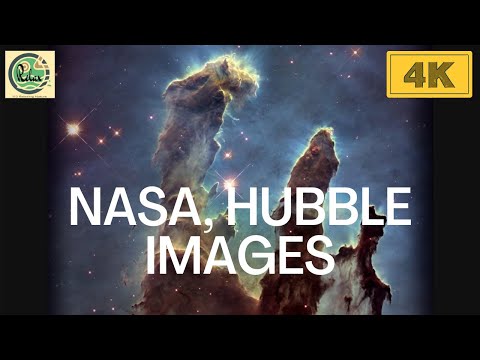
- The Pillars of Creation: This image shows massive columns of gas and dust where stars are born in the Eagle Nebula. It’s like a cosmic nursery!
- The Whirlpool Galaxy: This spiral galaxy looks so beautiful with its arms stretching out into space. It gives us clues about how galaxies like our Milky Way evolve over time.
- The Orion Nebula: One of the brightest nebulae visible to the naked eye, it’s teeming with star formation and complex molecular structures.
I remember seeing one of these images for the first time—feeling so small yet connected to something so vast and beautiful! It’s wild to think that those glowing dots are actual stars billions of light-years away.
But how does Hubble actually take these amazing pictures? Well, it uses a mix of infrared, visible, and ultraviolet light to see objects that we can’t detect with our eyes alone. By capturing light at different wavelengths, scientists can study various elements in space—like gases and dust clouds—and learn more about their properties.
And let’s not forget how important these images are for science! They help astronomers answer questions about black holes, galaxy formation, and even dark matter. You know, those mysterious things that make up most of the universe but are invisible to us? The data collected from Hubble continues to shed light (literally) on these profound mysteries.
In short, Hubble’s contribution goes far beyond just pretty pictures; it helps us understand our place in this vast universe in ways we never thought possible! When you see those stunning images, you’re not just looking at pretty colors; you’re witnessing history being made right before your eyes. Isn’t that amazing?
Explore Stunning Hubble Space Telescope Images of the Universe – Free Access to Cosmic Wonders
The Hubble Space Telescope is like a cosmic photographer, capturing stunning images of the universe that leave us in awe. Based up in space since 1990, it’s been snapping pics of stars, galaxies, and other celestial wonders. You know, it’s pretty wild to think how far technology has come.
What makes these photos so special? Well, the thing is, Hubble doesn’t just take ordinary pictures. It uses advanced instruments to observe light across different wavelengths. So, you get not only visible light images but also infrared and ultraviolet ones. Each type reveals something different about the universe around us.
When you look at a Hubble image, take a moment to appreciate its detail. Here are some cool things you might see when exploring its archive:
- Galaxies: Hubble has captured breathtaking views of galaxies like the whirlpool-shaped M51 or the beautiful Andromeda Galaxy. They really show how vast and complex our universe is.
- Nebulae: These colorful clouds of gas and dust are like cosmic nursery homes for new stars. The Orion Nebula is one standout that looks downright magical!
- Exoplanets: Some Hubble photos have even helped scientists gather information about planets outside our solar system. How cool is that? It’s like peeking into someone else’s backyard!
- Supernovae: These explosive events signal the death of stars and can outshine entire galaxies for a brief moment! Hubble captures their beauty as they light up the cosmos.
One time I was sitting with some friends who aren’t really into space stuff—like at all. But then, we saw a photo from Hubble showing the Pillars of Creation in the Eagle Nebula. Their jaws dropped! I mean, those towering structures of gas lit up by young stars look straight out of some sci-fi movie.
Accessing these images is super easy too! You can check out NASA’s website where they provide tons of stunning photos—many with explanations to help you get what you’re looking at. Seriously, just browsing through them can feel like a journey through space without ever leaving your couch.
So whenever you’re feeling overwhelmed by life or just want to be reminded how big everything is out there, take a peek at those cosmic wonders from Hubble. They remind us there’s so much beauty beyond our little planet—all waiting for us to explore!
Stunning HD Images from the Hubble Telescope: A Journey Through the Cosmos
The Hubble Space Telescope has been our cosmic eye since it blasted off in 1990. Seriously, it’s hard to overstate how much this telescope has changed our understanding of the universe. You know those stunning photos you see of galaxies, nebulae, and planets? Yep, that’s all thanks to Hubble.
First off, let’s talk about the **images**. They’re not just pretty pictures; they’re scientific gold. Each image tells a story about the cosmos. For instance, the famous Pillars of Creation shows massive gas columns in the Eagle Nebula where new stars are born. It’s like witnessing a cosmic nursery right from your living room!
You might wonder how Hubble captures these incredible shots. Well, it orbits Earth at about 340 miles up—above all that atmospheric distortion that blurs our view from the ground. Instead of using film like old-school cameras, it employs advanced digital sensors to gather light from distant stars and galaxies.
The colors we see in the images can be pretty mind-blowing too! Often, they’re processed to highlight different wavelengths of light. So when you see vibrant reds and blues, what you’re looking at is data translated into color for us to understand better—basically turning invisible signals into something we can actually see.
Another cool aspect is how Hubble helps us understand things like black holes and dark matter. For instance, by observing gravitational lensing—where light bends around massive objects—scientists have been able to map out dark matter, which is a huge part of our universe that we can’t even see!
And let’s not forget about its longevity! Most space missions have a set lifespan but Hubble keeps on trucking through technical upgrades and repairs thanks to astronauts who’ve visited it multiple times for servicing missions. Those improvements mean sharper images and better scientific results!
A favorite moment for many folks was when Hubble captured the Ultra Deep Field image in 2004. This tiny patch of sky revealed thousands of galaxies—some billions of light-years away—in just one long exposure! It was humbling and awe-inspiring to think that each speck of light could be a galaxy filled with stars.
In short, Hubble’s stunning HD images aren’t just beautiful—they’re crucial for expanding our cosmic knowledge and helping us piece together the grand tapestry of our universe. With every click of its shutter, it’s reminding us how vast and mysterious space really is—and it’s pulling back the curtain on celestial wonders we never knew existed before!
The Hubble Space Telescope is like that friend who always manages to capture the best moments at a party, you know? It’s up there in space, floating around our planet, snapping breathtaking pictures of galaxies, nebulae, and everything else in the universe. I mean, seriously, those images are nothing short of stunning!
I remember the first time I saw one of Hubble’s photos. It was an image of the Pillars of Creation—these towering columns of gas and dust in the Eagle Nebula. The colors were just mind-blowing! Beautiful blues and soft pinks gave it this ethereal quality. I thought to myself, “Wow, this is art!” But it’s more than just pretty pictures; they tell stories about how stars form and how galaxies evolve. There’s a certain magic in that.
What’s really wild is that Hubble has been orbiting Earth for over 30 years now! Can you imagine? It started its journey way back in 1990. Since then, it’s provided us with insights that have literally changed our understanding of the cosmos. Like when it helped confirm that the universe is expanding at an accelerating rate! So not only do we get these cool visuals, but we also get a peek into some pretty deep science.
And let’s not forget about the team behind it all—scientists and engineers who work tirelessly to keep this space telescope running smoothly. It’s kind of like they’re nurturing a pet that lives thousands of miles away. They fix issues remotely and tweak its instruments to ensure it keeps delivering those jaw-dropping photographs.
It makes me feel small yet connected at the same time when I look at those images from Hubble. You realize how vast the universe is but also how we’re all part of this huge cosmic story. I mean, come on. Every time Hubble sends back data or an image, it’s like opening a window to another world!
So yeah, the next time someone shares one of those stunning Hubble images with you—whether it’s on social media or just among friends—take a moment to appreciate not only its beauty but also what it represents: our endless curiosity about what lies beyond our little blue planet. Each picture tells us something new about where we fit in all this vastness… And that’s pretty amazing if you ask me!