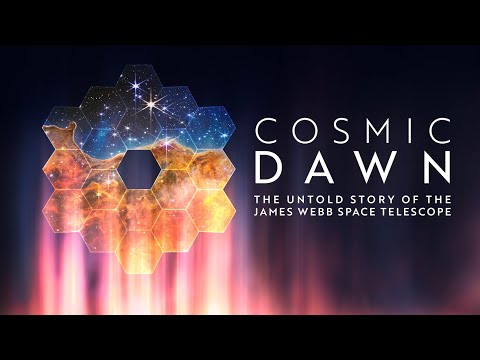
So, the other day I was watching this documentary about space—you know, the kind that makes you feel super small yet incredibly amazed? And guess what? They mentioned a brand new telescope from NASA that’s about to change everything we thought we knew about the universe. Seriously!
I mean, who would’ve thought we’d get new cosmic eyes? It’s like upgrading from old-school binoculars to the ultimate high-definition TV. Not kidding! This telescope is going to let us peek further into space than ever before.
Just think about it for a sec. We’ve been peering into the dark for so long, yet there’s so much still hiding out there. It’s exciting and a bit terrifying at the same time! With every new discovery, it feels like we’re piecing together this grand puzzle of our existence.
So, buckle up! Let’s chat about what this fancy new gadget is up to and how it might just blow our minds!
Exploring the James Webb Telescope’s Insights on the Expanding Universe: Confirmation and Implications in Modern Cosmology
So, let’s talk about the James Webb Space Telescope (JWST) and its mind-blowing insights into our ever-expanding universe. This amazing telescope is like a time machine, peering deep into space and showing us what the cosmos looked like billions of years ago.
The thing is, JWST has helped to confirm something we’ve been buzzing about in cosmology: the universe is indeed expanding. You might be wondering how we know this. Well, scientists measure this expansion by looking at light from distant galaxies. The farther away a galaxy is, the faster it seems to be moving away from us. This phenomenon is often explained using something called redshift.
Redshift happens when light waves stretch out as an object moves away. Imagine a siren on a police car; as it drives past you, the sound changes pitch due to the distance traveling. In the same way, light from galaxies shifts towards the red end of the spectrum as they move away from us.
- Key Insight: JWST measures redshift more accurately than any previous telescope.
- This accuracy helps: Confirm that the speed of expansion isn’t just fast but actually accelerating!
This acceleration is tied to a mysterious force called dark energy, which makes up about 68% of our universe! It’s pretty wild when you think about it—most of what makes up our universe is something we can’t see or measure directly.
A cool emotional moment for many scientists was when JWST captured images of ancient galaxies that formed just a few hundred million years after the Big Bang. Just imagine those early stars lighting up in an otherwise dark universe! It’s like witnessing fireworks after years of waiting for them to start.
The implications are huge! Understanding how fast the universe expands can reshape theories about its fate—will it keep expanding forever? Or will gravity eventually take over? These questions spark so much curiosity and excitement among astronomers.
- Another important point: The data may lead to new physics!
- In essence: We might have to rethink some fundamental ideas we’ve held dear in cosmology for decades!
You know? The way JWST gazes back in time gives scientists clues on how galaxies formed and evolved over billions of years. Each observation pulls back another layer on how we understand our cosmic neighborhood.
You really start to grasp just how interconnected everything is in science—like pieces of a big puzzle coming together. So every little finding from JWST can lead us down new paths for exploration.
The implications of all this are monumental not only for astrophysics but also for philosophy and even art! Think about it: understanding our place in this vast cosmos can change how we view ourselves and each other here on Earth.
This journey through space with JWST isn’t just about discovering facts; it’s also about inspiring wonder and sparking conversations that reach beyond science into culture and society itself. Exciting stuff, right?
The Future of the James Webb Space Telescope: Implications of Fuel Depletion in Astronomical Research
The James Webb Space Telescope (JWST) is nothing short of a marvel in the world of astronomy. Launched in December 2021, it’s been peering deep into the universe, helping us explore cosmic phenomena like never before. But, you know, all good things come with some strings attached. One major concern? Its fuel depletion.
So let’s break it down. The JWST was designed to operate for about 10 years. It’s got some serious capabilities, but its fuel is essential for maintaining its orbit and keeping those massive mirrors pointed accurately at distant galaxies. Seriously, even tiny adjustments require fuel! Without it, the telescope’s vision would start to get blurry over time.
Now, you might be wondering how this affects astronomical research. Once the fuel runs low—it’s estimated that will happen after a decade or so—JWST’s ability to make precise observations will diminish. Imagine trying to take a clear picture while someone keeps shaking your camera! That’s sort of what we’re talking about here.
But there’s also some good news! As JWST gazes into the cosmos and gathers data, it’s sending back a treasure trove of insights about our universe. The implications are huge; we’re gaining knowledge about star formation, exoplanets, and even the early moments after the Big Bang! Each observation adds another piece to our cosmic puzzle.
Also worth noting is that by the time JWST starts running low on fuel, we might have new technologies or telescopes ready to step up and continue where JWST leaves off. It’s like passing the baton in a relay race; one team finishes strong while another gets ready to take on challenges.
While we’ll feel sad when JWST can’t operate at full capacity anymore, there is potential for future missions that could build on its legacy. What happens next? Well, ongoing advancements in space technology mean we could see even more powerful telescopes with better capabilities—and they might not need as much fuel!
In short:
- Fuel is crucial for JWST’s operations.
- Running out means losing precision in observations.
- Currently providing invaluable insights into our universe.
- Future tech might replace or complement JWST’s findings.
So as we enjoy all that JWST has to offer now, let’s keep an eye on what comes next in our quest to understand the vastness around us!
Exploring the Cosmos: How the James Webb Space Telescope is Revolutionizing Our Understanding of the Universe
- Meet the James Webb Space Telescope. This incredible piece of technology is like a time machine for astronomy. Launched in December 2021, it’s designed to see further and clearer than ever before.
- What makes it special? Well, Webb isn’t just your average telescope. While Hubble used ultraviolet and visible light, Webb focuses on infrared light. This means it can capture images from much farther away and through dust clouds that often hide celestial objects.
- Pushing boundaries. Imagine peering back to the very first galaxies that formed after the Big Bang. That’s what Webb aims to do! When you look at its images, you’re not just seeing pretty colors—you’re looking at how the universe evolved over billions of years.
- A new perspective on exoplanets. Did you ever think about planets outside our solar system? Webb is poised to examine their atmospheres, searching for signs of water vapor and other things that might suggest they could support life. That’s pretty mind-blowing!
- The heartwarming story: Just before it launched, engineers were anxiously checking every detail. Some even joked about sending a “good luck” note along with it! You could feel the excitement underlining their hard work, knowing they were sending humanity’s dreams into space.
- Capturing cosmic events. From supernovae to colliding galaxies, Webb will help astronomers study these spectacular happenings in real time. Think about witnessing a star being born or dying—it’s like watching nature’s most dramatic performances unfold!
- The challenge of distance. As Webb looks deep into space, it has to deal with the vast distances involved. Light from some of these distant objects takes millions or even billions of years to reach us! So when we look at those images, we’re seeing them as they were eons ago—not how they are now.
- Paving the way for future discoveries. The findings from Webb are guiding future missions too! Scientists are already planning more telescopes inspired by its technology. It’s like passing the baton in a relay race; each new project builds on what we learn today.
- The joy of collaboration. Engineers, scientists, and researchers worldwide worked together tirelessly on this project. That sense of teamwork is inspiring! It shows how bringing diverse minds together can lead to breakthroughs that push humanity forward into uncharted territory.
So basically, the James Webb Space Telescope is changing how we understand our universe—not just by looking at stars but by unraveling mysteries hidden within them. It’s an exciting time for science and astronomy!
So, there’s this buzz about NASA’s new telescope, and honestly, it’s kinda exciting when you think about it. It’s like getting a new set of glasses that lets you see the stars clearer or something. Seriously! This telescope is supposed to help us peek into the universe in ways we’ve never seen before.
The other day, I was outside with my niece, and we were just lying on the grass looking up at the night sky. It hit me: how tiny we are in this vast cosmos. I mean, there are billions of galaxies out there! And here we are on this little blue dot, wondering if we’re alone or if there’s something more out there. That feeling of curiosity—it’s what drives scientists to keep looking deeper into space.
With this new telescope, we’re talking about getting images of far-off galaxies that formed just after the Big Bang! Can you believe that? It’s like opening a time capsule from millions of years ago. The idea that we could actually see light that has traveled across the universe gives me chills. It’s as if each twinkling star carries with it stories from ages past.
But it’s not just about staring at pretty pictures. This telescope might actually help us answer some serious questions—like what makes up dark matter and dark energy. You know how scientists say most of the universe is made up of stuff we can’t even see? Well, this tech might change all that.
And who knows? Maybe someday we’ll find signs of life on another planet or learn something that completely flips our understanding upside down. Just thinking about what lies beyond our horizon is thrilling!
So yeah, while I’m just an ordinary person standing under the stars, knowing there are big discoveries ahead makes it feel like I’m part of something way larger than myself. And honestly? That’s pretty amazing!