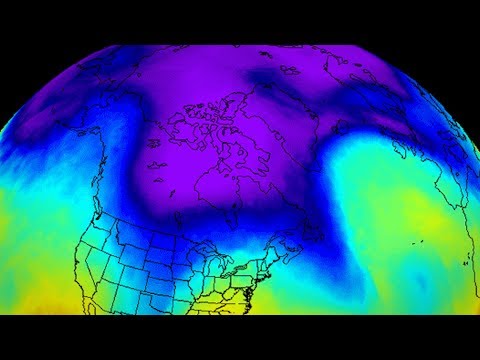
You know what’s wild? When your weather app says it’s -20 degrees outside, but you’re still feeling like it’s a heatwave compared to the polar vortex swirling around. Yeah, that frigid phenomenon can really take your breath away—literally!
So, what’s the deal with these extreme cold snaps and climate change? Like, is there really a connection? People seem to be buzzing about it lately. It’s kinda fascinating how something that feels so cold can actually link back to global warming somehow.
But hang on! Before you dive deep into the science, let me just say: weather can be confusing, right? One minute it’s steamy summer vibes, and the next you’re bundled up like an Eskimo. Let me break it down for you in a way that makes sense. We’re talking polar vortexes and climate shifts—two things that sound super complex but are totally worth understanding! So grab a cozy drink, and let’s chat about what all this means for our planet.
Exploring the Connection Between the Polar Vortex and Climate Change: A Scientific Investigation
So, let’s chat about the polar vortex and how it connects to climate change. You know, the polar vortex is that swirling mass of cold air that hangs out over the Arctic. When it’s stable, all that chilly air stays up north. But sometimes, it gets a little wobbly and can send frigid blasts southward. Ever noticed those super cold winters? Yeah, that can be the polar vortex acting up!
Now, about **climate change**. It’s like this big puzzle where different pieces affect each other. As our planet warms—thanks to greenhouse gases like carbon dioxide—the Arctic ice melts and affects weather patterns. Got it? Well, when ice melts, it changes how air moves around.
You might be asking, “How does this relate to the polar vortex?” Well, glad you asked! Here’s what’s been happening:
- Weakened Polar Vortex: Some studies suggest that a warming Arctic can weaken the polar vortex.
- Sudden Stratospheric Warming (SSW): Sometimes the stratosphere heats up suddenly and disrupts the vortex.
- More Extreme Weather: A weaker polar vortex means more chances for cold air to spill into places like North America or Europe.
So picture this: one winter, you’re bundled up because temperatures drop way below what’s usual for your area. That could be because of a disrupted polar vortex sending arctic air your way!
Now don’t think it’s all doom and gloom! While some scientists make these connections between climate change and polar weather patterns, others say it’s not so straightforward. Climate is complex; many factors play into how the weather behaves.
It’s kind of like trying to predict what will happen in a football game based on just one player—you follow me? The atmosphere has its own ways of playing out.
It’s also essential to remember that while we see colder winters tied to a wobbly polar vortex sometimes happening more often due to climate change, that doesn’t mean **every** cold snap is because of it! Weather is still influenced by natural variability too.
In short, there’s an intriguing link between the **polar vortex** and **climate change**, but it’s not as simple as “climate change causes cold.” Think of it as part of a bigger conversation about how our world is changing—both naturally and through human actions.
So next time you feel chilled by an unexpected winter blast or read about your local weather forecast going haywire, just remember there might be more behind it than just a dip in temperatures! Stay curious!
Examining the Impact of Climate Change on Global Temperature Trends: Is It Really Getting Colder?
Sure! Let’s have a chat about climate change and its impact on global temperature trends. And yeah, I get it, it can feel a bit overwhelming sometimes. So, let’s break it down.
First off, you might have heard people say things like, “Oh, it’s getting colder!” when weird winter storms hit. You know the kind that makes you want to hibernate until spring? But here’s the deal: **climate change is a complex beast**, and while we do experience cold snaps, the overall trend is *definitely* towards warming.
A few key points to consider:
Let me share something personal here: last winter was wild for me! One day I’m bundled up in layers; the next day it’s like summer out there! It blew my mind how fast everything could flip.
So why does this happen? Basically, rising global temperatures mess with atmospheric patterns. You know those jet streams? The ones that guide weather around the globe? Well, they’re getting wobbly because of uneven heating due to climate change. This leads to those sudden arctic blasts we sometimes get.
But wait…what if I told you that even while some places get colder during certain seasons or weather events; globally speaking, we’re still on an upward trend? That feels confusing sometimes but think of it like this: **the ocean is absorbing most of that heat** from climate change! It’s like stuffing all your junk under your bed—you can’t see it but trust me; it’s there!
You might also wonder about what scientists predict for the future. If we don’t seriously cut down on greenhouse gas emissions—yeah those pesky things from cars and factories—our planet could warm up by another 1-4 degrees Celsius by the end of this century! Crazy right?
In summary: Even if you feel Newfoundland freezing at one moment or an early summer bloom in February (seriously!), remember that these are just pieces of a bigger puzzle made blurry by climate change’s impacts on temperatures globally—and let me tell ya, that puzzle is definitely leaning toward higher temps in general!
That’s what makes understanding these trends so important: they shape our world in more ways than one—from agriculture to wildlife and even our health. Just keeps you thinking about how interconnected everything really is.
Exploring the Polar Vortex: Impacts of Climate Change from a Scientific Perspective
Okay, so let’s talk about this thing called the polar vortex. It sounds a bit like some kind of superhero villain, but trust me, it’s way more about weather than comics. Basically, the polar vortex is a large area of low pressure and cold air surrounding the Earth’s poles. You know how you feel that biting cold when winter rolls around? That’s partly because of this guy.
Here’s the deal: the polar vortex is stronger during the winter months. When things are running smoothly, this cold air stays put over the Arctic region. But when it gets disrupted—like seriously shaken up—it can lead to some wild weather events elsewhere. Imagine it like a snow globe: shake it up, and everything inside gets swirled around.
- Extreme Weather Events: When the polar vortex weakens or shifts, it can push cold air further south than usual. This might mean some regions experience *crazy* cold temperatures or intense winter storms. Remember those winters where it seemed colder than ever? A weak polar vortex might be to blame.
- Heatwaves: Oddly enough, when that cold air moves south, sometimes warmer air rushes in from the south to take its place. This can lead to heatwaves in places that usually don’t get too hot in winter.
- Impacts on Ecosystems: Fluctuating temperatures can disrupt ecosystems too. Plants and animals have their own schedules for blooming or hibernating based on temperature cues—if those cues get messed up, nature finds itself a bit confused!
You might be wondering how all this connects to climate change. Well, here’s where it gets interesting: as our planet warms up due to climate change, scientists have noticed changes in how frequently and intensely these polar vortices behave.
The warming Arctic could lead to weaker polar vortices because ice loss affects wind patterns and pressure systems. See? It all links together! If these patterns become more unpredictable due to climate change, we could see our seasonal weather become even less reliable.
A personal anecdote here: I remember one winter not long ago when my city got hit by an unexpected snowstorm in March—a pure slap-in-the-face surprise! Friends were scrambling for shovels they hadn’t touched for months. It was amusing at first until I thought about what caused such an out-of-order event—you guessed it—the polar vortex was acting all wonky that year!
This back-and-forth between warmth and cold isn’t just annoying; it’s got real consequences for us humans too—like affecting agriculture and energy consumption due to unexpected heating needs or cooling demands.
The science community is continuously studying these patterns as part of understanding climate change better. What we know now is just scratching the surface! So next time you hear about the polar vortex or extreme weather events that seem out of nowhere…remember there are lots of factors at play—including our own impact on this planet we call home.
The bottom line? The interplay between **the polar vortex** and **climate change** is super important—and super complicated! But being aware helps us all stay prepared for whatever Mother Nature throws our way next!
You know, the weather can be pretty bizarre sometimes, right? Like, one minute, we’re chilling on the beach, and the next, we’re wrapped in layers of blankets because it’s freezing outside. That’s partly where the polar vortex comes in. It’s this massive area of low pressure and cold air that’s usually hanging out around the Arctic. But every so often, it decides to take a little field trip down south.
Thinking about last winter reminds me of a time when I was visiting family up north. We were ready for some snowball fights and hot cocoa by the fireplace. Instead, we got hit by this crazy cold snap because the polar vortex shifted. The temperature dipped dramatically overnight! Even our snowman looked like he was ready to pack his bags and head for sunny skies. It was wild how just a change in air patterns transformed everything.
So what’s up with this polar vortex anyway? Well, normally, it keeps the super cold air trapped near the poles. But with climate change messing with our atmosphere—like warming temperatures affecting wind patterns—it can wobble out of control. Sometimes it even splits into two or more sections, letting that icy air spill into places that usually don’t see such frigid temps.
Now, you might wonder how that connects with climate change and what it really means for us day-to-day. The thing is that even small shifts in these massive systems can influence not just temperatures but also precipitation patterns and storm tracks around the globe. So while one year you might be freezing your butt off because of a polar vortex dip, another year you can have warm spells in areas that used to get heavy snow.
It’s like seeing climate change unfold live before your eyes—a constant reminder that these big-picture scientific ideas have real impacts on our lives. And honestly? It makes me think about how interconnected everything is—from the Arctic to my living room couch on a chilly evening.
So yeah, as fascinating as it all sounds—from crazy cold snaps to understanding how our planet works—there’s something deeper there about being aware of our changing world. And who knows? Maybe those lightweight jackets will become your best friend in February someday! You feeling me?