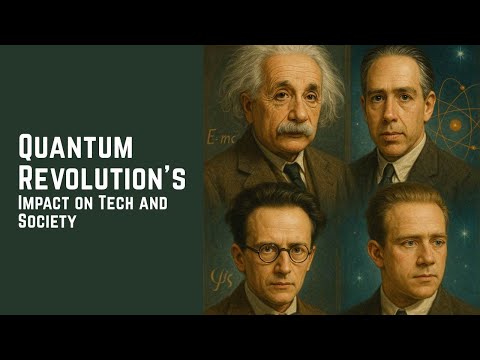
You ever hear someone say they’re “quantum” about something? It’s like, what does that even mean? I mean, just last week, my buddy tried to impress a girl by saying he was “quantum” in his approach to life. Spoiler alert: it didn’t work.
But here’s the thing—quantum stuff is actually pretty cool. It’s totally reshaping how we think about everything around us. Particles behaving like waves, uncertainty everywhere, and reality feeling more like a sci-fi movie than plain old science? Yeah, that’s the quantum world for you.
So why should you care? Well, this isn’t just science fiction fodder. It’s influencing tech, medicine, and even how we understand existence itself! Are you scratching your head yet? Stick with me; we’re about to take a wild ride into the strange and mind-bending universe of quantum mechanics!
Exploring Joe Dispenza’s Insights on Quantum Physics and Its Implications for Science
Joe Dispenza has definitely stirred up some conversations around quantum physics. You might have seen him talking about how our thoughts and consciousness can influence our reality. It’s a pretty interesting take, but let’s break it down in a way that’s easy to digest.
So, the thing is, Dispenza pulls from ideas in quantum physics to explain how we can shape our lives through intention and mindfulness. But before we dig too deep, what’s quantum physics all about? Well, it’s the branch of physics that deals with the really tiny stuff—like atoms and particles. This world is totally different from what we see every day. For one thing, particles can exist in multiple states at once until they’re observed. Crazy, right?
Dispenza often ties this concept to consciousness, suggesting that by changing our thoughts or beliefs, we might alter our reality. But here’s where it gets tricky: while he uses scientific jargon to back up his claims, there’s still a lot of debate within the scientific community about blending quantum mechanics with consciousness.
Here’s a quick rundown of some key points Dispenza often emphasizes:
- The Observer Effect: This principle suggests that just by observing something at a quantum level, you change its state. It’s like a particle is all chill until you peek at it, and then it suddenly has a specific location.
- Coherence: Dispenza talks about achieving coherence between your heart and brain waves. Basically, it’s about syncing your emotions and thoughts which he believes helps in manifesting your desires.
- The Power of Intention: He argues that focusing on positive intentions can create changes not just internally but also externally – like attracting good vibes into your life.
Now let me share something personal. I recall chatting with my friend who was really into meditation and self-improvement; she would always bring up how intentional thinking changed her mood and life perspective dramatically. Hearing her stories made me curious if there could be something deeper happening behind the scenes—like some quantum connection!
But here’s where this all gets tricky again: many scientists argue that while it’s inspiring to think positively and set goals—how does that really connect with quantum physics? The evidence supporting such ideas isn’t solid enough yet to bridge those worlds fully.
In conclusion (not that I’m wrapping this up just yet!), while Joe Dispenza’s insights seem to blend spirituality with science in an appealing way—it’s good to remember there are still tons of questions out there about how these concepts truly mesh together. So you see? It’s fascinating stuff but full of complexities! What do you think? Can our minds really change reality or are we just wishing on shooting stars?
Exploring the Intersection of Quantum Entanglement and Biblical Perspectives: A Scientific Inquiry
Well, let’s talk about this intriguing mix of quantum entanglement and Biblical perspectives. It’s such a wild intersection, right? On one hand, you’ve got the mind-bending world of quantum physics, and on the other, the ancient texts that have shaped so much of our thinking about existence. It’s like trying to connect dots that seem worlds apart but actually might hint at some deeper truths.
Quantum Entanglement is one of those concepts that sounds like it’s straight out of a sci-fi movie. Basically, it’s when two particles become linked in such a way that the state of one instantly influences the state of the other, no matter how far apart they are. Imagine having two dice: if you roll one and it lands on six, the other one will also show six at the same time—even if it’s miles away! This phenomenon really challenges our classic notions of space and time.
Now onto Biblical Perspectives. These texts often focus on themes like interconnectedness and unity within creation. For example, in John 17:21, we read about how believers should be one just as Jesus and God are one. This idea of unity resonates with quantum entanglement in a way—like everything is somehow intertwined in ways we may not completely grasp yet.
So what does this mean? Well, it opens up space for thought about how science and spirituality can interact. The thing is, both realms seem to weave a narrative suggesting we’re all linked together—be it through particles or through divine creation. It raises questions about our understanding of reality itself!
Here are some key points connecting these ideas:
One emotional anecdote comes to mind. I remember talking to my grandma about faith and science over tea one afternoon. She said something so simple yet profound: “Everything is part of God’s design.” Now that I’ve dived deeper into concepts like quantum entanglement, her words echo in my head louder than ever! It feels like she was hinting at the same connections that scientists are exploring today.
To wrap this up (without making it sound too tidy), exploring the intersection of quantum entanglement with Biblical ideas isn’t just an academic exercise; it feels deeply personal too. Whether you’re into science or spirituality—or both—you can find something meaningful here. So basically, your reality might be tied together by invisible threads we’re just starting to understand! How cool is that?
Understanding the Quantum Revolution: Implications and Transformations in Modern Science
The quantum revolution is honestly one of the most exciting things happening in science today. It’s like looking at reality with a new pair of glasses that shows us a whole different world. So, what’s all the fuss about? Let’s break it down.
First off, quantum mechanics is this branch of physics that deals with the tiniest particles in the universe—think atoms and subatomic particles. Unlike what you might expect from classical physics, these tiny building blocks behave in pretty weird ways. They can exist in multiple states at once, which is called superposition. Imagine flipping a coin that doesn’t land; it just spins and remains both heads and tails simultaneously until you check it.
Now, this brings us to something really mind-bending: entanglement. When particles become entangled, their states are linked no matter how far apart they are. Change one particle, and its partner reacts instantly—even if they’re light-years apart! This concept challenges our traditional ideas about space and time, making us rethink how connected everything really is.
So why does this matter? Well, it has huge implications for technology. For instance:
- Quantum Computing: These computers can solve problems way faster than our traditional ones by using superposition to perform many calculations at once.
- Quantum Cryptography: This makes data encryption super secure because any attempt to intercept the data will change its state and alert you.
- Sensors: Quantum sensors can measure things with incredible precision—think detecting gravitational waves or tiny magnetic fields.
You see, these advances could revolutionize everything from how we communicate to how we do research. Picture yourself having a smartphone that’s not just fast but also totally secure against hacking!
Remember when I mentioned reality? The quantum revolution shakes up our understanding of it as well. With classical physics, we had a pretty solid view of cause and effect. But quantum mechanics introduces uncertainty; sometimes we can’t predict outcomes exactly but rather calculate probabilities instead. This opens up debates on concepts like free will versus determinism.
But let’s get real for a second—this stuff isn’t easy to wrap your head around! I remember sitting in my first quantum physics class feeling like my brain was doing backflips. It felt like trying to catch smoke with my bare hands! What I learned was: while it’s complex and often counterintuitive, diving into these ideas helps shape our modern scientific theories, leading us toward new discoveries.
The implications stretch even further into fields like biology and chemistry! For example, understanding photosynthesis at a quantum level might unlock more efficient energy sources in the future.
At the end of the day, the quantum revolution isn’t just about science—it’s about expanding our perspective on what reality can be. The journey’s only just beginning and who knows what astonishing breakthroughs are right around the corner?
So yeah, there you have it! Quantum mechanics is not just some nerdy theory hidden away in labs; it’s reshaping how we think about everything from technology to reality itself!
So, the whole idea of quantum mechanics is kinda mind-bending, you know? It’s like stepping into a completely different universe where the rules we thought we knew just don’t apply. I mean, picture this: particles that can be in two places at once or somehow affect each other instantly, even if they’re far apart. It’s beyond what most folks consider reality.
I remember sitting in a lecture back in college, feeling slightly overwhelmed. The professor was talking about superposition and entanglement, and my brain was doing somersaults trying to catch up. It was during a break when a friend turned to me and said with wide eyes, “Isn’t it just incredible that we’re learning about stuff that shapes our understanding of everything?” That hit me hard! Here we were, small specks on this massive planet, grappling with concepts that challenge how we see the universe.
And honestly, thinking about quantum revolution makes me feel both excited and intimidated. It’s like finding out there’s a secret club that only some people get to be in—where the members understand realities that can change based on observation alone! You’ve got particles acting like waves and vice versa. Sometimes they even exist in a “cloud” until you check them out.
What’s really cool is how this whole quantum thing is starting to weave its way into tech too. You might have heard of quantum computers—their potential to solve problems our regular computers can’t handle is basically like having a superpower! But it also raises questions: How do we fit these new ideas into our everyday understanding of life?
It feels important to keep pondering these things. The more I think about it, the more it seems like this quantum revolution isn’t just changing physics; it’s reshaping philosophy too. What does it even mean to be “real” if reality can change based on what you measure? It gets you thinking about how much more there could be beyond what our senses can tell us.
Anyway, while I still don’t claim to get all the intricacies of quantum mechanics—I mean who does?—it sure makes me curious about what else is out there waiting for us to discover!