So, picture this: you’re at a party, right? Everyone’s dancing, chatting, and you notice something wild. The folks dancing like they just went to a Zumba class are also the ones with the best pizza slice in hand. Coincidence?
Well, that little observation is kinda like what Spearman Rank Correlation is all about. It’s this nifty statistical tool that helps us figure out if two things are related—like your dance moves and pizza choices.
It sounds fancy, but trust me, it’s way simpler than it sounds! You can use it to make sense of all sorts of stuff in science and life. So let’s break it down together!
Understanding Spearman Correlation: Its Applications and Importance in Scientific Research
Spearman correlation is one of those concepts that seems a bit intimidating at first, but really, it’s just a cool way to see how two things are related, especially when the data isn’t perfect. Unlike some methods that need your data to be all neat and tidy, Spearman is pretty flexible and can handle messy data well.
So, what exactly is it? Well, the Spearman rank correlation coefficient (often just called “Spearman’s rho”) measures how well the relationship between two variables can be described using a monotonic function. In simpler terms, it checks if as one thing goes up or down, the other tends to do the same—without having to stick to a straight line.
Why is this important? Think about research in fields like psychology or ecology. You often have scores from surveys or measurements from nature that don’t fit perfectly into nice patterns. By using Spearman correlation, you can still analyze relationships effectively without stressing over those imperfections.
When you apply this in research, you might gather a bunch of data points—like people’s stress levels versus their hours of sleep. If you find a strong Spearman correlation here, it suggests that generally speaking, less sleep is linked with higher stress levels!
Now let’s break down some key aspects:
- Ranked Data: Instead of raw scores like 1–100, you rank them first. So if you had five students with scores of 90, 80, 70, 60 and 50 on a test: they get ranks 1 through 5 based on their scores.
- No Assumptions: It doesn’t assume things like normal distribution which makes it handy for real-world data.
- No Relationship Type Required: It checks for any type of monotonic relationship—not just linear ones—so it covers more ground.
To throw in an example again: imagine you’re analyzing how different amounts of fertilizer affect plant growth. Some plants might grow quickly with low fertilizer while others might do better with high amounts—all that matters is whether there’s an observable trend in growth corresponding with fertilizer levels.
In scientific research where understanding these kinds of relationships could impact health guidelines or environmental policies? That’s where Spearman really shines!
Oh! And remember when I said it works well even when your data has outliers? That’s another advantage; those pesky outliers won’t mess up your results as much as they would for other types of correlations.
So basically, if you’re diving into research that involves ranked or non-normally distributed data and are curious about relationships between variables—the Spearman correlation is your friend! It’s got practical applications across tons of fields and can help make sense outta complex scenarios out there in the wild world of science.
Exploring Real-Life Applications of Pearson Correlation in Scientific Research
So, you’ve probably heard about correlation, right? It’s a way for scientists to figure out how two things relate to each other. There are a couple of popular methods, like Pearson and Spearman correlations. Let’s take a closer look at how the Pearson correlation plays out in real-life research and how it kinda contrasts with Spearman’s method.
The Pearson correlation coefficient measures the strength and direction of the linear relationship between two continuous variables. It gives you a number between -1 and 1. If it’s close to 1 or -1, that means there’s a strong relationship; if it’s around 0, well, not so much.
Imagine this: a study on how long students study before an exam affects their marks. A researcher might collect data on study hours and exam scores from hundreds of students. Now, using the Pearson method, you’d look at whether those who studied more scored higher.
In this case:
Now let’s chat about Spearman rank correlation for a sec! While Pearson deals with actual values, Spearman looks at ranks or positions. So if you’re analyzing data that isn’t normally distributed or has outliers (like one student who studied 100 hours!), Spearman can save the day.
Let’s say you’re looking at something like people’s height and their running speeds in a race but there are some really tall runners who don’t perform well due to other factors like training conditions. Here’s where Spearman shines because it focuses on rank rather than raw values.
What happens is that researchers often use both methods for different purposes—Pearson when they want to analyze straight-up numbers and Spearman when they suspect that some values might mess up the picture.
In practical terms, think about health research. A doctor might want to see if there’s any relationship between exercise and cholesterol levels in patients. Using Pearson could show that as exercise increases (in hours per week), cholesterol levels tend to decrease—maybe you find r = -0.8! But if there are some extreme cases (like super athletes with surprisingly high cholesterol), switching gears and using Spearman could give more reliable insight by focusing on those ranks instead of hard numbers.
A few real-world applications include:
- **Social Sciences**: Correlating income levels with educational attainment can help understand societal trends.
- **Environmental Studies**: Analyzing temperature changes against species migration patterns could offer insight into climate impact.
- **Medical Research**: Linking medication dosage with patient recovery rates helps refine treatment plans.
So yeah, both Pearson and Spearman correlations have their place in scientific research—it’s all about picking the right tool for your data situation! You see? By understanding these relationships better, researchers can make informed decisions that lead to innovation and improvements across various fields!
Comprehensive Guide to Spearman Rank Correlation Tables in Scientific Research
So, Spearman Rank Correlation is one of those statistical methods that seems a bit intimidating at first, but hang on! It’s really not as bad as it looks. Basically, it’s a way to find out if there’s a relationship between two variables when the data isn’t normally distributed. Sounds fancy, right? But what it means is simple: you’re checking how one thing affects another without worrying too much about the exact values.
What’s This Table About?
The Spearman Rank Correlation Table helps you understand how strong the relationship is between two ranked variables. You’ll usually see a value called “rho” (ρ) which tells you how closely related these variables are. If ρ equals +1 or -1, then it’s a perfect correlation—yeah, like best friends who finish each other’s sentences! But if it’s around 0, well that suggests no correlation at all.
How Do You Get This Rho?
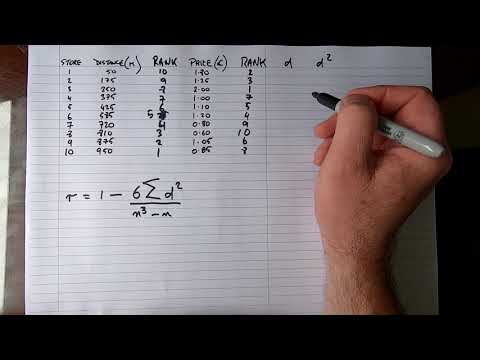
First off, you rank your data points from lowest to highest. Then you calculate the difference between the ranks for each pair of data points. You square this difference and sum it all up. After that, there’s some math magic involved—don’t worry too much about this part unless you’re really into numbers! In the end, you’ll get your rho value.
Here are some key points to remember:
- No Normality Required: Unlike other types of correlation like Pearson’s r, Spearman doesn’t need your data to be normally distributed.
- Ranked Data: You can use ordinal data (like ratings) and even convert continuous data into ranks.
- Diverse Applications: It can be applied in various fields such as psychology and ecology!
A Little Example for Clarity:
Imagine you’re studying students’ grades and their stress levels during exams—two things we all get stressed about at some point! Let’s say you’ve got scores from both categories. After ranking these scores and calculating rho, let’s say you find it to be -0.85. Wow! That suggests an inverse relationship: as stress goes up, grades go down—a thing most of us can relate to!
In scientific research environments, this table isn’t just a math tool; it gives researchers insights into patterns they might not initially see in their raw data. It’s sort of like finding hidden treasures in a messy attic!
So yeah, whether you’re studying behaviors or looking at environmental impacts, Spearman Rank Correlation Tables are invaluable tools for dissecting relationships in your research findings without getting lost in complicated calculations or perfect distributions. Just remember: ranking is everything here!
If you’re keen on diving deeper into specific applications or methods for calculating this stuff—or fun stories from researchers using these techniques—just keep digging around in that vast ocean of statistical knowledge!
So, let’s chat about Spearman Rank Correlation! It’s one of those statistical methods that sounds super fancy but really isn’t all that intimidating once you get the hang of it. Picture this: you’re trying to find out if there’s a relationship between two things, like how many hours a group of friends studies and their scores on a test. You know, something pretty relatable.
Here’s the scoop: Spearman’s method looks at the ranks of data rather than the actual values themselves. It’s like if you were in a race where instead of counting your finish time, you just cared about whether someone finished before or after another person. Simple, right? That makes it handy when your data doesn’t follow a straight-up linear pattern or when it’s not normally distributed, which can happen way more than you might think.
Let me give you a little example from my own life. Back in college, I had this study group that was all over the place in terms of study habits. Some pals would cram all night long before an exam—like seriously, pulling all-nighters—and others would study consistently throughout the semester. I started wondering: did our different studying styles impact our grades? So, I jotted down everyone’s study hours and their corresponding grades.
If I applied Spearman Rank Correlation here, I’d first rank each friend by their study hours and then do the same for their grades. Finally, plugging those ranks into the formula gives me a correlation coefficient between -1 and 1. If my pals who studied more generally scored higher (or lower), I’d wind up with a solid understanding of how those factors relate to each other.
It’s all about determining whether there’s some kind of connection without getting bogged down by intricate details or assumptions about the data’s distribution—pretty neat! When you think about it, Spearman Rank is kind of like that friend who knows how to simplify things in life when it feels complicated.
So yeah, next time you’re tossing around ideas on relationships between different sets of data—whether it’s grades or something wild like chocolate consumption and happiness—remember this tool! It can seriously help clarify things without turning into an overwhelming mess of numbers and stats. Science can be both fun and practical!