So, picture this: you’re at a party, and everyone’s debating how many times they can successfully toss a ping pong ball into a cup. Some are nailing it like total pros, while others… well, let’s just say the cups aren’t getting much love.
That right there is basically the real-life version of what we call a binomial distribution—successes and failures in repeated trials. Kinda neat, huh?
Now, if you’ve ever tried to figure out how consistent those tosses are, you might’ve stumbled upon standard deviation. And trust me, it’s not as scary as it sounds! It’s just a way to see how spread out those successes (or failures) are from the average.
Let’s break it down together and make it fun! Who knew math could have this much flair?
Calculating Standard Deviation for Binary Data: A Scientific Approach to Statistical Analysis
Alright, let’s chat about calculating standard deviation for binary data. You know, when you’re dealing with stuff like “yes or no” answers, like in a survey where people either pick “yes” or “no”? Well, that’s binary data. It’s simple but can get pretty interesting when you dive into the numbers.
So, the idea here is that we often want to understand how much variation there is in those responses. That’s where standard deviation comes in. It tells us how spread out the data points are from the average—or mean—value. For binary data specifically, we look at binomial distribution.
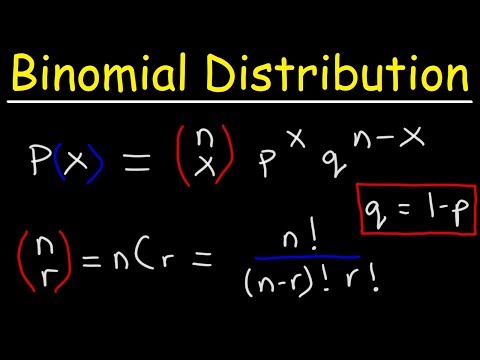
In terms of formulas and all that jazz, for binary outcomes you need to know a couple of things:
- n: This is the number of trials or observations. Think of it as how many people answered your survey.
- p: This is the probability of success on any given trial—like what portion of people said “yes.”
- q: This would be 1 minus p; basically it’s the probability of failure (or saying “no”).
The standard deviation (SD) formula for a binomial distribution looks like this:
SD = √(n * p * q)
Now let’s make it even clearer with an example! Suppose you surveyed 100 people about whether they like chocolate (because who doesn’t?). Let’s say 70 said yes. So:
- Your n is 100 (the total number of responses).
- Your p, which is “yes” votes, would be 0.7 (70 out of 100).
- Your q, then, is 0.3 (the remaining folks who said no).
If you plug those numbers into our SD formula, it looks like this:
SD = √(100 * 0.7 * 0.3) = √(21) ≈ 4.58.
This means we expect that individual responses will vary from the average by about 4.58 respondents either way from that average “yes” result.
You might find yourself wondering how this comes into play in real life—like when analyzing survey results or experiments where outcomes can only be one thing or another? Having that standard deviation helps not just in understanding how responses vary but also in predicting future outcomes based on past data.
You see? It isn’t just a bunch of numbers; it’s a tool to help us make sense of human behavior! Pretty neat stuff if you ask me!
This whole process can seem daunting at first glance, but taking it step by step makes it way more manageable—and kinda fun too!
Mastering Standard Deviation Calculation for Statistical Distributions in Scientific Research
Okay, let’s dig into this whole standard deviation thing, especially focusing on binomial distribution. You know how you often want to measure how spread out your data is? That’s where standard deviation steps in. It’s basically the average distance of each data point from the mean—cool, huh?
First off, what exactly is a binomial distribution? It’s a type of probability distribution that describes the number of successes in a fixed number of independent trials. Think about flipping a coin ten times. If you want to know how often you’ll get heads, that falls under binomial distribution.
Now, calculating standard deviation for this kind of data is super handy. The formula for standard deviation (SD) in a binomial distribution is pretty straightforward:
- SD = √(n × p × (1 – p))
Here’s the breakdown:
- n: This is the total number of trials.
- p: The probability of success on a single trial.
- (1 – p): This represents the probability of failure.
Let’s say you flip that coin again—this time 10 times—and you’re interested in how many heads (successes) you might get. Here, your n equals 10 and if it’s a fair coin, p would be 0.5 since you have the same chance for heads or tails.
If we plug these values into our formula:
- SD = √(n × p × (1 – p))
- SD = √(10 × 0.5 × (1 – 0.5))
- SD = √(10 × 0.5 × 0.5)
- SD = √(2.5)
- SD ≈ 1.58
This means that if you were to flip that coin ten times over and over again, you’d expect about one and a half heads to be your average deviation from what you’d expect (which would be five heads). Pretty neat!
The cool thing about understanding standard deviation in a statistical context is that it helps researchers make sense of variability in their data sets and draw conclusions based on that variability.
You might be wondering why this all matters? Well, think about it: if you’re testing new medications or studying environmental impacts, knowing how much your results vary helps determine reliability and effectiveness!
You see? Standard deviation isn’t just some boring math concept—it’s like a tool in your toolbox for making sense of real-world data! So next time you’re analyzing something statistically related; remember to give standard deviation its due credit! It’s a big deal!
Understanding Binomial Distribution: When to Use BinomCDF vs. BinomPDF in Scientific Applications
So, let’s chat about something that pops up a lot in stats: **binomial distribution**. It’s pretty cool once you get the hang of it! Basically, this distribution helps us understand the probability of a certain number of successes in a given number of trials when there are only two possible outcomes, like flipping a coin. You know, heads or tails.
Now, when you’re working with binomial distributions, you might stumble upon two functions: **BinomCDF** and **BinomPDF**. And trust me; knowing when to use each can save you some serious head-scratching later on.
BinomPDF stands for **Binomial Probability Distribution Function**. This little guy is your go-to when you want to find out the probability of exactly *k* successes in *n* trials. Say you’re tossing a coin 10 times and want to figure out the chance of getting exactly 4 heads. You’d use BinomPDF for that! You plug in your numbers (n=10 and k=4), and voilà! You’ve got your probability.
On the other hand, there’s BinomCDF, which means **Cumulative Distribution Function**. You use this one if you’re interested in finding out the probability of getting up to k successes—kind of like saying “How likely am I to get 4 heads or fewer?” If you had your coin toss scenario again but wanted that information, BinomCDF is where it’s at!
But let’s break it down further with these key points:
- Use BinomPDF for exact probabilities: You’re after the chance of hitting that exact number.
- Use BinomCDF for cumulative probabilities: Interested in how many successes up to a certain point? This is your function.
- Standard deviation matters! In binomial distributions, it tells you how much variation there is from what you expect.
- Standard deviation formula: It’s calculated as √(n * p * (1 – p)), where n is trials and p is success probability.
Let’s say we have 20 flips of our trusty coin. If we assume fair odds (p=0.5), what’s our standard deviation? Well, plug those values into our formula: √(20 * 0.5 * 0.5) gives us about 2.24. This means most results will fall within about two heads from what we expect—around 10 heads if we’re aiming for an average!
Here’s an emotional angle for ya—imagine preparing for a big exam where the questions are either right or wrong, just like our coin flips! Knowing that standard deviation gives you insight into how well you’re doing compared to others can be super comforting.
So next time you’re knee-deep in probabilities with binomial distribution, just remember: BinomPDF helps pinpoint exact outcomes while BinomCDF keeps it broad with cumulative results—all while those standard deviations keep things grounded!
You know, when you think about statistics, it can feel pretty overwhelming sometimes. I remember sitting in my college statistics class, grappling with all those formulas and concepts. But one day, we dove into something that really clicked for me—the standard deviation in a binomial distribution. I had this light bulb moment that made everything else just a bit clearer.
So, what’s the big deal about standard deviation? Well, it’s a way to measure how spread out your data is from the average. Imagine you’re tossing a coin. If you flip it 10 times and get heads 8 times one day, and then heads 2 times the next day—those results are pretty different, right? That’s where standard deviation comes in handy; it helps you understand the variability of those results.
In the context of binomial distribution—which, by the way, is just a fancy term for experiments with two possible outcomes (like flipping a coin)—calculating standard deviation is like figuring out how much your results can swing around your average number of successes. To do this in a binomial setting, you use this formula: sqrt(n * p * (1 – p)).
Okay, let’s break that down! “n” represents the number of trials or experiments—you know, like how many times you flip that coin. And “p” is the probability of success on each trial. For our coin toss example where heads is considered success, p would be 0.5 since there’s an equal chance of landing heads or tails.
Now imagine flipping that coin 20 times—so n equals 20—and p remains at 0.5. You’d plug those numbers into your formula and get something like sqrt(20 * 0.5 * 0.5), which simplifies down to around 2.24. This means if you were to keep flipping coins in repeated trials of twenty flips each time; most of your results will fall within about two and some change heads from your average (which would be ten in this case).
It’s kind of cool to see how math can tell us about randomness! You might not hit exactly ten heads every time because life isn’t so predictable but knowing that you’re likely to be within this range gives you some solid footing on expectations.
Reflecting on all this now reminds me: these formulas are more than just numbers—they’re tools for understanding life’s unpredictability! Whether it’s in games or natural phenomena; seeing how things fluctuate gives us better insight into our world—and honestly? That’s pretty amazing!