So, picture this: you’re at a dinner party, and someone brings up their latest science experiment. Everyone’s nodding along, but deep down, they’re thinking, “How do I know this is legit?” Yeah, we’ve all been there!
That’s where the Student T Test struts in like a superhero. Seriously! It’s one of those cool statistical tools that helps researchers figure out if their findings are actually something or just a fluke. You know what I mean?
Imagine you have two groups: one sips herbal tea while the other enjoys double espressos. How do you tell if the herbal tea truly calms nerves better? That’s where this little gem comes into play.
It’s not just numbers and equations; it’s about answering questions that matter! Want to get to know how this works? Let’s break it down together!
Understanding the Role of T-Tests in Scientific Research: Implications and Applications
Alright, let’s jump into the world of T-Tests. You might be asking yourself, what even is a T-Test? Well, it’s a fancy statistical method that helps researchers compare the means of two groups. Basically, it tells you if the differences between groups are real or just random chance—kind of like figuring out if your friend’s crazy cooking experiment actually made a better cake or if it’s just your taste buds playing tricks on you.
Now, the most common version is the Student’s T-Test. It was created by William Sealy Gosset back in the early 1900s. He was working for a brewery and needed a way to make sure that his beer ingredients were consistent. So he came up with this method, and here we are over a century later still using it in all sorts of studies!
So, how does it work? The T-Test takes two groups and compares their averages (or means). You gather data from each group, calculate their means and variances, and then plug those numbers into the T-Test formula. This results in what’s called a T-value. The higher that value is, the more significant those differences are likely to be!
- Independent Samples T-Test: This one compares means from two different groups. Say you wanted to see if students who study with music do better on tests than those who study in silence. You’d gather scores from both groups and run the test.
- Paired Samples T-Test: Here you’re looking at the same group at different times or under different conditions. For example, measuring blood pressure before and after treatment in patients.
- One-Sample T-Test: This tests whether the mean of a single group differs from a known value. Let’s say you think your coffee’s caffeine content differs from its label claim—it could help to test that!
The implications of using T-Tests in research can be pretty big! Imagine two medical treatments being tested for effectiveness; researchers can use this test to decide which one works better based on patient outcomes statistically rather than just gut feeling.
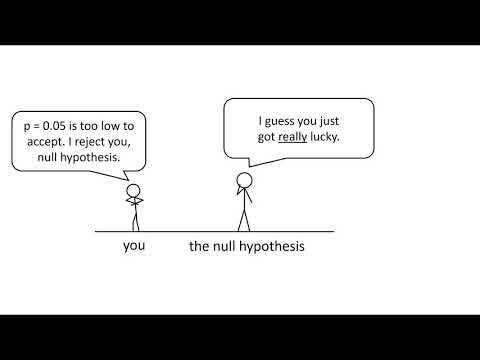
You know what’s also interesting? The concept of significance levels. Generally set at 0.05 (5%), this threshold helps scientists understand where they should draw their line when declaring something statistically significant. If your result falls below this level, you have enough evidence to suggest there’s really a difference going on rather than it all being random noise.
But hey, it’s not just about crunching numbers; context matters too! A significant result doesn’t always mean it’s important or practical—like finding out that adding mint to chocolate chip cookies makes them “statistically” tastier but isn’t really revolutionary info for bakers everywhere.
The takeaway here is that T-Tests have become an invaluable tool in scientific research, helping validate findings across fields like psychology, medicine, and agriculture. They help keep our scientific conclusions grounded in reality instead of wild guesses!
If you’re ever involved in research or even just curious about experiment results, remember: those little calculations can have huge implications! So next time someone mentions P-values or mean differences… you’ll know exactly what they’re talking about! Pretty cool stuff!
Understanding When to Use Student’s T-Test vs. Z-Test in Scientific Research
When you’re diving into research, you’ll often come across two statistical tests that help you analyze your data: the Student’s T-Test and the Z-Test. Understanding when to use each can be tricky, but it’s crucial for getting accurate results.
The Z-Test is typically used when you have a large sample size—usually over 30 observations. Why? Well, larger samples tend to resemble a normal distribution due to the Central Limit Theorem. Also, you need to know the population variance or standard deviation before using this test. So, if you’re working with data where these conditions are met, a Z-Test might just be your go-to option.
Now let’s talk about the Student’s T-Test. This one comes into play when your sample size is smaller—generally less than 30—and when you don’t have access to the population variance or standard deviation. With a smaller dataset, it’s more likely that your results could be influenced by random chance. The T-Test accounts for this by using something called “degrees of freedom,” which essentially adjusts for how uncertain your estimate might be with such limited data.
You know what’s cool? As sample sizes increase, the T-Distribution starts resembling the normal distribution closely; hence, for very large datasets, both tests will yield similar outcomes! So they can sometimes play nice together.
Here’s where it gets interesting: each test serves unique situations but answers similar questions—like whether there’s a significant difference between two groups. For example:
- If you’re testing a new drug on a small group of patients (let’s say 25), you’d use the T-Test.
- However, if you’re analyzing average heights in a large city with thousands of people surveyed, you’d go for a Z-Test.
So why do researchers care about these details? Because using the wrong test can lead to incorrect conclusions. If you mistakenly use a Z-Test on small data sets where variances are unknown or suspect, well…you might end up painting an inaccurate picture of reality!
In summary:
– Use **Z-Test** for large samples and known variances.
– Use **T-Test** for smaller samples and unknown variances.
Both tests help validate scientific research by ensuring that findings are statistically sound. Understanding their differences changes how effectively you interpret data!
So next time you find yourself swimming in numbers and statistics, remember these guidelines; they could save your research from drowning in uncertainty!
Understanding Significance in Student’s t-Test: A Comprehensive Guide for Scientific Research
The Student’s t-test is a statistical method used to evaluate the differences between two groups. It helps researchers determine if the means of these groups are significantly different from each other. Let’s break it down.
When you’re conducting an experiment, you might want to compare, say, the test scores of students who studied with a new method against those who used traditional methods. You need to know if any difference in their scores is meaningful or just random chance. That’s where the t-test comes in.
The Basics of the t-Test
There are mainly two types of t-tests: the independent samples t-test and the paired samples t-test.
- Independent Samples t-Test: This one is for comparing two different groups. Think about comparing two classes that were taught using different techniques.
- Paired Samples t-Test: This one compares the same group at two different times or conditions. Like measuring students’ scores before and after a specific training program.
So, how does a researcher decide if there’s a significant difference? Well, you calculate what’s called a **t-statistic**, which basically tells you how far apart your groups are in terms of their averages (means) relative to how much they vary (variability).
P-Values
After calculating the t-statistic, you’ll usually check something called a **p-value**. The p-value helps determine significance in your results:
- If your p-value is less than 0.05 (the typical threshold), you’ve got evidence that there’s indeed a significant difference between groups.
- If it’s greater than 0.05, that suggests any observed differences might just be due to random fluctuations instead of real effects.
Imagine you’ve done your experiment and found that students using the new study method scored an average of 75% while those using traditional methods scored 70%. If your p-value ends up being 0.03 after running your t-test, it implies there’s less than a 3% probability that such differences could arise by chance alone.
Choosing Significance Levels
Now let’s talk about significance levels—this is your cutoff for deciding whether an effect is “real.” Besides the common 0.05 level, some studies go stricter by using 0.01 or even lower thresholds when high precision is needed.
But here’s something important: setting too low of a significance threshold can potentially overlook real effects (false negatives). It’s like putting on really dark glasses and missing out on all those beautiful colors around you!
Assumptions of the t-Test
It’s crucial to note that several assumptions come with using a t-test:
- Normality: Your data should roughly follow a normal distribution—in simpler terms: it’s bell-shaped.
- Homogeneity of variance: The variances in both groups should be approximately equal; otherwise, things get tricky!
- Independence: The observations need to be independent from each other unless you’re doing paired tests.
If any assumptions don’t hold true? The results might not be reliable! In such cases, alternatives like non-parametric tests can be used instead.
The Role in Scientific Research Validation
In research validation, utilizing statistical tests like the Student’s t-test can enhance credibility significantly. When other researchers try to reproduce your results or build upon them, they’ll often look back at those statistics to measure reliability.
Imagine presenting your findings at a conference! If someone asks how you determined that significant difference between study methods—you’ll confidently explain it based on rigorous analysis through your trusty friend, the t-test.
In summary—understanding significance in Student’s t-test isn’t just about crunching numbers; it’s understanding what those numbers mean for research outcomes and decision-making processes! You’re not just playing with stats; you’re uncovering truths within data—a pretty amazing journey!
So, let’s talk about the Student’s T Test for a bit. It sounds kinda fancy, right? But really, it’s just a tool that helps researchers figure out if their results are legit. Like, imagine you’re at a coffee shop, and you try two different coffees. You want to know if one is truly better than the other or if you’re just fooling yourself on a caffeine high. That’s where the T Test swoops in to save the day!
Here’s the thing: science is all about asking questions and getting answers based on evidence. You don’t just want to say “I think this works” without proof, do you? You need solid data. When scientists perform experiments, they gather data points from samples and then analyze them to see if what they found is statistically significant.
Let’s say we have two different teaching methods and want to know which one leads to better test scores for students. After running some tests with two groups of kids—one using Method A and the other Method B—the T Test helps determine whether any differences in scores are due to the teaching method (which would be significant) or just random chance (which would be not-so-significant).
The emotional side of it all? I remember when I first saw a presentation on this in college, and it struck me how numbers can tell stories—real stories! There was this professor who shared research showing how implementing new strategies in classrooms led to real boosts in student engagement. Using that T Test didn’t just validate their findings; it added horsepower to their argument for change.
And here’s a little twist: though it’s super useful, it’s also important not to over-rely on any single method like this one. Just like your coffee preferences might change depending on your mood or the weather outside, research often needs multiple angles to get a well-rounded picture.
In short, the Student’s T Test plays a vital role in giving credibility to scientific research findings—it’s solid ground beneath our feet when discussing claims grounded in data. And honestly? That makes science feel more relatable and trustworthy because at its core, it’s about understanding our world better—even when it gets complicated!