You know what’s wild? Just last week, I was at this park, sprawled out on a blanket, staring up at the stars. And there it was—a shooting star zipping across the sky. It got me thinking about those huge telescopes peering into the universe. Crazy how they can capture things way beyond what our eyes see, right?
Imagine standing in front of one of those beasts. They’re like giant time machines, opening windows to the past! The light from distant galaxies has been traveling for millions of years just to reach us. How mind-blowing is that?
But it’s not just about fancy equipment and big discoveries. Telescopes are also about connecting people to science—making the cosmos feel a little more personal and a lot less intimidating. You follow me?
In this chat, we’ll explore how telescopes do all that and more—bringing science alive while keeping the wonder intact. And who knows? You might even feel inspired to grab some binoculars yourself!
The Crucial Role of Telescopes in Advancing Scientific Research and Understanding the Universe
So, let’s chat about telescopes and why they’re super important in our hunt to understand the universe. You know, these nifty gadgets have been around for a while now, but their impact is still huge! Telescopes allow us to look at things that are light-years away. Imagine gazing into the past every time you peek through one. That’s just mind-blowing!
The heart of the matter is that telescopes collect light from distant celestial bodies. They help us see objects that our naked eyes simply can’t. The basic idea is to gather as much light as possible, which helps scientists pick up on details that would otherwise be invisible. Crazy, right? You could say they’re like the ultimate magnifying glass for the cosmos.
Think about it this way: when Galileo first pointed his telescope at the night sky in 1609, he saw Jupiter’s moons and Venus going through phases—things nobody had even considered before. This kind of observation challenged existing beliefs about our solar system. Suddenly, we weren’t just Earth-centric anymore; we started to understand our place in a much larger picture.
Now, let’s not forget about what these amazing tools do today. There are different types of telescopes—like optical ones that capture visible light and radio telescopes that pick up radio waves from space. Each type has its own way of revealing secrets hidden away in the universe.
- Optical Telescopes: These are what you might think of when you hear “telescope.” They gather visible light and can produce stunning images of planets and stars.
- Radio Telescopes: These don’t rely on light; instead, they capture radio frequencies emitted by objects in space. They’ve helped us discover cosmic phenomena like pulsars and black holes!
- Space Telescopes: Like the Hubble Space Telescope—wow! It gives us breathtaking views without Earth’s atmosphere messing with the images.
One of my favorite stories involves Hubble making observations that led to the discovery of cosmic expansion. Before Hubble’s work, many thought we lived in a static universe. But with clearer images revealing faraway galaxies moving away from us, it became clear that everything is changing all the time!
What’s cool is how telescopes aren’t just for scientists locked away in labs or observatories anymore. The advent of citizen science means anyone can contribute to discoveries. There are platforms where people can analyze data collected by large telescopes from their own homes. This makes science feel a bit more personal—you’re literally part of exploring our universe!
Then there’s outreach! You know those star parties where folks gather to gaze at celestial wonders? Those events shine a light (pun intended) on how important science communication is. When people get together under a dark sky with some telescopes set up, they forge connections with each other while also connecting a little deeper with the universe itself.
In a nutshell, telescopes have transformed how we understand everything from our solar system to distant galaxies billions of years old. They’ve helped open up conversations about existence and maybe even why we’re here in the first place! So next time you look up at those twinkling stars or read about some new discovery made possible by these incredible instruments, realize there’s so much more than meets the eye—and it’s all thanks to those marvelous telescopic wonders.
Exploring the Impact of Telescopes on Scientific Advancement: A Journey Through Astronomy and Beyond
Sure! Let’s talk about telescopes and the massive role they’ve played in science, especially astronomy. Seriously, these nifty tools have changed the way we see the universe, you know? The early ones were like peering through a soda straw compared to what we’ve got today.
First off, what exactly is a telescope? Well, it’s a tool that helps us gather light from distant objects in space and magnifies them so we can see more detail. You can think of it like using binoculars but for planets, stars, and galaxies. The first popular telescope was invented by Galileo in the early 1600s. He pointed it to the sky and saw moons orbiting Jupiter! Can you imagine his excitement? Suddenly, the universe felt more like a neighborhood—something we could study.
Now let’s break down how telescopes have impacted science:
- Discovering new celestial objects: Telescopes help astronomers spot previously unknown comets and asteroids zooming around in our solar system. Every time they find something new, it’s like opening a door to a hidden room in your house.
- Understanding our place in the universe: By studying distant galaxies with powerful telescopes like Hubble or James Webb, scientists have learned so much about how our universe came to be. These observations offer clues about dark matter and dark energy—two mysterious forces that make up most of the cosmos!
- Aiding planetary exploration: Telescopes don’t just point at stars; they also help us study planets within our own solar system. For example, they’ve revealed details about Mars’ surface that helped guide missions there. Imagine being able to prepare for an interstellar road trip based on what your trusted binoculars tell you!
- Advancing technology: The tech behind telescopes has led to advancements in various fields—like sensors used in medicine or even smartphones! It’s kind of neat how looking at stars leads to life-saving innovations here on Earth.
But beyond just scientific discoveries, telescopes also play a huge role in outreach. They bring people together over shared curiosity about everything above us!
Think back to those star parties where people gather with their own telescopes to gaze at Saturn’s rings or even just catch a glimpse of the Moon’s craters. Those moments inspire budding astronomers with wonder and excitement! You learn about constellations and get lost in stories from ancient cultures that looked up at the same stars we do today.
Plus, with modern technology—like online astronomy classes or live-streamed observatory sessions—we can connect with experts worldwide from our living rooms! That’s pretty cool because knowledge isn’t locked away anymore; it’s right there for anyone who wants it.
So yeah, telescopes are not only tools for scientists; they’re bridges connecting us all through discovery and wonderment. Every time someone looks through one, whether it’s for research or just fun stargazing—you know there’s magic happening right there under those twinkling lights!
Breakthrough Discoveries of the James Webb Telescope in 2025: Unveiling Cosmic Mysteries
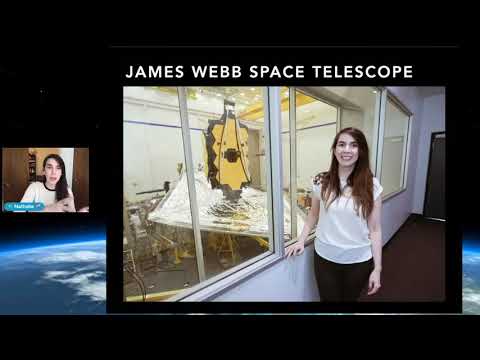
It’s tough to predict exactly what the James Webb Telescope will achieve in 2025, but there are some cool possibilities out there! This incredible telescope has already started to change our understanding of the cosmos. Its advanced technology allows scientists to peer deeper into space and time than ever before.
One of the most exciting things Webb can do is look at the formation of stars and galaxies. Think about it: we’re talking about catching a glimpse of how our universe looked just a few hundred million years after the Big Bang! By studying these ancient celestial bodies, we can learn more about how galaxies evolve. That could help us understand where we fit in this vast universe.
And let’s chat about exoplanets for a second. Webb has this amazing ability to study their atmospheres by using a technique called transmission spectroscopy. When a planet passes in front of its star, some light filters through its atmosphere, revealing its chemical composition. You might think of it as sniffing out clues—like checking for water vapor, carbon dioxide, or even signs that could hint at life!
You can imagine scientists getting giddy when they find potential signs of extraterrestrial life in those atmospheres. It’s like looking for breadcrumbs on an interstellar journey! Analyzing these data points helps researchers draw conclusions about habitability.
Another big deal is understanding dark matter and dark energy. We can’t see them directly, but they’re out there—making up most of the universe’s mass-energy content. Webb’s observations could help us figure out how they interact with visible matter and influence cosmic structure.
And here’s something wild: did you know Webb might also observe the first black holes? Some scientists think that early black holes played a key role in shaping galaxies. If Webb nails this down, it’ll be groundbreaking!
Let’s not forget outreach either! The discoveries made using Webb aren’t just for scientists in lab coats with pocket protectors; they’re for everyone! Imagine kids looking up at the night sky and dreaming bigger because they see what we’ve discovered together. The storytelling aspect—that we have all come together as humans to figure out our place in this crazy universe—is pretty amazing.
So here’s what could happen in 2025 with the James Webb Telescope—
- Revolutionizing our understanding of stars and galaxies.
- Analyzing exoplanet atmospheres, searching for signs of life.
- Diving into dark matter and dark energy, uncovering more secrets.
- Exploring early black holes, linking them to galactic formation.
- Encouraging public interest and education; making science accessible!
In short, it’s not just about pretty pictures from space; it’s about unraveling mysteries that could change everything we know about our universe—and doing it together as a global community hungry for knowledge.
You know, telescopes are kind of magical, aren’t they? I mean, they’re like giant eyes peering into the infinite universe. When I was a kid, my dad took me to a local observatory. I remember standing in awe as I looked through one of those huge eyepieces. It felt like I could almost touch the stars!
So, let’s break down why these amazing tools are so crucial for both scientific discovery and outreach. First off, telescopes let scientists explore the cosmos in ways that would be impossible otherwise. Think about it: without them, we’d still be staring up at the night sky and wondering what those twinkly dots really were. We’re talking about uncovering black holes, understanding galaxies billions of light years away, or even spotting exoplanets that might host life! Seriously mind-blowing stuff.
But it’s not just about what scientists find out; it’s also about sharing that excitement with everyone else. Telescopes have this incredible ability to engage people from all walks of life. When you see a breathtaking image of Saturn’s rings or a distant galaxy captured by Hubble or any other telescope, it’s like you’re being invited into a cosmic club where everyone can marvel at the vastness together.
These outreach programs can spark curiosity in kids who maybe thought science wasn’t for them. Remember that feeling when you first grasped something big and complicated? It’s contagious! Some places offer “star parties” where families gather to look through telescopes—it’s like a night-time picnic filled with wonder and amazement.
And here’s where things get interesting: accessibility has improved too! With advances in technology, smaller and cheaper telescopes have made it easier for schools and community groups to get involved in astronomy. You don’t need to be an astrophysicist anymore to appreciate the wonders out there; just grab your binoculars or hop online to explore virtual tours of space!
But then again, even with all this progress, we still have so much left to learn. Each new discovery raises questions that lead us deeper into the mysteries of space and time—like what happens inside a neutron star or how dark matter plays its game with gravity. And here’s the kicker: every little piece we uncover can inspire someone to ask their own questions or seek answers through exploration.
So yeah, harnessing telescopes isn’t just about the cutting-edge science; it’s about connection—between people and knowledge, between us today and those who came before us gazing at the same stars in wonderment. It’s exciting because every glance up can lead someone somewhere amazing!