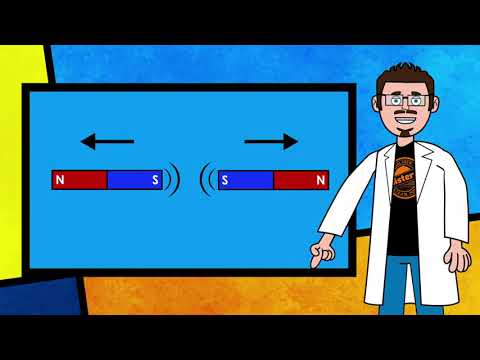
You know how when you were a kid, you’d play with magnets and see how they’d stick to the fridge? I always thought it was like magic! Just a little piece of metal could hold up my drawings.
But, seriously, there’s so much more to magnets than just fridge decor. They come in all shapes and sizes, each with their own quirks. Some are super strong, while others are just kind of chill.
Ever heard of electromagnets? Those things can lift cars! And then there are the little tiny ones buzzing away in your phone. It’s wild, right?
So let’s dive into the fascinating world of magnets—what makes them tick and how they’re used in our daily lives. You might just discover some surprising stuff along the way!
Exploring the Different Types of Magnets: Applications and Uses in Scientific Fields
So, magnets! You know those things that stick to your fridge and can like, pick up paper clips, right? But there’s way more to magnets than just that. They come in different types and are used in tons of cool scientific applications. Let’s break it down.
First off, we’ve got **permanent magnets**. These are the classics. Just think of refrigerator magnets or those little ones you might use for crafts. They’re made from materials like iron, cobalt, or nickel, and once they’re magnetized, they stay that way forever (well, almost). You see them everywhere—from electric motors to magnetic compasses. They’re pretty much the rock stars of the magnet world!
Then there are **temporary magnets**. These guys only get their magnetic properties when they’re around a magnetic field. Like if you put a piece of iron near a magnet—it’ll act like one too! But once you take it away from the field, poof! It goes back to being just plain iron again. This is super useful in applications where you need temporary magnetism without kicking out permanent magnets all over the place.
Now let’s talk about **electromagnets**—the real game changers! These work by running an electric current through a coil of wire wrapped around a core material (often iron). The best part? You can turn them on and off as needed! So when you need something super powerful—like in MRI machines or maglev trains—you use electromagnets because they can lift heavy stuff effortlessly or create precise magnetic fields.
And then we have **superconducting magnets**. Here’s where things get really interesting! When certain materials are cooled down to super low temperatures, they lose all electrical resistance and can carry an electric current indefinitely without losing energy. This means they can create incredibly strong magnetic fields without heating up too much. You’ll find these bad boys in particle accelerators and fusion experiments.
Another fascinating type is **rare-earth magnets**, which are made from alloys of rare earth elements like neodymium and samarium. These things are incredibly strong for their size; you could have a tiny neodymium magnet that holds a whole chunk of metal! They’re widely used in tech gear like hard drives and speakers because they create powerful magnetic fields without needing much space.
Finally, there’s this special group called **bidirectional magnets**, which can produce magnetic fields in two opposite directions at once—pretty handy for applications requiring precise control over magnetism!
In short:
- Permanents: Think fridge; always on.
- Temporary: Need power from a field; turns off after.
- Electromagnets: Powered by electricity; totally controllable.
- Superconducting: Super strong when cooled down; no energy loss.
- Rare-earth: Small but mighty; high-strength options.
- Bidirectional: Can work both ways!
So yeah, each type of magnet has its own vibe and purpose in scientific fields—from everyday use to cutting-edge research. It’s kind of amazing how something so simple can have such a huge impact on our technology and understanding of physics!
Exploring the 7 Types of Magnetism: A Comprehensive Guide in Science
Alright, let’s talk about magnetism. It’s not just those cool fridge magnets you stick your grocery list to. It’s a whole world of physics with different kinds that scientists explore. There are actually **seven** main types of magnetism, each with its own quirks and applications. So, buckle up!
1. Ferromagnetism:
This is probably the most familiar type. You know those magnets that cling to your fridge? Yeah, they’re ferromagnetic! This kind involves materials like iron, nickel, and cobalt. Basically, in a ferromagnet, the magnetic moments (think tiny magnets) align themselves in the same direction when exposed to a magnetic field. But here’s where it gets interesting; even after you take away the magnetic field, they often stay aligned.
2. Antiferromagnetism:
A bit more complex! In antiferromagnetic materials, those tiny magnetic moments get all oppositional and cancel each other out. So instead of sticking to your fridge, these materials don’t show any magnetism overall at room temperature. Manganese oxide is a classic example here. It’s like sibling rivalry—each one pushing against the other!
3. Ferrimagnetism:
This one’s kind of a mix between ferromagnetism and antiferromagnetism. Think of it as a tag team match where opponents aren’t exactly matched in strength! Ferrimagnetic materials have two different types of magnetic moments that don’t completely cancel out; one is stronger than the other. This can lead to some pretty cool properties used in microwave devices.
4. Paramagnetism:
Here’s where things get chillier! In paramagnetic materials like aluminum or platinum, the magnetic moments only align when there’s an external magnetic field applied—but once you remove that field? Poof! They go back to being unaligned and non-magnetic again. It’s not permanent but definitely neat for certain scientific applications!
5. Diamagnetism:
Diamagnets are like the introverts of magnetism; they avoid any strong interactions with magnets whenever possible! When placed in a magnetic field, they develop an opposing force which makes them weakly repelled by it—think bismuth or graphite here! This is why certain materials can levitate if placed above strong magnets.
6. Superparamagnetism:
Now this one is fascinating—superparamagnetic particles can behave like ferromagnets but only when they’re really small (like nanometer-sized). At this size, thermal energy can flip their spins randomly if there’s no external magnetic field present—even if they’ve been magnetized before!
7. Metamagnetism:
Last but definitely not least! Metamagnetic materials show interesting behavior: under certain conditions (like temperature or pressure), they can transition from being antiferromagnetic to showing ferromagnetic-like properties when an external field is applied.
So there you have it—the seven types of magnetism that help shape our understanding of physics and have really cool applications in everyday life too! From creating advanced tech gadgets to helping scientists explore new realms in material science—it’s all connected through these amazing properties of magnetism.
Anyway, it’s pretty wild what goes on at such tiny scales! Each type tells its own story about how matter interacts with magnetic fields—and it just goes to show how incredible nature can be when you start scratching beneath the surface.
Exploring the 5 Key Applications of Magnets in Science and Technology
Sure thing! Let’s get into the world of magnets and check out some cool applications in science and technology. Magnets have this magnetic personality, pun intended, and they play a vital role in so many areas. Here are five key applications that really stand out:
1. Magnetic Resonance Imaging (MRI)
You know those big machines they use to take pictures of your insides? Yep, that’s MRI! It uses powerful magnets to create images of organs and tissues. An MRI machine has a giant magnet that aligns the hydrogen atoms in your body when you’re inside it. When the magnet is switched off, these atoms send signals back out, which helps doctors see what’s going on inside. It’s like taking a peek under the hood without any invasive procedures!
2. Electric Motors
Every time you hop on an electric bus or ride in an electric car, you’re witnessing magnets at work. When electricity flows through coils of wire inside a motor, it creates a magnetic field. This interacts with permanent magnets or electromagnets in the motor to produce motion. So basically, if it moves and uses electricity—like your blender or phone charger—magnets are likely involved!
3. Data Storage
Magnets are also stars in the data storage world! Hard drives use magnetic materials to store information. When data is written onto a drive, it changes the magnetization of small sections on the disk’s surface. Later on, when you go searching for that epic video from three summers ago (we’ve all been there!), the drive reads those magnetized sections to pull up what you need.
4. Levitation Technologies
Okay, this one sounds like something out of a sci-fi movie: magnets can actually make things float! Using magnetic levitation, we can lift objects without any physical support—a principle that’s already being used in some train systems around the globe (ever heard of maglev trains?). By using powerful electromagnets and carefully controlling them, these trains glide above their tracks at incredible speeds with minimal friction.
5. Electromagnetic Fields for Communication
Let’s talk about communication technology for a sec. You know how your phone connects to Wi-Fi or sends texts? Well, it all happens thanks to electromagnetic fields generated by antennas that use magnets as part of their components! These fields transmit radio waves carrying information over vast distances without those pesky wires getting in the way.
So there you have it! Magnets aren’t just for fridge decorations; they’re integral to various scientific and technological advancements shaping our lives today! From healthcare to transportation and communication—magnets truly pack a punch with their diverse applications!
Magnets are super interesting, right? You might think they’re just those little things that stick to your fridge, but they actually come in all sorts of shapes and sizes, and they do way more than keep your takeout menus in place. I remember a time as a kid when I was playing with my little toy train set. It used tiny magnets to keep the trains on the tracks! I was amazed every time I saw how they just pulled together. That was my first real taste of magnetism!
So, let’s unpack this whole magnet thing a bit. There are basically a few main types: permanent magnets, electromagnets, and temporary magnets. Permanent magnets are like those fridge buddies—they stay magnetic no matter what. They’re made from materials like iron or cobalt and can hold their magnetic properties for ages. Ever seen Neodymium magnets? They’re super strong for their size! You can easily lose a finger if you’re not careful while handling them!
Now, electromagnets are where things really get juicy. These guys only act like magnets when you run electricity through them. It’s kind of wild; you can switch them on and off! They’re used in motors, MRI machines in hospitals (talk about high-tech!), and even junkyard cranes that lift heavy metal. The moment I learned how someone could make a magnet just by flipping a switch—it blew my mind!
Temporary magnets are like the shy ones at the party; they only get magnetic when they hang out near a strong magnetic field but lose it once they leave the area. Think of iron nails that become temporarily magnetic when close to a magnet—they stick around until you pull them away.
So then there’s applications—a ton! In electronics, motors rely heavily on both permanent and electromagnets to function smoothly. And if you’ve ever enjoyed music on speakers or headphones? Yup, that’s all thanks to magnets making sound waves vibrate through air.
It’s pretty neat how something that seems so simple has such complex roles in the world around us! Every time I see those little toy trains now or hear music blasting from speakers, I can’t help but think about how these diverse types of magnets are behind some seriously cool stuff—sparking creativity from childhood toys to high-tech applications we use every day! Isn’t it crazy how much we depend on these invisible forces without even realizing it? Just shows there’s magic in science everywhere you look!