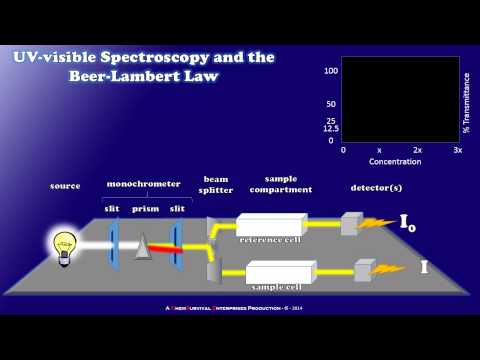
You know those moments when you’re just chillin’ outside, and you feel like a lizard soaking up the sun? Well, that’s kinda what UV and visible spectroscopy do in science! They’re all about light.
Picture this: scientists peering through high-tech instruments to figure out what’s going on with all sorts of substances. It’s like a detective story but with colors instead of crime scenes!
From figuring out what’s in your favorite snack (hello, hidden flavors!) to checking water quality, it’s wild how much we can learn just by playing with light. So let’s chat about how these techniques are shaking things up in science!
Innovative Applications of UV-Visible Spectroscopy in Environmental Science and Quality Control
Alright, let’s chat about UV-Visible spectroscopy. It’s like that cool tool in the science toolbox that helps scientists peek into the invisible world of light. UV stands for ultraviolet, while visible is just what our eyes can see. This technique is super handy in environmental science and quality control.
So what’s the deal? Well, UV-visible spectroscopy is based on how light interacts with matter. Think about it – everything absorbs light differently. When a sample absorbs light in the UV or visible range, it gives us clues about its composition. It’s like a fingerprint!
Now, let’s break down some innovative applications:
- Water Quality Testing: Imagine you’re checking whether a river is clean or not. By shining UV-visible light on water samples and measuring how much light gets absorbed, you can determine if there are harmful substances like heavy metals or organic pollutants present.
- Air Pollution Assessment: It’s not just water that needs watching! This technique can monitor air quality too. By analyzing atmospheric particles with UV-visible spectroscopy, scientists can detect pollutants such as nitrogen dioxide or ozone levels.
- Agriculture Monitoring: Farmers often want to know how their crops are doing without going around every field. Spectroscopy helps here by analyzing plant leaves. It can measure chlorophyll content or stress levels by looking at how plants absorb different wavelengths of light!
- Food Safety: Ever worried about what’s really in your food? This method can help check for contaminants or additives in food products by identifying certain chemical compounds based on their absorption patterns.
- Sustainable Practices: Scientists are constantly looking for eco-friendly alternatives to harmful chemical processes. Using UV-visible spectroscopy enables them to monitor reactions efficiently and ensure they’re using less harmful substances along the way.
That’s a lot of ground covered! But wait; let’s throw in a little story to keep things interesting. I once read about researchers who used this technique in a small coastal town where fishing was vital to the community’s livelihood. They monitored local waters to ensure they were safe from industrial runoff, which not only helped protect marine life but also supported the fishermen’s work and income.
Crazy right? It’s pretty mind-blowing how something as seemingly simple as shining light through a liquid can have such significant implications for our environment and health!
In short, when it comes down to it, UV-Visible spectroscopy isn’t just another lab gadget; it’s practically revolutionizing how we look at environmental issues and product quality control every day. And that’s seriously worth getting excited about!
Exploring the Scientific Applications of Spectrophotometry Across Various Fields
Sure, let’s chat about spectrophotometry. It’s one of those scientific tools that, honestly, makes life a lot easier across different fields. You might not realize it, but if you’ve ever wondered how scientists measure light absorption in liquids or solids, then you’ve stumbled upon the cool world of UV and visible spectroscopy.
So, here’s the deal: spectrophotometry is all about measuring how much light a substance absorbs at different wavelengths. Basically, you shine light through a sample and figure out how much light gets through versus how much is absorbed. This helps scientists make some pretty important conclusions about the material they’re working with.
In Chemistry: Spectrophotometry is super useful for quantifying substances in a solution. For example, if you’re studying water quality, you can check concentrations of pollutants by measuring their specific wavelengths of absorption. You know what I mean? Like when you see a little change in color of a water sample? That can indicate something’s off.
In Biology: This technique plays an essential role in analyzing DNA and proteins. Check this out: when you extract DNA from cells and run it through a spectrophotometer, you can see exactly how pure your sample is based on its absorbance at specific wavelengths. It’s like having your own little quality control checker right there in the lab!
In Environmental Science: Researchers often use UV-visible spectroscopy to monitor air quality too. By analyzing gas samples for specific UV absorbance patterns, it’s possible to detect harmful compounds like nitrogen dioxide or ozone. Imagine driving through the city and knowing that air quality is being monitored like that—pretty neat!
In Medicine: You’ll find this technique becomes crucial when diagnosing diseases or checking drug levels in patients. For instance, some blood tests use spectrophotometry to measure bilirubin levels—a key indicator of liver function—by assessing how bilirubin absorbs light at particular wavelengths.
And hey, let’s not forget about Food Science. This method helps determine food quality by measuring certain compounds that can spoil or indicate freshness—like antioxidants for example. So if you’re munching on fruits or veggies and thinking they look fresh? Scientists are using spectrophotometry behind the scenes to confirm those vibrant colors mean good stuff!
In Manufacturing: Quality control is where spectrophotometry shines bright too! Factories may analyze color consistency in products like paints or plastics using this technique to ensure everything meets their standards before hitting store shelves.
You see? Spectrophotometry isn’t just some fancy term; it’s a vital tool making waves across various scientific fields! Whether it’s ensuring clean air to breathe or helping doctors diagnose health issues more accurately—it touches our lives every day in big ways we often overlook!
Exploring the Applications of UV-Visible Spectroscopy in Forensic Science: Techniques and Implications
So, let’s chat about UV-visible spectroscopy and how it’s used in forensic science. You might be wondering, what’s the big deal about this technique? Well, it involves using light to analyze substances. It helps identify materials by measuring how much light they absorb at different wavelengths. This is super handy for forensic scientists trying to solve crimes!
What exactly is UV-visible spectroscopy? It’s a method that takes advantage of ultraviolet (UV) and visible light. When you shine light through a sample, some of it gets absorbed while some of it passes through. The amount absorbed tells you what the sample is made of.
Now, onto its applications in forensic science. You see, one of the major uses is in analyzing drugs. Forensics teams need to quickly identify unknown substances found at crime scenes. Using UV-visible spectroscopy, they can determine the presence of specific compounds based on their unique light absorption patterns. Imagine finding a suspicious powder; this technique can give a quick answer about what it is!
Another cool application involves toxicology. When investigating deaths or poisoning cases, scientists can analyze bodily fluids like blood or urine using this method. By looking at absorption spectra, they can detect harmful substances that might be there.
Also, have you ever thought about how important it is to analyze ink? In cases involving forged documents or signatures, UV-visible spectroscopy comes into play again! Different inks absorb light differently; by examining these patterns, experts can determine if an ink is original or if it has been altered.
Additionally, you might find it interesting that UV-visible spectroscopy also aids in examining trace evidence, such as fibers or paint chips. This evidence often holds crucial information about a suspect or victim’s whereabouts during a crime.
Now let’s talk technique! One common approach in forensic labs uses a spectrophotometer. This device shines light through samples while measuring the intensity of light before and after passing through the material. The data collected creates a graph—called a spectrum—that showcases how much light was absorbed at each wavelength.
However, it’s not always foolproof! Sometimes interference from other substances can complicate results. That’s why forensic scientists often combine various techniques to confirm findings. They cross-check results with methods like mass spectrometry which provides more detailed info on molecular structure.
You know what I find pretty incredible? The implications go beyond just solving crimes! It’s also used in environmental monitoring to check pollutants in water sources or air quality studies. So truly, this technology spans multiple fields!
In summary, UV-visible spectroscopy plays a vital role in forensic science by allowing rapid identification and analysis of various materials involved in criminal investigations. Its applications range from drug analysis and toxicology testing to ink examination and trace evidence investigation. The next time you hear about forensics on TV or in movies, remember how pivotal these techniques are!
You know how sometimes you just marvel at the simple things, like how a rainbow forms after rain? Well, that kind of wonder can also apply to science, especially when you think about something like UV and visible spectroscopy. Sounds super fancy, right? But it’s all about how we use light to look at stuff more closely.
Basically, UV (ultraviolet) and visible spectroscopy is this technique where scientists shine light on a sample and then see how much of that light is absorbed or transmitted. This little dance between light and matter gives us tons of info about the chemical structure of substances. Seriously, just by playing around with colors and wavelengths, we can discover so much!
I remember one time in chemistry class when our teacher brought in some colorful solutions—like a mini rainbow in test tubes. She explained that by measuring the specific colors of light absorbed by each solution, we could pinpoint what was present in there. I was totally amazed! It’s like being a detective but instead of looking for clues with a magnifying glass, you’re using light.
When it comes to applications, oh boy, the list goes on! You got pharmaceuticals checking drug purity using UV analysis. That’s huge since nobody wants to take medicine that’s gone bad or isn’t what it claims to be! Also think about environmental monitoring—scientists can track pollutants in water samples just by analyzing how those nasty chemicals interact with light.
Then there’s food science; yes, even your snacks might be getting the spectroscopy treatment! By examining pigments in foods, researchers can verify if certain nutrients are present or even detect spoilage indicators without tasting them (thank goodness for that!).
And let’s not forget materials science! Spectroscopy helps identify new materials or analyze their properties. Ever heard about solar cells? Understanding their efficiency often involves this very technique.
So the next time you see something colorful—like your favorite drink or a stunning sunset—just think: there’s a whole world of science behind it! Light isn’t just pretty; it’s an essential tool that helps us unravel mysteries all around us. And who knows? You might be inspired to explore this vibrant side of science yourself!