So, picture this: you’re at a dinner party, and someone just casually drops a comment about, oh I don’t know, the wonders of the female reproductive system. Suddenly, everyone’s quiet. You can almost hear crickets chirping! It’s kinda wild how little we really talk about women’s anatomy, right?
Yet, it’s such an important topic! I mean, think about it—understanding body anatomy isn’t just for doctors or scientists. It’s for everyone. Like knowing how things work can help you support friends or loved ones when they need it.
And here’s the thing: discussing women’s body anatomy shouldn’t be awkward or taboo! It can be engaging and fun if we break it down in a simple way. So what if we sprinkle in some illustrations and make this stuff feel more relatable? Sounds like a plan!
Exploring Female Anatomy: A Comprehensive Guide to Human Body Structures in Real Person Context
Okay, so let’s talk about female anatomy. We live in a time where understanding our bodies is super important, yet the whole thing can feel a bit like navigating a maze sometimes. You know? So, here’s the scoop on some key structures in female anatomy.
First up, let’s start with the basics: the reproductive system. This includes parts like the ovaries, fallopian tubes, uterus, and vagina. Each part has its own role to play. For instance, the ovaries produce eggs and hormones like estrogen and progesterone that regulate the menstrual cycle and influence many body functions.
The uterus, often called the womb, is where a fertilized egg can develop into a fetus during pregnancy. It’s not just a simple organ; it has muscles that contract during labor—a bit fierce if you ask me!
- The fallopian tubes are like little highways for eggs. They transport them from the ovaries to the uterus—sometimes catching sperm along the way for fertilization.
- The vagina, often overlooked in discussions about anatomy, serves multiple purposes—it’s not just a birth canal. It also plays a role in sexual pleasure and is an essential part of sexual health.
Moving on to external structures: The parts you see are collectively referred to as the vulva. This includes labia majora and minora (the outer and inner lips), clitoris (which is all about pleasure), and other features that protect internal organs.
A little story for you: I once met someone who thought they had no idea what their clitoris was or what it did! Crazy right? But honestly, many people don’t get proper education about these things—yet it plays such an important role in sexual health and wellbeing!
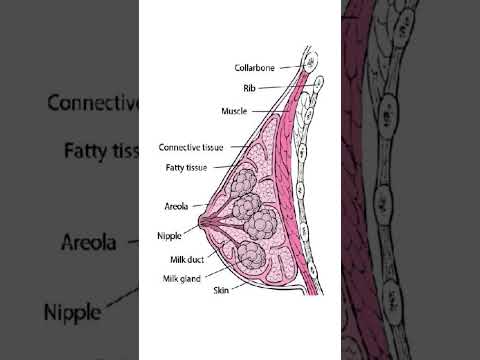
Next up is breast anatomy: Breasts consist of glandular tissue (which produces milk) and fat tissue. They’re also packed with nerves that make them sensitive to touch—something people often forget when discussing anatomy. Plus, breasts play an essential part in breastfeeding after childbirth, which connects mother and baby in such a beautiful way.
- Nipples: These are more than just decorative! They have milk ducts leading to them ready to go when it’s feeding time.
- Areolas: The pigmented area around the nipples—they might darken during pregnancy due to hormonal changes; it’s all part of preparing for potential nursing!
Mental health is also linked to physical health: There’s so much going on beneath the surface regarding hormones affecting mood swings and emotional states throughout different phases of life—like PMS or menopause! That’s why understanding this stuff matters beyond just biology—it touches our daily lives too.
This whole topic gets even deeper when we consider intersections with culture, personal experiences, education systems (or lack thereof), and how open we are as a society talking about “womanly” things without embarrassment or fear.
If anything stands out from this exploration of female anatomy it’s that knowledge empowers you! So whether you’re diving into biology books or chatting with friends over coffee about these topics—every bit helps break down stigmas around female bodies while equipping you with info to advocate for your own health & well-being!
This isn’t exhaustive by any means but hopefully gives you some perspective on those amazing structures we often take for granted! Stay curious!
Explore Free Online 3D Models of Female Anatomy for Science Education
Exploring female anatomy can be a game changer for understanding health, biology, and even art. With the rise of tech, you don’t even have to leave your house to dive into 3D models of the female body. They’re available free online, making them super accessible for anyone who wants to learn.
These **3D models** are like virtual human bodies that you can manipulate. You can rotate them, zoom in on specific areas, and peel away layers to really see what’s going on inside. This is not just cool; it’s also an incredible teaching tool! For instance, if you’re interested in how the reproductive system works, these models allow you to examine each organ up close and personal.
So where do you find these amazing resources? Here are a few options:
- Visible Body: It has detailed models that can show everything from muscles to organs. The basic version is often free!
- BioDigital Human: Similar to Visible Body but offers some fantastic interactive tools for exploring anatomy. There’s a free tier you can check out.
- AnatomyTOOL: Offers open-source 3D anatomical models. You can even download them for offline use!
When I first stumbled upon these resources during my studies, I was totally blown away! I remember looking at a specific model of the **heart** and realizing how intricate it was—like peeling back an onion! Each layer revealed something new about how blood circulates through our bodies. It made me appreciate biology so much more.
Another great benefit of these 3D models is that they enhance **visual learning**. Think about it: some people grasp concepts better when they can see them rather than just reading about them in textbooks. If you’re studying for a science class or trying to understand your own health better, these models make complex ideas more tangible.
And let’s not forget about diversity—many online platforms also include variations to reflect different body types and conditions. That way, you get a comprehensive view of anatomy that’s not just one-size-fits-all!
In short, using **free online 3D models** of female anatomy is an exciting way to learn about our bodies in depth. Whether you’re a student or someone curious about anatomy for personal reasons, diving into these digital tools opens up new avenues for understanding health and biology like never before! So go ahead and explore—you’ll be amazed at what you’ll discover!
Exploring Female Body Anatomy in 3D: A Scientific Guide to Understanding Human Physiology
So, you got curious about female body anatomy in 3D, huh? That’s great! Understanding how our bodies work, especially when it comes to human physiology, is super important. And there’s something really cool about visualizing all those intricate parts in three dimensions. It’s like getting a backstage pass to your own body!
First off, let’s talk about some key structures you’d see in a 3D model of female anatomy:
- The Reproductive System: This is often the focus of many studies. You’ve got the ovaries, fallopian tubes, uterus, and vagina all working together in a pretty amazing way. It’s not just for reproduction; these parts also play crucial roles in hormone production and menstrual cycles.
- The Endocrine System: Hormones are the body’s messengers. Glands like the ovaries and pituitary gland are essential for regulating everything from growth to mood swings.
- The Skeletal and Muscular Systems: Women generally have different body shapes and sizes compared to men. The pelvis is wider to accommodate childbirth. It’s fascinating to see how bones and muscles support all bodily functions integrally.
- Circulatory System: Blood flow is vital for overall health. In a 3D model, you can visualize how blood moves through arteries and veins specifically designed for women’s bodies.
You know what always blows my mind? The womb! Picture it: it can expand massively during pregnancy but return back to its normal size afterward. That elasticity is simply astonishing! And when you’re looking at it in 3D, you can actually see how everything fits together—like a complex puzzle.
When tech companies or educational institutions create these 3D models, they often use software that allows users to rotate and zoom in on different anatomical parts. This makes learning much more engaging…and honestly, way more fun than flat diagrams!
There’s also something empowering about understanding your own body at this level—it helps demystify processes like menstruation or pregnancy that are often shrouded in stigma or misunderstanding. Like when I learned about the menstrual cycle’s phases—I mean wow! For most people, it can be easy to think it’s just one long drag but seeing it laid out really opened my eyes to what’s happening internally.
And don’t forget about technology’s role here! With advances in virtual reality (VR) and augmented reality (AR), exploring female anatomy has become even more interactive. Imagine being able to put on some goggles and “walk” through a virtual body while learning where everything is located!
The takeaway here? Understanding female body anatomy isn’t just for medical students or scientists—it’s knowledge everyone should have access to! Knowing how your body operates can lead you toward better health choices and an appreciation of what it does every day.
If you ever get the chance to explore these 3D models yourself—go for it! Dive into those details because our bodies are truly amazing works of art.
So, let’s chat about something that’s super important but often gets kinda awkward—women’s body anatomy. Illustrating it for scientific education is no small feat, right? We’re talking about a subject that has been surrounded by a veil of mystery and misconceptions for way too long.
I remember in high school, sitting in biology class. The teacher pulled out this textbook with diagrams that looked more like abstract art than real bodies. It was confusing! Honestly, I didn’t realize how vital it was to actually understand what I was looking at. Fast forward to now, and I see how essential it is to present this information clearly and accurately.
You know, women’s bodies aren’t just a collection of parts; they’re complex systems with intricate functions—like the menstrual cycle or hormonal changes—and they deserve to be represented properly. But here’s the kicker: traditional illustrations often miss the mark. They can be clinical and detached or so stylized that they don’t really show what’s happening in the real world.
Imagine if we had illustrations that not only accurately depicted anatomy but also celebrated the diversity of women’s bodies! Like different shapes, sizes, and colors. That would help so many people relate to what they’re learning about—whether it’s students looking for answers or even adults trying to understand their own health better.
And let’s not forget cultural sensitivity! Different cultures have various perspectives on women’s health and anatomy, which means we should consider those nuances when creating educational materials. An approach that includes a range of voices can only enrich our understanding.
In essence, illustrating women’s body anatomy isn’t just about science; it’s about empowerment and education. Seriously! When you can visualize what something looks like—and understand why it matters—you become more capable of taking charge of your own health decisions or engaging in informative conversations with friends or family.
So yeah, when you think about all these things together—the need for clarity, representation, and respect—it becomes clear how essential these illustrations are in reshaping attitudes toward women’s anatomy. It’s not just drawing; it’s opening up conversations that need to happen! And who knows? Maybe one day we’ll look back at those old textbooks and smile at how far we’ve come.