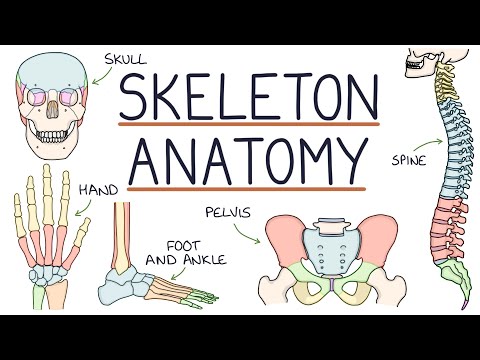
Alright, so picture this: you’re at a Halloween party, and someone shows up dressed as a skeleton. Not just any skeleton, but one with sparkly bones and a top hat. You can’t help but chuckle, right? But then it hits you: that fancy costume is basically a nod to our amazing human skeleton.
Yeah, we’ve got this incredible framework holding us upright. Seriously! You’ve got over 200 bones all doing their thing while you walk, run, or dance like nobody’s watching. You know what’s wild? Each bone has its own story, and when you really think about it, they’re like the unsung heroes of our body.
So let’s chat about why understanding our skeleton is not just for Halloween enthusiasts or doctors in lab coats. It’s for anyone who wants to appreciate how cool our bodies really are! Are you with me? Good! Let’s get into the nitty-gritty of those bones that keep us standing tall.
Unveiling Human Stories: Insights from Forensic Anthropology on the Role of Bones in Studying Human Skeletons
Forensic anthropology is a pretty captivating field. It combines the study of human bones with detective work. When someone passes away under mysterious circumstances, forensic anthropologists step in to help uncover the truth about what happened. They take a close look at skeletons to reveal fascinating stories, you know?
First off, let’s talk about what bones can tell us. Bones are like history books about our lives. They carry clues about age, sex, ancestry, and even diseases we might have had. Imagine a young adult who lived a rough life in the city; the wear on their bones can hint at their lifestyle choices or work conditions.
- Age estimation: The way your bones develop and change over time helps experts figure out how old you were when you died. For instance, kids have softer bones with more cartilage, while older folks have denser bones that show signs of arthritis.
- Sex determination: Male and female skeletons have different characteristics. Men usually have bigger brow ridges and more robust skulls. Women generally have wider pelvises which help during childbirth.
- Ancestry analysis: The shape of your skull can indicate where your family comes from; for example, certain features are characteristic of specific populations.
- Health indicators: Bones can show signs of stress or disease over time; they may develop lesions from infections or malnutrition.
But it’s not just about gathering facts—there’s an emotional side too! Imagine finding a long-lost relative’s remains and piecing together their life story through their bones. It’s like unearthing little secrets locked away for years.
The methods used by forensic anthropologists are diverse and quite sophisticated. They often use techniques like DNA analysis to match remains with living relatives. This is super important for identifying victims in mass disasters or criminal cases.
And there’s also the archaeological aspect. When excavating a site, such as a historical graveyard or battlefield, they gather information from the context surrounding the skeletons—like items buried alongside them or even soil samples that might hold clues.
It can feel like piecing together a massive jigsaw puzzle where each bone represents an essential piece of someone’s life story. Every fracture tells tales of struggles or battles fought; every wear pattern speaks volumes about how someone lived.
So next time you think about bones—just remember they’re not just lifeless pieces of material lying around! Instead, they are profound storytellers bridging us to our past and helping solve mysteries that lie beneath the surface!
Unveiling the Science of Skeletal Anatomy: Techniques for Identifying Human Remains
The human skeleton is like a puzzle, you know? Every bone tells a story, and when you put them together, you can uncover some pretty fascinating information about people who lived long ago. Let’s break down the science of skeletal anatomy and how experts identify human remains through various techniques.
First off, the human skeleton consists of 206 bones in adults. Each bone has its unique shape and size, which can reveal a lot about the individual. For example, the skull provides clues about age, sex, and even ancestry. Those are vital details for forensic scientists or anthropologists who study remains.
When it comes to identifying remains, one important technique is osteology. This is basically the study of bones. Osteologists examine different aspects of bones to gather information. They might look at the size and shape of specific bones. For instance, pelvic bones are particularly telling; they differ between genders because of childbearing in females.
Then there’s something called forensic anthropology. This goes beyond just looking at bones; it brings in other factors like the context where the remains are found. Say someone discovers a skeleton in a field versus a grave; that changes how you interpret what happened to that person.
One fascinating method used in this field is called dental analysis. Your teeth can reveal your age and even your diet! That’s why some experts take special care to look at dental records if they have them available. It’s like having a little ID card right in your mouth.
Another cool part? DNA analysis! If the organic material is still preserved enough for testing, it can provide incredibly detailed info about ancestry and health issues. You could potentially link someone back to their family tree just through tiny samples taken from their bones.
On top of all these techniques, there’s also the use of imaging technology like X-rays or CT scans. These tools help visualize internal structures without having to disturb the remains physically. Imagine getting an inside scoop on bone health or possible fractures without lifting a finger—pretty amazing!
So yeah, when it comes down to it, identifying human remains through skeletal anatomy isn’t just about recognizing shapes or sizes; it’s like being a detective piecing together someone’s life story from their bones.
In summary:
- The human skeleton has 206 bones.
- Osteology studies shape and size.
- Forensic anthropology considers context.
- Dental analysis reveals age and diet.
- DNA analysis links individuals to families.
- X-rays and CT scans provide internal visuals.
In conclusion, identifying skeletal remains combines science with storytelling—it’s all about filling in those gaps left by time!
Unraveling the Main Idea of the Evolving Human Skeleton: Insights from Evolutionary Biology
The human skeleton is like a storybook of our evolutionary past. If you think about it, it tells us about where we came from and how we’ve changed over millions of years. Pretty cool, right?
First off, let’s talk about what the skeleton actually is. It’s not just a bunch of bones hanging out together. It’s a complex system that provides structure, support, and protection for our organs. The human skeleton has 206 bones in total (give or take, if you count some smaller bones as well).
One major point in understanding the human skeleton is its evolution. Through evolutionary biology, we see how our skeletal structure adapted to different environments and lifestyles over time. For instance:
This shift to walking on two legs caused some interesting changes! Imagine trying to keep your balance while standing only on your back legs—there’s a lot more involved than just standing still. You must also consider how this affects everything from our spine to our feet.
Another key insight comes from studying other species. For example, look at chimpanzees—our closest relatives! They have a different skeletal structure because they’re built for climbing trees rather than walking long distances on flat terrain. Their arms are longer relative to their legs—which makes climbing easier—but humans became more balanced as they spent time walking.
There’s also something called “vestigial structures.” These are traits that still exist but have lost their original function over time. Think about your tailbone; it doesn’t serve any purpose anymore since we don’t have tails like some animals do! This shows remnants of our evolutionary journey.
So why does all this matter? Well, understanding how our skeletons evolved helps us figure out what health issues we might face today. For instance:
When you think deeper about it, each bone tells a story of survival and adaptation throughout history. It’s not just science; it’s part of who we are!
Looking at these elements really helps unveil the bigger picture behind our anatomy. Just remember: every twist and turn in our skeletal evolution reflects challenges faced by humans throughout history—from hunting for food to adapting to new environments.
In the end, the human skeleton isn’t just an assembly of bones; it’s a living testament to our past—a narrative that will continue unfolding as we move forward into future generations!
You know, there’s something pretty cool about the human skeleton. It’s like this intricate framework that holds everything together. For a long time, I’ve been fascinated by how artists illustrate it. I mean, think about it! Every time you see a drawing of a skeleton, you’re not just looking at bones—you’re witnessing a story of how our bodies function and what makes us human.
I remember this one time in school when we had to draw a skeleton for biology class. I thought, “Oh man, this is gonna be boring!” But once I started sketching, it was like all these little light bulbs went off in my head. Each bone had its own purpose and fit into the whole picture in such a clever way! Like the way the pelvis cradles your organs or how those tiny bones in your ear help you hear. Crazy, right?
The thing is, illustrating the skeleton isn’t just about getting every rib and vertebra in place. It’s also about showing how they connect and work together. Artists often play with light and shadows to add depth or show movement. A well-drawn skeleton can express so much—strength, fragility, even gracefulness as it mimics our own movements.
And there’s another layer to consider: history! Back then, artists like Leonardo da Vinci didn’t have access to all the fancy tech we do now, yet he nailed it with his anatomical drawings. He took dissections of cadavers and translated that into art that still blows minds today! You gotta admire that blend of art and science.
So yeah, while we’re illustrating public health campaigns or even medical textbooks today, it’s crucial to think about accuracy but also creativity! Good illustrations can reach people on an emotional level; they can inspire curiosity or even respect for the human body. When you think of all of that wrapped up in one simple image of a skeleton? That’s pretty powerful stuff.
In short, illustrating the human skeleton isn’t just science; it’s an art form where biology meets creativity — a true reflection of what being human is all about! And who knew that simple bones could hold so much meaning?