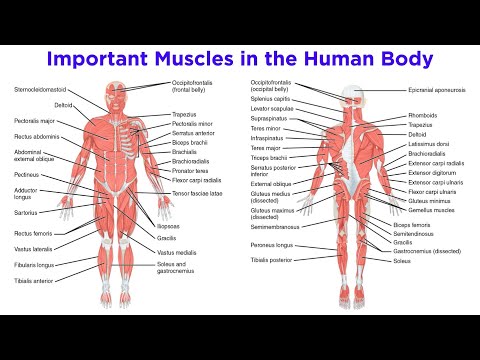
You know that feeling when you try to lift a couch, and your muscles just decide to call it quits? Yeah, we’ve all been there! It’s like they say, “Nope, not today!”
Well, our muscles are pretty amazing creatures. They’re the reason we can do everything from running a marathon to simply waving at a friend. Each muscle plays its own little part in this massive symphony of movement.
But here’s the thing: have you ever thought about what’s really happening when you flex or even relax? Seriously, it’s wild!
So let’s dive into the world of muscles – their functions, how they work, and why they sometimes seem to have minds of their own. You might just find yourself appreciating your biceps (and that couch-lifting moment) a whole lot more!
Comprehensive PDF Guide to Human Body Muscles: Anatomy and Function in Science
The human body is like a well-oiled machine, and you know what keeps it moving smoothly? Muscles! There are over 600 muscles in your body, each one with its own role. Let’s break it down.
Types of Muscles
Muscles come in three main types: skeletal, smooth, and cardiac.
- Skeletal muscles are what you think of when you flex your biceps. They connect to bones and help you move. You control these muscles, which is why you can choose to wave hello or run a marathon.
- Smooth muscles are found in places like your stomach and blood vessels. You don’t think about these guys—they work without you having to tell them what to do!
- Cardiac muscle, as the name suggests, is only found in your heart. It’s specialized to keep pumping blood all day, every day.
Anatomy of Skeletal Muscles
These muscles are made up of bundles of fibers that can contract to create movement. When you want to lift something heavy or even just stand up, these fibers work together.
Each muscle has a few key parts:
- Tendon: The strong cord-like structure that connects the muscle to the bone.
- Origin: The starting point of the muscle—where it attaches closer to the body trunk.
- Insertion: Where it connects further away from the trunk; this is where the action happens!
How Muscles Work
Muscle fibers contract when they receive signals from your brain via nerves. Imagine this: You’re at a concert, lost in the music, and suddenly realize you want to dance! Your brain sends signals down through your spinal cord into your legs’ muscles. That’s how quick it happens!
Each fiber has tiny sections called sarcomeres. These little guys contain proteins that slide past each other when stimulated—this sliding is what causes contraction.
The Role of Antagonistic Pairs
Now here’s an interesting bit: Muscles usually work in pairs called antagonistic pairs. When one muscle contracts (like your bicep when you curl), its partner (the tricep) relaxes. This coordination is essential for smooth movements.
To visualize it better: think about holding onto something tight with one hand while opening a door with the other—all those complex movement kinds depend on this teamwork!
The Importance of Muscle Function
Muscle health is crucial for everything from everyday tasks to sports performance. If you’ve ever experienced soreness after exercising or felt tired just walking upstairs, that’s all about how your muscles are used.
When we talk about function, it’s not just physical strength but also endurance and flexibility that plays into how well our muscles work together.
Sometimes life throws challenges at our bodies—injuries or age can slow us down and impact how our muscles function over time.
So there you have it! Understanding this fascinating network helps us appreciate just how amazing our bodies really are. Besides keeping us upright and moving around daily, our muscles play an invaluable role in overall health too!
It seems simple but knowing how these components interact highlights just how much goes into even the most basic activities we do every day!
Exploring the Three Main Types of Muscles in the Human Body: A Scientific Overview
Muscles in your body are like the engines that keep everything running smoothly. There are three main types of muscles, and each has its own unique job. Let’s break them down, shall we?
1. Skeletal Muscles
These are the ones you probably think of when you hear “muscle.” They’re attached to your bones and help you move around. You know when you flex your bicep? That’s skeletal muscle in action! What’s interesting is that these muscles are under your control—this means you can decide when to move them. Imagine trying to lift a heavy box or play a sport; those muscles kick in to get the job done.
2. Smooth Muscles
Now, smooth muscles are a bit different. You can’t control these bad boys at all! They work automatically, taking care of things like digestion or blood flow. For example, the walls of your intestines are lined with smooth muscle, helping to push food through your system without you even having to think about it. Isn’t that kind of cool? It’s like they have their own little job—just doing their thing while you go about your day.
3. Cardiac Muscles
Then there’s cardiac muscle, which is all about keeping your heart ticking away happily and healthily. This muscle is also involuntary, meaning it works without any conscious effort from you. Can you imagine if you had to remember to tell your heart to beat? What a mess that would be! This type of muscle contracts rhythmically and never tires out—it just keeps going, day after day, for as long as you’re alive.
In summary:
- Skeletal muscles: Voluntary; helps with movement.
- Smooth muscles: Involuntary; manages internal processes like digestion.
- Cardiac muscles: Involuntary; keeps the heart beating continuously.
Understanding how these muscles work helps highlight how our bodies function as a whole. It’s pretty amazing how they all come together for everything from lifting weights at the gym to simply digesting that pizza slice from last night! So next time you’re moving around or feeling your heartbeat race during exercise, just appreciate all those little muscle fibers working tirelessly for you—what a team they make!
Exploring the 7 Key Functions of Muscles in Human Physiology
So, let’s talk about muscles. You know, those things that help you lift your grocery bags and run for the bus? Muscles are fascinating structures in our bodies that do way more than just help us move around. They play a bunch of crucial roles in human physiology, and it’s pretty cool to break them down. Let’s explore the seven key functions of muscles.
1. Movement: This is the big one! Muscles enable us to perform all sorts of movements—from taking a step to waving at a friend across the street. Skeletal muscles are responsible for voluntary movements, meaning you can control them. Think about doing jumping jacks or playing your favorite sport; it’s all thanks to these muscles working together.
2. Posture: Ever tried standing perfectly still? It requires effort! Your muscles constantly work to keep you upright and maintain good posture. They’re like little helpers keeping everything aligned and stable, even when you’re just sitting on the couch binge-watching your fav series.
3. Stabilization of Joints: Muscles also help stabilize joints in your body. When you bend your elbow or knee, it’s not just bone that keeps everything together; surrounding muscles provide support too! This stability is super important during activities like running or lifting heavy things because it prevents injury.
4. Heat Generation: Here’s something neat—muscles generate heat when they contract! This process helps regulate your body temperature, especially when you exercise. Ever noticed how you start sweating after a workout? That’s your body cooling down as those hardworking muscles create heat.
5. Circulation of Blood: The heart is the superstar here, but guess what? Muscles also contribute by aiding blood flow! Skeletal muscles pump blood back to your heart as they contract and relax—like a natural boost for circulation which keeps oxygen moving throughout your body.
6. Digestion: Yup, muscles play a role in digestion too! Smooth muscles line your digestive tract and help move food along as it gets processed inside you—think of them as conveyor belts that keep everything moving smoothly!
7. Respiratory Function: Last but not least, let’s talk about breathing. Diaphragm muscles expand and contract as you breathe in and out, making sure oxygen gets into your lungs efficiently. It’s sort of like an automatic pump that works every moment of every day without you having to think about it!
So there you have it—a peek into how integral our muscles are for so many aspects of life beyond just movement alone! Next time you flex those biceps or kick a soccer ball, remember—you’re harnessing the incredible power of these amazing structures in ways that keep everything running smoothly!
You know, when you start thinking about the muscles in your body, it’s kind of mind-blowing. I mean, just imagine how much work they do every single day without us even realizing it! Like, we often take for granted that we can just walk around, pick things up, or even smile. But have you ever stopped to think about what’s going on under the skin?
So, let me tell you a quick story. A while back, I tried to impress a friend by doing some push-ups. I thought, “How hard could it be?” Well, let me tell you: my arms were like jelly afterward! That was a big wake-up call about how our muscles work together. There’s this incredible thing called muscle memory that kicks in after doing something enough times. You know how when you first start learning to ride a bike? It feels all wobbly and awkward, but eventually your body just knows what to do.
Now, our muscles come in different types – there are skeletal muscles that help us move around, smooth muscles that control things inside our organs (like your stomach doing its thing), and cardiac muscle which keeps your heart beating strong. Isn’t it amazing how they all work in harmony?
Every time you bend over to tie your shoes or reach for that snack on the top shelf (the important stuff!), there are so many muscle fibers working together. It’s like a well-rehearsed dance routine happening right under the surface! And seriously, if we didn’t have stamina and strength from these muscles built through exercises like running or climbing stairs, life would be quite boring—imagine just sitting around all day!
Plus, here’s something cool: our muscles don’t just help with movement; they also play a role in burning energy and keeping us warm. Ever notice how you get warm after exercising? That’s your muscles working hard and generating heat!
There’s so much complexity behind those biceps and quads – nerve signals firing off at lightning speed just so we can move smoothly. It makes the simple act of lifting a cup of coffee feel like magic when you really think about it.
So next time you’re feeling lazy or tired after exercising (happens to the best of us), remember this little dance happening inside: each stretch and contraction is not only shaping our bodies but also connecting everything from head to toe. Isn’t that something worth appreciating?