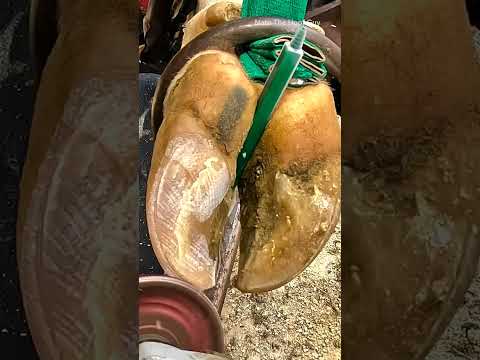
You know, cows are pretty interesting creatures. I mean, they spend all day munching grass and looking totally chill, but have you ever thought about their hooves? Seriously! Those big clunky things are way cooler than you might think!
One time, I was at a farm and watched some cows prance around. Their hooves were just flying everywhere! It made me wonder what’s going on down there. Like, how do these things even work?
Well, it turns out there’s a whole science behind cow hoof anatomy and function. It’s not just about keeping them from slipping in the mud! Their hooves are like marvels of nature—designed for stability and strength. So as we dig deeper into this topic, get ready to be amazed by something you never really thought about before!
Understanding Cow Hoof Anatomy and Function: A Scientific Exploration
So, cow hooves? Seriously interesting stuff! Let’s break them down together.
Cows are remarkable animals, and their hooves play a huge role in how they move and live. Basically, a cow’s hoof is made up of several parts that work together like a well-oiled machine. The primary purpose of the hoof is to support the weight of the cow while providing traction on different surfaces.
First up, we’ve got the ***claws***. Each hoof has two main parts called claws, which are like your toes but more specialized. The claws help distribute weight and keep balance when the cow stands or walks. That’s why you might see cows using their hooves differently depending on where they’re walking.
Then there’s the ***horny wall***. It’s tough and keratin-rich—think of it like the hard outer layer of your nails. The wall protects the sensitive inner structures of the hoof. If cows are walking on rough terrain, this wall is crucial for preventing injury.
Now let’s chat about the ***sole*** and ***bulb*** of the heel! The sole is softer than the wall and molds itself to different surfaces, which helps with grip—super important for those muddy farms! Meanwhile, the bulb is located at the back of each claw and acts as a cushion when cows walk or run. Kind of like wearing sneakers with good shock absorption!
Another cool part? The **digital cushion** located inside each hoof! This little structure acts as a shock absorber too, reducing impact when cows move around. It’s fascinating how all these parts work together for comfort and safety.
Oh, one thing to remember is that improper hoof care can lead to issues like lameness in cows. Just imagine if you had a pebble stuck in your shoe all day—that wouldn’t feel great at all! Regular trimming keeps their hooves healthy so they can roam around happily.
In conclusion, understanding cow hoof anatomy helps us appreciate these magnificent animals even more. By taking care of their hooves and understanding how they function, we contribute to better cattle management practices overall. Isn’t it amazing how something so simple allows for such complex interactions in nature?
Understanding Cow Hoof Anatomy: The Role of Corium in Bovine Health
Alright, let’s talk about cow hoof anatomy and something called corium. Seriously, it might sound a bit technical, but it’s super important for these big animals. Cows have some of the coolest hooves in the animal kingdom, and understanding their structure helps us get a grip on their health.
The hoof of a cow is basically divided into some key parts. You know how our feet have skin, bones, and nails? Well, cows do too, but their hooves are a bit more complex. They have two main digits that form what we call claws, and each claw has its own little world inside.
Now let’s get to the juicy stuff: the corium. This part is super cool because it’s like the foundation for everything else going on in the hoof. Think of corium as a protective layer that’s rich in blood vessels and nerves. It supplies nutrients to the hoof wall and helps keep everything alive and kicking. Without it, those hooves wouldn’t be strong or healthy at all!
- Nutrient Supply: The corium provides essential nutrients to the hoof wall. Just like we need food for energy, cows need this for healthy hooves.
- Sensory Functions: Those nerves in the corium help cows feel different surfaces when they walk around. Imagine stepping on something sharp; you’d want to know right away!
- Support Structure: The corium acts as a foundational support system for the hoof wall itself. It keeps everything structured and prevents deformities.
You see how crucial this part is? If something goes wrong with the corium—like an infection or injury—it can lead to all sorts of problems for our bovine friends. For instance, think back to that one time your friend twisted their ankle running on uneven ground—ouch! Cows can suffer similarly if their hooves aren’t cared for.
Cow health issues related to hoof problems often come from lack of proper care or nutrition. A cow with unhealthy hooves can face serious challenges like lameness or reduced productivity—nobody likes that! Farmers pay attention to things like diet and living conditions to keep those hooves happy.
Caring for bovine feet might not seem glamorous at first glance, but trust me; it matters more than you’d think! The simple act of checking corium health regularly can save farmers tons of stress down the line.
So next time you catch sight of cows grazing peacefully in a field, remember there’s way more happening underneath those sturdy hooves than meets the eye—thanks to good ol’ corium doing its thing!
Comprehensive Guide to Cow Hoof Anatomy: Detailed Diagrams and Scientific Insights
Cow hooves, wow, they’re pretty fascinating when you actually take a closer look. Like, have you ever thought about how essential they are for a cow’s overall health and movement? Cow hooves aren’t just simple structures; they’re intricate and designed for their specific lifestyle.
First up, let’s talk about what a cow hoof is made of. The hoof is basically divided into three main parts: the toe, the heel, and the sole. The toe is where you see that sharp tip, and it’s super important for digging into various terrains. Meanwhile, the heel helps absorb shock when cows walk. And that sole? It’s like a protective barrier against all sorts of nasty stuff on the ground.
When it comes to anatomy, each hoof has multiple layers. Let me break it down:
- Outer Layer: This part is known as the hoof wall. It grows continuously and protects the inner structures.
- Coronary Band: This upper edge of the hoof wall produces new growth; it’s like a factory for hooves!
- Frog: It looks like a V shape in the middle of the sole. It plays a crucial role in pumping blood back up through the leg.
- Sole: The underside that provides protection but should be kept softer than concrete—too hard can lead to problems.
Cows stand on two distinct toes per foot—like little “cloven” feet! Each toe operates individually which gives them an awesome ability to navigate rough terrains without losing balance. Think about walking on rocky paths; it’s way easier if your feet can adjust independently!
Now, you might be wondering why this all matters. Well, healthy hooves are crucial for their **mobility and overall well-being**. If something goes wrong with their hooves—like cracks or infections—it can seriously affect how they walk or even stand up! Imagine trying to walk around with painful shoes all day; not fun at all!
Speaking of which, ailments related to cow hooves can vary widely from simple overgrowths to more serious issues like laminitis (which is inflammation of that sensitive inner layer). Keeping an eye on their hoof health is essential because it directly ties into their comfort and productivity.
So yeah, cow hoof anatomy isn’t just some boring topic hidden in textbooks! It’s vital knowledge if you’re interested in animal care or farming practices. When cows are healthy and happy—with solid hooves—they can roam freely while munching on grass without any issues.
Next time you see cows grazing peacefully in a field, take a moment to appreciate those amazing hooves doing all that hard work! They sure do play an underrated but vital role in these animals’ lives.
So, let’s chat about cow hoof anatomy for a second. You know how you see those big, clunky hooves clomping around on farms? They might look simple, but there’s actually some pretty neat science behind them. Seriously, if you’ve ever seen a cow kick up mud or trot across a field, you’ve got a front row seat to some cool biology at work.
First off, it’s all about the structure. Cow hooves are split into two main parts called digits. Yep, that’s right! They’re like little split toes. This split design helps distribute their weight better and gives them more stability on uneven ground—think rocky pastures or muddy fields. Kind of like having two sturdy bases instead of just one!
There’s also something called the hoof wall that protects the sensitive inner parts of the hoof. It’s made of keratin—a tough protein that also makes up our hair and nails. When I learned that, I thought it was wild how similar we really are to cows in some ways! Anyway, this outer layer is super essential because it helps keep their feet safe from injury while walking around. Imagine walking everywhere barefoot; you’d want some protection too!
And then there’s the sole—the soft part underneath that gives them grip while keeping them comfy as they move. It’s fascinating how their hooves have evolved to help them adapt to their environment! You wouldn’t want a cow trying to navigate a grassy hill with slippery shoes or something.
Now here’s where it gets personal for me. Once, I visited a farm with my family and saw this sweet old cow struggling to walk properly because of an infected hoof. It broke my heart! The farmer explained to us how important foot health is for cows; if their hooves aren’t taken care of, it can lead to serious issues like lameness and even impact their milk production or overall happiness! That day hit home just how interconnected everything is—like how farmers need to be vigilant about hoof care not just for the cows’ sake but for the livestock’s health overall.
When all’s said and done, cow hooves might seem ordinary at first glance, but they’re actually these incredible structures designed through evolution to keep our mooing friends healthy and happy! Just goes to show you; there’s more than meets the eye out there in nature—you know?