You know what’s wild? I once got lost in a huge maze at a fairground. It was like those moment in movies where you’re just running around, trying to remember where you’ve been. Every turn looked the same and I was totally confused.
Well, that’s kinda how Breadth-First Search (BFS) works in graph theory! It’s this cool way of exploring everything step by step, like calmly figuring your way out of the maze instead of panicking. You start from one point, check out all the neighbors first, and then keep going deeper into each path.
This method is super handy for all sorts of things, not just mazes! Think social networks or finding the quickest route on Google Maps. It’s this simple but powerful tool that can save us from getting lost…well, most of the time! So stick around, let’s unravel this together; it might just make your next treasure hunt a bit easier!
Exploring the Applications of Breadth-First Search in Scientific Research and Data Analysis
Alright, let’s get into the world of **Breadth-First Search** (BFS). It might sound technical, but really, it’s all about exploring things in layers. Imagine you’re at a party, and instead of just talking to one person all night, you chat with everyone in the room by going from one group to another. That’s how BFS operates in graph theory!
**What is BFS?** Well, here’s the deal: BFS is an algorithm used for traversing or searching through data structures like trees and graphs. It starts at a node (like that first person you talk to) and explores all its neighbors before moving on to their neighbors. This means it searches layer by layer, which makes it super effective for certain scenarios.
Applications in Scientific Research
In scientific research, BFS can be pretty handy for several reasons:
- Network Analysis: When researchers study ecosystems or social networks, they often need to understand how different species or individuals interact. BFS helps map out these relationships effectively.
- Path Finding: Think about GPS navigation—when you’re looking for the shortest route from A to B, BFS can help calculate that path by checking all possible routes systematically.
- Circuit Design: In engineering, especially with computer chips, BFS is used to check circuits efficiently. It helps in verifying if signals can travel correctly through complex connections.
One time I was working on a group project where we had to analyze social media interactions during a public health crisis. We used BFS to visualize how information spread across different communities online. By tracing connections among users who shared posts about health guidelines, we could see patterns emerge throughout our research.
Another cool application comes up in **bioinformatics**. When scientists study genetic sequences or protein structures, they use graph theory concepts like BFS to identify similarities and relationships between various biological entities.
Data Analysis Magic
In data analysis, using BFS is like organizing your closet—first you tackle one shelf before moving onto the next one!
- Data Clustering: You can utilize BFS algorithms when trying to identify clusters within large datasets. By exploring nearby data points first, it’s easier to categorize them based on similarity.
- Recommendation Systems: Ever wondered how Netflix suggests shows for you? They often use graph algorithms like BFS behind the scenes to suggest films based on what you’ve watched before!
- Anomaly Detection: In cybersecurity or fraud detection scenarios, discovering unusual patterns in data can benefit from a breadth-first approach since it examines each part of the dataset thoroughly.
So basically, whether you’re trying to make sense of population dynamics or just figuring out which socks are missing from your dryer (okay maybe not that), *Breadth-First Search* has got your back!
At the end of the day, while it may seem straightforward at first glance—it’s this friendliness that gives BFS its charm—using it effectively requires some serious thought about how everything connects together. But once you get the hang of it? Well then you’re ready to unravel insights hidden deep within complex data structures!
Understanding Breadth-First Search (BFS) in Graph Theory: Concepts and Applications in Computer Science
So, let’s chat about something called **Breadth-First Search (BFS)**. If you’ve ever dived into graph theory, you might already know how useful it is. Seriously, BFS is like your trusty map when you’re wandering through a maze. Before we dig in deeper, let’s just clarify what we mean by graphs.
A graph is basically a collection of **nodes** (or vertices) connected by **edges**. Think of it like a network of friends on social media; your friends are the nodes and the connections between them are the edges. Pretty relatable, huh?
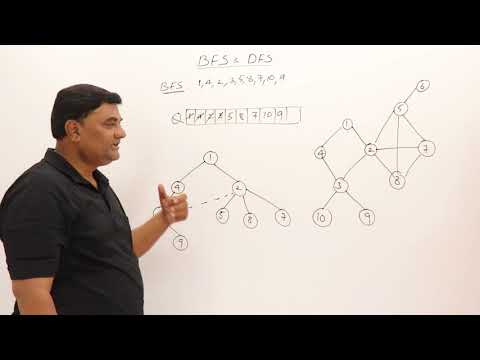
Now, BFS is a way to navigate this kind of structure. The key concept here is that it explores all the neighbors at the present depth before moving on to nodes at the next depth level.
How does BFS work? Well, it’s pretty simple! Here’s the gist:
- Start at a selected node (this is called the **source node**).
- Explore all its immediate neighbors (those directly connected to it).
- Then, for each of those neighbors, explore their neighbors too.
- You keep doing this until you explore all reachable nodes!
It’s kind of like how you’d invite everyone over for a party. First, you call your closest friends—like seriously close—then they call their friends who then call their friends. Everyone’s invited!
Why use BFS? There are loads of scenarios when BFS struts its stuff!
Let’s say you’re designing social networks or search engines; BFS can help find the shortest path between two users or index pages effectively.
Another cool application? Suppose you’re into AI or game development—BFS can help characters navigate mazes or environments without getting lost.
And oh man, I remember when I first stumbled upon graph theory in college! It was during my computer science course. The professor explained BFS using a simple analogy about sending messages through networks. We were tasked with figuring out how to send messages in real time! It was like solving a puzzle together and such an adrenaline rush just to see how everyone reacted differently.
A quick example: Imagine a small town where everyone knows everyone else within one step — you could think of each person as a node and every friendship as an edge between those nodes. If one person throws a party and invites their immediate circle, those folks will do the same until everybody in town has partied together if no one gets left out!
So, to wrap this up: Breadth-First Search isn’t just some theoretical concept; it’s practical and shows up in various applications in computer science. From finding paths on maps to analyzing social networks—it helps us make sense of how things connect!
Pretty neat stuff if you ask me!
Exploring the Application of Breadth-First Search (BFS) in Graph Theory and Its Scientific Implications
Alright, let’s chat about this Breadth-First Search (BFS) thing in graph theory. You might be asking yourself, “What even is a graph?” So, picture a bunch of dots connected by lines. Those dots are called vertices, and the lines are edges. These structures help us model relationships in various fields, from social networks to computer networks.
Now, bread-first search is like a method for exploring these graphs. Imagine you’re at a party looking for friends—you start from where you are and check out everyone nearby before moving further away. BFS does just that! It looks at all the neighbors of a node (that’s your starting point) before going deeper into the graph.
How does BFS work? Well, it uses a queue to keep track of which nodes to explore next. When you visit a node, you add its unvisited neighbors to this queue. You keep going until there are no more nodes left to check. This method ensures that you find the shortest path in an unweighted graph—so if you want the quickest way to get from point A to point B in this network of dots, BFS has got your back.
Applications? Tons! Here are some cool examples:
- Social Networks: When you look for friends on platforms like Facebook, they use BFS algorithms to suggest people you might know based on mutual connections.
- Web Crawlers: Search engines use BFS to index pages quickly by exploring all links starting from one page before moving on.
- GPS Navigation: Navigating through streets? GPS systems often utilize BFS algorithms for finding the shortest route.
So yeah, think about how many times you’ve used something that relies on this neat little algorithm without even knowing it!
But wait—there’s more! The scientific implications of BFS can go into fields like biology too. For example, researchers study how viruses spread through populations using graph models and can apply BFS methods to predict outbreak patterns.
Sometimes things can get tricky with large graphs though because memory use can balloon if there are too many vertices and edges. That’s when scientists tweak algorithms or combine them with other methods for efficiency.
In summary, **breadth-first search** isn’t just some dry concept stuck in a textbook; it’s super practical and helps solve real problems we encounter every day—whether it’s navigating your social life or figuring out how diseases spread! It’s pretty mind-blowing when you think about it all interconnected like that.
Alright, let’s talk about this thing called Breadth-First Search, or BFS for short. It’s like a super cool method in graph theory that can feel a bit like doing a big puzzle. You know, where you start with corner pieces and then work your way around to fill everything in? That’s kind of how BFS works with graphs.
So imagine you have a big network of friends, like everyone you met at that huge party last year. Each friend is like a node, and the connections between them are the edges. When you want to find someone specific, you don’t just go straight to the depth of your friendship. Nope! Instead, you check out all your friends first before moving deeper into the network. BFS takes this approach – it explores all neighbors before diving deeper into any one path.
Let me tell you about a time I got lost in a new city without my phone. I was trying to find this little café my friend raved about, but all those streets looked pretty much the same! So instead of picking one direction and sticking with it until I figured out if I was right or wrong—which might have taken forever—I decided to explore one street at a time and check every side alley along the way before moving onto the next main street.
That’s BFS in action! It’s not just for getting coffee though; it has tons of applications. Think about web crawling—search engines use BFS to index pages on the internet. They start from one page and look at all linked pages before moving on into more links.
It’s also handy for finding the shortest path in maps or games where characters need to navigate through levels efficiently—just like how Mario hops through those levels without running into walls too often! Oh, and don’t forget social networks where it helps suggest people you might know based on mutual friends.
But here’s something interesting: while BFS is great for finding shortest paths in unweighted graphs, if there are weights (like when some connections cost more than others), then it’s time for other approaches like Dijkstra’s algorithm.
So yeah, next time you’re faced with some sort of complex problem or maze—real or digital—just remember that sometimes taking it step by step through each immediate connection can get you where you’re going faster than blindly rushing through every option right off the bat!