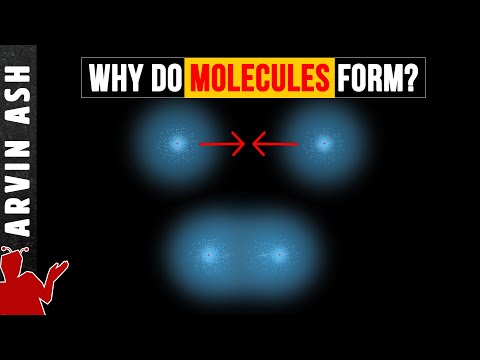
So, imagine you’re at a party. You see people mingling, chatting, and forming cliques. It’s like the dance floor of science! Each person is like an atom, and guess what? They don’t just hang out solo; they’re out there bonding!
Chemical bonding is pretty much the glue that holds everything together in our universe. Seriously! Without it, we wouldn’t have water to drink or air to breathe. Wild, huh?
You know those friendship bracelets we make as kids? Well, atoms do something kinda similar but way more complex and cool. They connect in ways that create everything around you—like your favorite snacks or those cozy sweaters.
Let’s take a stroll through the molecular world and check out all the magic behind these connections. Are you ready? Come on, let’s figure this out together!
Molecular Bonding: Understanding the Connections Between Molecules in Science
Molecular bonding is like the romantic connections of the atomic world. Picture atoms as individuals looking for companionship. They don’t want to be lonely, so they come together to form molecules. These connections, or bonds, are what make up everything around us—even you!
There are three main types of bonds: covalent, ionic, and metallic. So let’s break ’em down.
- Covalent Bonds: This is when atoms share electrons. Imagine two friends sharing a pizza; both get to enjoy it! For example, in a water molecule (H2O), each hydrogen atom shares an electron with the oxygen atom.
- Ionic Bonds: Here’s where things get a bit spicy! One atom gives away an electron while another takes it. It’s like a trade-off—and this creates charged ions that attract each other. A classic example is table salt (NaCl). Sodium (Na) loses an electron to become positive, while chlorine (Cl) gains one to become negative. They stick together because opposites attract!
- Metallic Bonds: Think of metals as a party where everyone shares the dance floor! In this bond type, electrons are free to move around between many atoms—this explains why metals can conduct electricity so well.
But wait! It gets more interesting when these bonds come together in different ways. You see, how strong or weak these bonds are can affect properties like boiling points or solubility.
Let’s take carbon dioxide (CO2) as an example. The carbon atom forms double covalent bonds with two oxygen atoms. This structure makes CO2 gas non-reactive and very different from water—though both have covalent bonds!
And remember those beautiful crystals you sometimes see? That’s another fun aspect of bonding! Ionic compounds arrange themselves in repeating patterns called lattices that can create stunning structures.
Molecular bonding doesn’t just play a role in chemistry; it’s important for biological processes too! For instance, proteins are made from amino acids linked by peptide bonds—another form of covalent bonding—which define how they fold and function.
So there you have it! Molecular bonding connects atoms and influences everything from substances we touch daily to life itself. The next time you sip on some H2O or sprinkle salt on your fries, think about those tiny connections making it all happen! Isn’t that mind-blowing?
Understanding Atomic Bonds: The Forces That Hold Molecular Compounds Together
Understanding atomic bonds is like figuring out how friends stick together. Atoms are the basic building blocks of matter—like tiny Lego pieces. These little buddies connect through various forces to form molecular compounds. Let’s break it down into bite-sized chunks.
First off, there are two main types of atomic bonds: **ionic** and **covalent**.
- Ionic bonds happen when one atom steals an electron from another, creating charged atoms called ions. It’s like one friend takes a toy from another; the friend who loses a toy becomes sad (positive charge), while the one who took it becomes happy (negative charge). These oppositely charged ions attract each other and stick together strong.
- Covalent bonds, on the other hand, are all about sharing. Imagine two friends splitting a pizza; both get a slice and stay connected over shared toppings. In covalent bonding, atoms share electrons to fill their outer shells, creating a stable compound.
Now, let’s talk about some of the forces that hold these bonds together. You’ve probably heard of electromagnetic forces. These are super important in atomic bonding! Basically, they help keep positively charged protons in an atom’s nucleus attracted to negatively charged electrons swirling around that nucleus like planets around the sun.
Remember back in school when you learned about octet rule? That’s where atoms try to have eight electrons in their outer shell for stability—like wanting a full circle of friends at your party. So ionic and covalent bonds help them achieve this goal in very different ways.
And then there are polar covalent bonds. They’re kind of like splitting that pizza unevenly; one friend gets more toppings than the other. In this case, some atoms attract shared electrons more strongly than others due to their electronegativity—their “grabbing power.” This creates slight positive or negative charges within the molecule.
But wait! There’s also hydrogen bonding. It sounds fancy, but it’s pretty straightforward. Water molecules (H2O) have hydrogen bonds between them because those little hydrogen atoms just can’t resist making connections with oxygen atoms from nearby water molecules. Believe it or not, this is why water has unique properties like boiling at high temperatures!
All these different types of bonding make our world tick by forming everything from sugar to proteins in our bodies—showing us that without these atomic connections, life as we know it wouldn’t even exist.
So there you go! Atomic bonds might seem complicated at first glance, but they’re really just about how atoms choose to stick together or share stuff to become happier and more stable—kinda like friendships throughout our lives!
Understanding Chemical Bonding: A Comprehensive Guide to Atomic Connections in Molecular Science (PDF)
Chemical bonding is like the friendship glue that holds atoms together to form everything around us—molecules! You’ve got two main types of bonds: **ionic** and **covalent**. Each kind has its own unique way of connecting atoms, kind of like how different friendships work.
Ionic bonding happens between atoms that really want to steal or give away electrons. Imagine two people where one is super generous (that’s the atom giving away an electron) and the other is a bit needy (the atom accepting that electron). This transfer creates charged particles called ions. For example, take sodium (Na) and chlorine (Cl). Sodium gives up one electron and becomes positively charged, while chlorine takes that electron, turns negatively charged, and they stick together thanks to their opposite charges. It’s like they’re holding hands, but only because they need each other!
On the flip side, you’ve got covalent bonding. This one’s more about sharing than giving or taking. Picture two friends who decide to share a toy instead of fighting over it. When atoms share electrons, they create what we call a molecule. A classic example of this is water (H2O). Each hydrogen atom shares an electron with oxygen. They’re all cozy, working together to create something new—like water!
Now, let’s not forget about polar covalent bonds. These occur when one atom pulls on shared electrons a bit more than the other. Think of it as one friend being slightly stronger in tug-of-war—they get more time with the toy because they’re pulling harder! In water again, oxygen pulls those shared electrons closer to itself because it’s heavier in terms of protons compared to hydrogen. This makes oxygen slightly negative and hydrogen slightly positive—a perfect recipe for some cool properties like water’s ability to dissolve salt.
Ever heard of electronegativity? It sounds fancy but really just measures how much an atom wants those electrons for itself! When comparing elements’ electronegativities helps us guess which type of bond will form between them. If there’s a big difference—like between sodium and chlorine—we’re talking ionic bonding; if not so much—as with hydrogen and oxygen—it’s likely covalent.
Lastly, there are some quirky types of bonds too! Like metallic bonding, which you find in metals like copper or gold. Here, electrons are free-roaming delinquents that can move around a crowd instead of being locked down by just one or two friends. This explains why metals can conduct electricity—they’re all connected by shared enthusiasm!
So yeah, understanding chemical bonding opens up a whole universe right at your fingertips! Atoms are always looking for ways to connect with each other in either playful or serious ways—just like you with your friends! And next time you sip on some water or admire shiny jewelry, you’ll know there’s some serious chemistry happening behind the scenes!
You know, thinking about chemical bonding really brings back memories from high school. I can still picture my chemistry teacher, waving a beaker around and explaining how atoms are like little Lego pieces. They connect in various ways to build everything around us—like their very own community. It’s kind of beautiful, right?
So, you’ve got these tiny atoms that are mostly empty space, but they can hold hands in different ways to create all kinds of stuff. They can form ionic bonds, where they’re basically taking electrons from one another, like a couple deciding who gets the last slice of pizza. Or they could go for covalent bonds, which are more about sharing those electrons. It’s almost like working together to build something bigger than themselves.
Picture it: water molecules. Each molecule has two hydrogen atoms and one oxygen atom; they come together like a trio of buddies on a fun day out, holding hands through those covalent bonds. That’s what makes water so special—it’s not just H2O; it’s life! Who knew that something so simple could be the foundation for so much complexity?
And then there are metallic bonds where you’ve got these metal atoms just chilling together in a big pool of shared electrons—like an epic dance party or something! This is what gives metals their shininess and strength. You know that satisfying feeling when you bend a paperclip? That’s metallic bonding for you.
I remember when I first learned about these connections; it was mind-blowing! It’s amazing to think how all this tiny stuff combines in countless ways to create everything we see and experience daily—a cup of coffee in the morning or that shiny car parked outside. All thanks to some clever atomic teamwork!
Chemical bonding might seem like just another dry science topic at first glance, but it really reveals the intricate relationships that compose our world. So next time you sip your drink or look at the sky, think about those invisible connections tying everything together—you might find it pretty heartwarming!