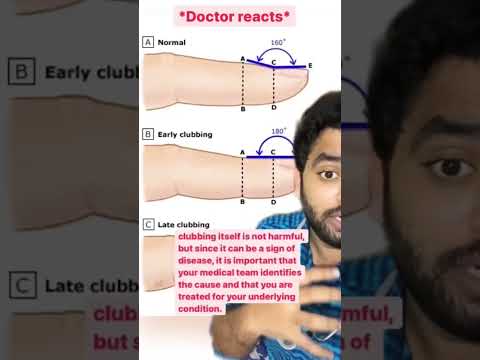
Okay, so picture this: you’re at a party, and someone’s showing off their nails. But instead of a classic manicure, they have these big, rounded fingers that look like little sausages. You can’t help but ask, “What’s up with those?”
That’s clubbing for you—when your fingers and toes take on this rounded appearance. It sounds kinda funny at first, but it’s actually a pretty telling sign from your body. Seriously!
Clubbing isn’t just a quirky nail thing; it can hint at some underlying health conditions. It can mean anything from lung issues to heart problems. So yeah, there’s more going on than meets the eye here—and that’s what we’ll explore together!
Let’s dive into the nitty-gritty of why clubbing happens and what it could mean for our health. Trust me, it’s more interesting than it sounds!
Understanding the Mechanism of Lung Clubbing: Insights into Pathophysiology and Clinical Significance
Lung clubbing, or digital clubbing, is when your fingers or toes take on a rounded, bulbous shape. You might notice this if you look down at your hands and the nails start to curve and look shiny. It’s kinda wild how something so subtle can actually point to some serious business happening in the body.
So, let’s break down what’s going on here. Clubbing isn’t a disease itself but rather a symptom of various underlying conditions. The mechanism behind this phenomenon is still being figured out, but it generally involves changes in blood flow and oxygen levels in your body.
When you have certain diseases like lung cancer or chronic obstructive pulmonary disease (COPD), they can cause your lungs not to work properly. This leads to reduced oxygen delivery to the tissues. In response to low oxygen levels, your body goes into overdrive trying to compensate. That’s where the clubbing comes in.
Here’s what happens: small blood vessels start to dilate and grow more capillaries in those areas near your nails and fingers. These adjustments are meant to increase blood flow—and therefore oxygen—to meet the demand from your tissues. But ironically, while it feels like a solution, it leads to that noticeable thickening of the nail bed as new tissue forms.
You might be thinking… “so what?” Well, the clinical significance of lung clubbing is huge! It can be an early warning sign for healthcare professionals. For instance:
- Idiopathic Pulmonary Fibrosis: This is a nasty condition where lung tissue gets scarred over time. Clubbing often appears alongside it.
- Lung Cancer: Many types of lung cancer come with clubbing as one of those sneaky signs that something’s off.
- Cystic Fibrosis: A genetic disorder that affects the lungs and digestive system can also show up with clubbed fingers.
Imagine sitting in a doctor’s office—maybe you’re nervous about something else entirely—but then they take one look at your hands and think “Hmm, let’s check for underlying issues.” Crazy how something so simple can lead them down an important diagnostic path!
It’s important to remember that not all people with clubbed fingers have serious illnesses; sometimes it could just be genetic or associated with non-life-threatening conditions too!
And speaking about emotional connections – I once had an uncle who was an avid gardener, always tending his plants with his calloused hands sporting those rounded nails. He never thought twice about it until he got sick later on; then we realized his “nail thing” was actually linked to more than just his hobby.
If you’re curious about treatment options for any potential underlying issues related to lung clubbing? Well—that usually means tackling whatever condition caused it in the first place! Sometimes addressing those primary concerns can lead back towards healthy-looking digits again.
To wrap things up: monitoring changes like this can really help catch serious health issues early on. So next time you glance at those fingers, remember—the shape might tell a deeper story than you realize!
Exploring the Stages of Clubbing: A Scientific Perspective on the Pathophysiology and Implications
Clubbing, or digital clubbing, is when the tips of your fingers or toes get wider and rounder. It’s not just a quirky trend in your nails—there’s some serious biology behind it. Understanding the stages of clubbing and its underlying mechanisms can give us insight into various medical conditions.
So, let’s break it down. Clubbing usually develops slowly over time. At first, you might notice a change in nail shape, but there’s more going on under the surface. The real kicker is what’s happening with blood flow and tissue growth.
What happens first? It can start off with an increase in blood flow to the extremities. This is often due to chronic hypoxia, which means your body isn’t getting enough oxygen. Think about it this way: if your fingers are starved for oxygen, they start to compensate by growing more tissue around them.
- The first stage usually involves softening of the nail bed and a shiny appearance as new blood vessels form.
- Next comes the actual curvature of the nails, which may start to look like a spoon (called koilonychia) but then morphs into that characteristic rounded shape over time.
- The final stage is what we typically refer to as clubbing—a full-on enlargement of the distal phalanx that gives those fingers an almost bulbous appearance.
This process isn’t just a cosmetic issue; it’s often linked with other health concerns like lung diseases, heart problems, or even gastrointestinal disorders. For example, persistent clubbing might signal something like cystic fibrosis or lung cancer. Your body is trying to tell you something!
Why does this happen? Well, when there’s an issue like low oxygen levels in your blood or chronic inflammation from infections or tumors, certain growth factors are released into your bloodstream. These factors stimulate fibroblasts (a type of cell) to produce more connective tissue in your nailbeds—hence the thickening and rounding.
But wait—there’s more! Researchers have also looked into how platelets (a type of cell involved in clotting) release substances that promote new blood vessel formation during clubbing. So it’s like a double whammy: low oxygen and increased growth factor signaling pushing things along!
<p< and get this! clubbing can be reversible if treated early enough. you fix whatever's causing that hypoxia—like quitting smoking or managing heart failure—you might able to stop in its tracks.
You know what’s fascinating? The implications surrounding clubbing extend beyond just individual health; they can impact how doctors diagnose systemic diseases! It serves as a physical marker that identifies underlying issues before they become serious problems for patients.
In summary, understanding those stages of clubbing can be quite enlightening—not just for catching potential health issues early on but also for appreciating how interconnected our body’s systems really are!
Exploring the Diverse Types of Clubbing: A Scientific Perspective on Social Dynamics and Behavior
Clubbing might make you think of late-night dancing or the vibrant social scene, but in a more scientific sense, it refers to something quite different. We’re talking about **clubbing** as a condition where your fingers and toes start to look a little different. It’s not just an aesthetic change but can indicate what’s going on inside your body. Hang tight; we’re getting into the nitty-gritty of it!
So here’s what happens: the tips of your fingers or toes can become rounded and swollen. Think of it like you’ve got a tiny drumstick at the end of each finger! This is because of a buildup of tissue, which isn’t exactly normal. And you might ask, why does this even happen? Well, clubbing can be linked to various health issues, particularly those affecting your lungs or heart.
When you’re dealing with conditions like **lung diseases**, such as *pulmonary fibrosis* or *cystic fibrosis,* your body sometimes goes into overdrive trying to compensate for low oxygen levels. This leads to changes in how blood vessels grow and what tissues do around those areas. As a result, the fingers begin to change shape over time.
Now let’s talk about some reasons behind clubbing:
- Chronic Hypoxia: Low oxygen levels in your blood can trigger an increase in blood flow to certain areas—like those fingertips!
- Lung Diseases: Like I mentioned before, certain lung conditions are major players in causing clubbing.
- Cardiovascular Issues: Heart defects can also lead to lower oxygenation; hence we see clubbed fingers.
- Gastrointestinal Disorders: Believe it or not, some liver diseases have been associated with clubbing too.
You know what’s interesting? Clubbing isn’t just one-size-fits-all; there are actually different types! For instance:
- Syndromic Clubbing: This is seen with specific genetic disorders and diseases.
- Acrylic Clubbing: While associated more commonly with lung diseases and hypoxia.
Even though it sounds somewhat unusual and alarming when you hear “your fingers are changing,” that emotional tie is important too. It might feel unsettling for someone when they notice this change in their body—like something’s off balance.
To put things into perspective: imagine going through life with blue skies only to wake up one day and see gray clouds! Your body sometimes sends signals that we’re not always aware of until they become visible—like our fingers changing shape.
So if you ever notice clubbing happening in yourself or loved ones, it’s definitely worth checking out with a healthcare professional. It’s all about looking after our bodies and understanding what they’re trying to tell us.
And remember, clubbing signifies changes—some serious—that deserve attention but also serve as reminders of how interconnected our bodies really are! Each little thing plays its part in the grand scheme of keeping us healthy.
Alright, so let’s chat about clubbing. It sounds like a fun night out, but in reality, it’s a pretty serious medical condition related to your fingers and toes. You might have seen someone with fingers that look like they’ve got a little extra growth going on at the end—sort of bulbous or rounded. That’s clubbing for you.
What happens is, when the body is not getting enough oxygen, it can lead to this funky finger phenomenon. It usually signals that something deeper is going on—like chronic lung disease or heart problems. So, when you see clubbing, it’s really a way for the body to tell you, “Hey! We’ve got issues here!”
I remember this one time I had a family friend who was feeling pretty off, and her fingers started looking different. At first glance, it just seemed like a weird quirk until she went to the doctor and found out she had some major health problems brewing under the surface. It was scary to think something as simple as nail shape could signal such serious stuff.
The pathophysiology behind clubbing involves some complex interactions—you know? It relates to blood flow and oxygen levels in your body. When there’s not enough oxygen getting where it needs to go, something triggers changes in the tissues around your nails. The exact mechanism isn’t super clear-cut—it can vary from person to person—but generally speaking, there are some underlying issues at play.
Now imagine if you didn’t pay attention to those early signs; things could spiral pretty quickly! That’s why it’s crucial (and I mean crucial!) for healthcare providers and even us regular folks to recognize something like clubbing for what it truly is—a red flag.
So what does this all mean? Well, understanding clubbing isn’t just about knowing another medical term; it’s about being aware of what our bodies are trying to communicate with us. If we notice changes or oddities in ourselves or those around us—like those bulbous nails—it might be worth looking into further. It’s all about listening closely and acting accordingly when our bodies send up smoke signals!
</p