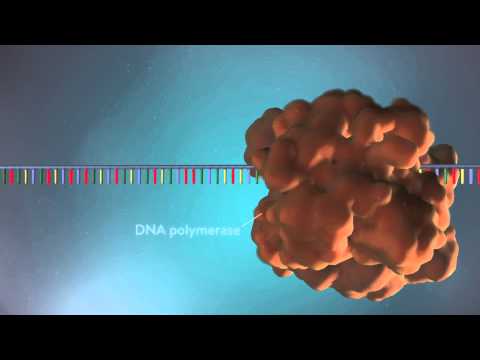
So, picture this: You’re trying to make a copy of your favorite recipe, but instead of writing it down, you just throw the ingredients in a blender and hope for the best. Sounds messy, right? That’s kind of how DNA replication works without a little guy called DNA polymerase.
This enzyme is like that super organized friend who actually makes sure you follow the recipe to the letter. Without it, our genetic info would be all over the place—like trying to make lasagna with peanut butter instead of cheese!
Curious about how this tiny powerhouse pulls off such a big job? Let’s dig into the wild world of DNA polymerase and see why it’s essential for life as we know it. You ready?
Key Enzymes Involved in DNA Replication: A Comprehensive Overview for Molecular Biology
So, let’s chat about DNA replication. This process is like a super important copy machine for our genetic material. It happens every time a cell divides, which is pretty often, especially in growing tissues. And the star of this show? You guessed it—DNA polymerase. But there are other players too. Let’s break it down.
First off, when a cell decides to replicate its DNA, it needs to unwind the double helix structure of the DNA molecule. This initial step is handled by an enzyme called helicase. Think of helicase as a zipper that goes down your jacket; once it opens up, everything inside can be accessed and duplicated.
Now, as helicase does its thing and the strands of DNA separate, we need another team member to stabilize those unwound strands. Enter single-strand binding proteins (SSBs). These little guys jump in to keep the strands from rejoining before they can be copied. You can imagine them as guardrails at a race track—keeping everything safe and in place.
With the strands stabilized, things get really exciting! Here’s where DNA polymerase struts onto the scene. Its job? To add new nucleotides to each strand and create two identical copies of DNA from one original strand. But here’s the twist: DNA polymerase can only add nucleotides to an existing chain. It can’t start from scratch! This is where another enzyme called primase comes into play.
Primase lays down a short RNA primer on each template strand, giving DNA polymerase something to grab onto and get started. Now you see how all these enzymes work together like a well-rehearsed band? Each one has its role in making replication smooth.
Once primase sets up shop, DNA polymerase starts adding nucleotides one by one—like building blocks. It’s important to note that there are different types of DNA polymerases in cells (like DNA polymerase I and III), each with specific tasks during replication. For example, while DNA polymerase III primarily does most of the heavy lifting in synthesizing new DNA strands, DNA polymerase I comes along later to replace those RNA primers with actual DNA once replication is underway.
But wait! There’s more! You can’t just leave loose ends hanging around after copying all that genetic info. That’s where ligase comes into play again. Ligase seals any gaps between Okazaki fragments on the lagging strand (that’s where things get a bit tricky) ensuring everything is neat and tidy for the next rounds of cell division.
And hey, don’t forget about proofreading! That’s right—DNA isn’t just copied; it’s double-checked too! Some forms of DNA polymerases have proofreading abilities that help catch mistakes during replication. If they spot something wrong—a mismatched base or two—they can nip it in the bud before it becomes an issue for future generations!
To sum up all this enzymatic teamwork:
- Helicase: Unzips the double helix.
- Single-strand binding proteins: Stabilize unwound strands.
- Primase: Lays down RNA primers for initiation.
- Dna Polymerases: Add new nucleotides.
- Ligase: Joins gaps after RNA primers are replaced.
So next time you think about how your body replicates its precious genetic information—it’s like watching an intricate dance unfold right inside your cells! And each enzyme plays its part perfectly to ensure we stay healthy and able to grow—and isn’t that just remarkable?
Exploring the Key Enzyme in PCR: Unlocking the Secrets of Polymerase Chain Reaction
The polymerase chain reaction (PCR) is a game-changer in the world of genetics. It’s like having a magical copier for DNA. And at the heart of this process is DNA polymerase, the key enzyme that makes it all happen. So, what’s the deal with this enzyme, and why is it so crucial?
First off, let’s talk about what DNA polymerase actually does. This enzyme’s main job is to build new strands of DNA by adding nucleotides one by one. Nucleotides are the building blocks of DNA; think of them like tiny Lego pieces that snap together to form a bigger structure. When you’re replicating DNA, just like when you make a photocopy of a document, you need the right parts to be put in place correctly.
Now, here’s where it gets interesting. PCR has a few key steps: denaturation, annealing, and extension. During the denaturation step, you heat up the DNA so that it separates into two single strands—kind of like unzipping a zipper. Once you have those single strands, you cool things down a bit during annealing so that primers can attach to those strands. Primers are short sequences that tell DNA polymerase where to start building.
And then comes extension, when everything really kicks off! This is where DNA polymerase steps into action. It grabs those nucleotides and starts piecing them together based on the template strand’s sequence. If everything goes smoothly—bam! You’ve got brand new copies of your original DNA.
But not all DNA polymerases are created equal! Different types are used for different purposes in PCR. Some work better at high temperatures because they need to withstand the heat during denaturation without falling apart themselves. A famous example is Taq polymerase, sourced from the heat-loving bacterium Thermus aquaticus living in hot springs.
Let me tell you a little story here: I remember my first time attempting PCR during lab class in college—what an adventure! We heated up our samples with Taq polymerase and watched in awe as our teacher explained every detail about how this enzyme worked its magic under changing temperatures. With each cycle we performed, I could see how powerful this technique was for amplifying specific segments of DNA for research or medical diagnoses.
So what does it all mean? Essentially, without DNA polymerase and its ability to replicate genetic material quickly and accurately, many modern advances in biotechnology would just fall flat on their faces! From detecting pathogens in medical diagnostics to cloning genes for research purposes—this enzyme plays an essential role across various fields.
In short:
- DNA Polymerase builds new strands of DNA.
- The process involves three main steps: denaturation, annealing, and extension.
- Taq Polymerase is commonly used because it can handle high temperatures.
- PCR has opened doors for advancements in medicine and research.
PCR isn’t just about running some tests; it’s about understanding life itself at a molecular level thanks largely to this incredible enzyme, DNA polymerase. So next time you hear about PCR or see it referenced in some groundbreaking study or news article, you’ll know there’s some serious science—and an amazing little enzyme—behind all those results!
Understanding the Role of DNA Polymerase in DNA Replication for A Level Biology
So, you’ve probably heard of DNA, right? It’s like the instruction manual for life. But here’s the thing: just having a manual isn’t enough; you need to make copies when you want to grow or heal. That’s where DNA polymerase comes into play—it’s like the photocopier of DNA.
First off, let’s get into what DNA polymerase actually is. Basically, it’s an enzyme, which means it helps speed up chemical reactions in your body. In the case of DNA replication, it plays a critical role in copying that long strand of DNA so your cells can divide. Think of it as a talented builder that constructs a new house by following blueprints.
Now, during DNA replication, which happens before a cell divides, the strands of the DNA double helix unwind and separate. This is like unzipping a zipper on your jacket—once it’s unzipped, both sides are available for access. The exposed strands then serve as templates for creating new strands.
- Template Strand: One side serves as a template that shows how to put together nucleotides—the building blocks of DNA.
- Nucleotides: These are added one by one to form new strands by matching them with their complementary bases (A with T and C with G).
- Directionality: Interestingly, DNA polymerase can only add nucleotides in one direction—from 5’ to 3’. This is super important because it dictates how replication occurs on each strand.
You might be thinking: why does this matter? Well, how well DNA polymerase does its job affects everything from how we grow to how we respond to environmental challenges. Mistakes can happen—like typos in a book—and that can lead to mutations. But don’t worry too much; there are proofreading mechanisms that help catch errors along the way.
An interesting tidbit: there are different types of DNA polymerases! In humans alone, there are at least 15 different ones categorized based on their functions and locations within the cell. For instance, DpoI, found mostly in mitochondria (the powerhouse of cells), has specific roles in creating mitochondrial DNA—which are crucial for energy production.
A bit more about how this whole replication process works: once DNA polymerase adds an appropriate nucleotide to the growing chain, it also checks if it’s correct through its proofreading ability. Imagine writing something and then quickly scanning for spelling mistakes before handing it in—that’s kind of what happens!
The bottom line here is that without DNA polymerase, your cells wouldn’t be able to replicate their genetic material properly. And without proper replication? Well, life as we know would be pretty messed up! You see why this enzyme is such an unsung hero in biology?
This entire orchestration between unwinding DNA and adding nucleotides involves many other proteins and enzymes working together too—that teamwork makes sure everything goes smoothly while copying our precious genetic material!
So next time you hear someone talk about DNA polymerase, think about all those intricate processes humming along inside you every moment of every day—keeping things running like they should!
You know, when you think about DNA, it can feel like a whole other world. I mean, we’re talking about those tiny double helixes that carry all the information for life itself! And at the heart of this fascinating process is an unsung hero: DNA polymerase. Seriously, this enzyme is like the construction worker in a massive building project, laying down the bricks—except in this case, the bricks are nucleotides, and they make up our genetic code.
Let me tell you a little story. Picture a high school science class where we all had to extract DNA from strawberries. It was messy, sure—everyone had that gooey residue on their fingers—but once we saw those white strands of DNA finally appear, there was this collective “Wow!” moment. That experience made me realize how these molecules define who we are and how they replicate when cells divide. And that’s where DNA polymerase comes into play!
So here’s the deal: DNA needs to replicate if a cell is going to divide and create new cells. Think of it like copying your favorite playlist so you can share it with friends—everyone gets to enjoy the same tunes! But it’s not as easy as hitting ‘copy’ on your computer; there’s a lot more going on inside our cells.
DNA polymerase grabs onto single strands of DNA and starts adding complementary bases (the building blocks), basically putting together a mirror image of what’s already there. It’s like following a recipe—you need precise measurements for everything to come out right. If something goes wrong during this copying process? Yikes! That could lead to mutations, which sometimes cause problems but can also be what drives evolution forward.
And here’s the kicker: As crucial as DNA polymerase is, it doesn’t work alone. It relies on other proteins and enzymes in this grand ballet of molecular biology—keeping everything running smoothly so that life can keep doing its thing.
Imagine if you had an efficient team working behind you every time you tried something new—whether it’s cooking or learning an instrument. That support makes all the difference! The same goes for our cells and their intricate processes.
So next time you’re engrossed in some fascinating stories about genetics or just marveling at life itself, take a moment to appreciate those tiny workers inside us called DNA polymerases. Without them (and their crew), well… let’s just say we wouldn’t be having this conversation! Isn’t nature simply incredible?