Okay, picture this: you’re in the kitchen, whipping up your favorite dish. You toss in all the ingredients, but something seems off. It’s like the pasta won’t cook or the sauce just sits there. Frustrating, right? Well, that’s kinda how enzymes feel when they don’t do their thing.
So, what exactly are enzymes? Think of them as tiny helpers in our bodies that make reactions happen faster. Without them, life would be way slower—like watching paint dry! Seriously, these little guys are biological catalysts that keep everything running smoothly.
Enzyme kinetics is all about studying how these helpers work. It’s like trying to figure out what makes your grandma’s secret sauce so good! You know there’s a science behind it; you just have to dig a bit deeper.
Join me on this wild ride through enzyme kinetics where we’ll unravel how these clever molecules speed things up and keep life moving along. Who knew science could be this tasty?
Understanding Enzyme Catalysis: A Comprehensive Guide to Kinetics in Biochemistry
Enzymes are like tiny machines in our bodies. They help speed up chemical reactions, which is super important for everything we do—like digesting food or making energy. The process of how enzymes do this? That’s called enzyme catalysis. So, let’s break it down nice and simple.
First off, enzymes are proteins. They’re made up of chains of amino acids, all folded up in a special way. This unique shape allows them to fit perfectly with the molecules they work on, known as substrates. When these substrates stick to the enzyme, something magical happens: the reaction speeds up! You could think of it like a key fitting into a lock—only the right key can open the door.
Now, enzyme kinetics is all about understanding how fast these reactions happen and what factors affect them. There are a couple of important terms you should know here:
- Reaction Rate: This is how quickly a reaction occurs.
- Substrate Concentration: The amount of substrate available for the enzyme to work on.
- Activation Energy: The energy needed to start the reaction.
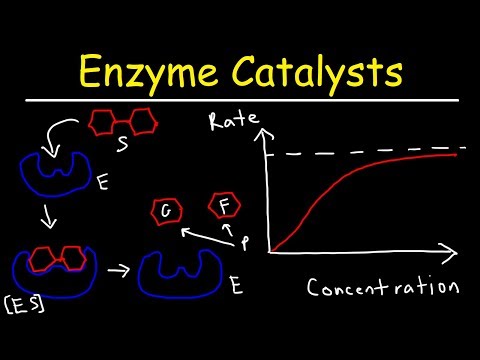
One classic way to study enzyme kinetics is through the Michaelis-Menten equation. This equation describes how reaction rates change with different substrate concentrations. Basically, as you add more substrate, the reaction rate increases—up to a point! Eventually, all the enzyme’s active sites get filled up, which means adding more substrate won’t make much difference anymore. Think of it like trying to fit more cars into a parking lot that’s already full!
Another cool thing about enzymes is how temperature and pH levels can influence their activity. Enzymes have an optimal temperature where they work best—like human beings enjoying that sweet spot between being too cold or too hot! If it’s too hot? Well, proteins can start unfolding—and when that happens, they lose their function.
Let’s not forget about inhibitors either! These are substances that can slow down or even stop an enzyme from working effectively. Imagine if someone decided to block those parking spaces for your cars—that would definitely slow things down!
So why does this matter? Understanding enzyme kinetics opens doors for many fields such as medicine and biotechnology. For example, researchers might design drugs that target specific enzymes involved in diseases, like cancer.
In summary, enzyme catalysis is essential for life as we know it! Grasping how enzymes work helps us unlock answers in biology and health science—and honestly? It’s pretty neat stuff if you think about how tiny proteins have such massive roles!
Understanding the Role of Enzymes as Biological Catalysts in Biochemistry
So, let’s talk about enzymes. You might think of them as tiny workers in our bodies, racing around and helping reactions happen faster than they normally would. Seriously, it’s like having a superpower right at the cellular level!
Enzymes are a type of protein that act as **biological catalysts**. This means they speed up reactions without getting used up in the process. Imagine if you had a friend who could make chocolate chip cookies in record time but still get to eat them afterward—that’s kind of how enzymes work!
Now, here’s where it gets cool: every enzyme has a specific job. They’re like specialists at a buffet who only want to serve certain dishes. For instance, amylase is an enzyme that breaks down starch into sugars. It works best in your mouth because it starts chewing through pizza crust before it even hits your stomach!
One intriguing thing about enzymes is their **specificity**. Each one is designed to fit its “substrate” like a key in a lock. This lock-and-key model is super important because if the shape doesn’t match, the reaction just won’t happen. It’s as if you were trying to fit a square peg into a round hole—total fail.
Next up is enzyme kinetics, which is basically studying how these catalysts work over time and how they interact with substrates. This can get pretty technical but let’s keep it simple: when you increase the concentration of substrates (the stuff enzymes work on), you’ll often see an increase in reaction speed—up to a point. Like when you’re making cookies; more flour means more dough until you can’t fit anymore on your baking sheet!
But there’s also this thing called **saturation**. Kind of like how you can only fit so many people at your party before it feels cramped! When all the active sites of enzymes are filled up with substrates, adding more won’t make things go any faster.
Now let’s not forget about temperature and pH levels—they’re also crucial for enzyme activity! Enzymes have an optimal temperature range where they perform best. If things get too hot or too cold, or if the pH shifts too much from its sweet spot (like lemon juice for pepsin), it’ll start messing with their effectiveness—as if someone turned down the music at your party!
Just think about it: without enzymes doing their thing, many biological processes would be way too slow for life as we know it—kinda like watching paint dry instead of having a dance-off!
In summary:
- Enzymes are biological catalysts: They speed up reactions.
- Specificity: They only work on specific substrates.
- Enzyme kinetics: Study of how enzymes interact over time.
- Saturation: A limit to how much substrate can be processed at once.
- Temperature and pH: Key factors affecting enzyme activity.
So there you go! Enzymes are remarkable little machines that make life run smoothly and efficiently, all while putting on their own kind of show behind the scenes!
Understanding Allosteric Enzymes: Divergence from Michaelis-Menten Kinetics in Biochemistry
When you think of enzymes, you probably picture them as these little biological machines that help speed up chemical reactions in our bodies. Most of the time, we talk about them using the Michaelis-Menten model, which is like the classic playbook for enzyme kinetics. But there’s a whole other side to enzymes called **allosteric regulation**, and it’s pretty cool.
So, let’s break it down. Allosteric enzymes are different because they don’t just follow that predictable Michaelis-Menten curve. Instead, they have multiple binding sites—think of them as having a few knobs and levers. When a molecule binds to one site (the allosteric site), it changes the shape of the enzyme in a way that affects how easily it can work with its substrate. Imagine trying to fit a key into a lock; if something changes the shape of the lock, like if you stick gum inside it, well, good luck getting that key to turn!
Now, here’s why this matters:
- Cooperativity: Allosteric enzymes can show cooperativity. When one substrate binds, it can make it easier or harder for others to bind. This is super important for many biological processes.
- Sigmoidal Kinetics: Instead of that classic hyperbolic curve from Michaelis-Menten kinetics, you get a sigmoidal (S-shaped) curve when plotting reaction rates against substrate concentrations for allosteric enzymes.
- Regulatory Molecules: Some molecules serve as activators or inhibitors for allosteric enzymes. They can ramp up or slow down an enzyme’s activity based on what your body needs at any given moment.
Let’s put this in context with an example: Picture hemoglobin, which isn’t technically an enzyme but works similarly because it’s all about binding oxygen in your blood. It shows cooperative binding; when one oxygen molecule binds to hemoglobin, it increases the chances that more oxygen will grab on too! This is so your body can transport oxygen efficiently depending on how much you’re working out or chilling on the couch.
So basically, allosteric enzymes offer this sophisticated way to regulate reactions based on cellular needs. They add layers of control that go beyond what Michaelis and Menten originally described back in their day! You might say that allosteric regulation is like upgrading from basic texting to video calls—you gain more depth and clarity.
Understanding these differences not only enriches our knowledge of biochemistry but also helps scientists figure out how to tweak enzymes for things like drug design or industrial processes. So next time you think about those tiny catalysts in your body doing their thing, remember there’s a whole world behind those molecular decisions!
Enzyme kinetics might sound a bit dry at first, but trust me, it’s super cool when you think about it. These are the little superheroes of our biological world – enzymes, I mean. They’re proteins that speed up chemical reactions like they’re on a mission, and without them, life as we know it would be totally different.
You know that moment when you’re waiting for your food to bake in the oven? It feels like forever. Well, enzymes are like kitchen timers that make those reactions happen way faster. For instance, when you eat an apple, enzymes in your saliva jump right in to help break it down into sugars your body can use. It’s like a magic trick happening right in your mouth!
But here’s where it gets really interesting: the rate at which these enzymes work isn’t constant; it depends on several factors—like temperature and pH levels. I remember one time in high school biology class we did an experiment with catalase (an enzyme found in potatoes) and hydrogen peroxide. We measured how quickly our potato cubes could break down the peroxide into water and oxygen. The bubbling action was so satisfying, almost like watching a tiny volcanic eruption!
Now picture this: if you heat that potato too much, bam! The enzyme gets all messy and can’t do its job anymore. It’s called denaturation—it’s like cooking your eggs too long until they turn rubbery. Fascinating stuff.
You can also think of enzyme kinetics as a dance between substrates (the molecules they work on) and enzymes themselves. Like two partners moving together on the floor—sometimes really fast, sometimes slow—based on how much substrate is available or how many enzymes are around to do the dancing.
And there’s this thing called Michaelis-Menten kinetics that gives us a mathematical approach to understand this dance better—it helps predict how fast a reaction can go under different conditions. It might seem technical, but at its heart, it’s all about finding that sweet spot where things get groovy.
Honestly though? Like any good story about science, there’s always more to discover as we dig deeper into how these biological catalysts function and interact with their environments. Each little piece of information feels like turning the page in an unexpected novel where every twist leads us closer to understanding life itself—from how we digest food to how our cells communicate.
So next time you’re munching on something delicious or marveling at nature’s complex systems working seamlessly around us, just remember: there are invisible heroes keeping everything running smoothly in the background! Enzyme kinetics is one of those windows into their remarkable world—just waiting for you to take a peek!