Okay, so imagine this: it’s Friday night, and you’re trying to whip up some pasta sauce. You’ve got all the ingredients laid out, but every time you stir the pot, it just doesn’t seem to come together. You know how that feels, right?
Well, enzymes are kind of like those chefs in your kitchen. They help speed up reactions in our bodies. But here’s the kicker: they don’t always work on their own; they need a little something extra. That’s where Michaelis-Menten kinetics struts in like a superhero!
It’s this cool model that explains how enzymes do their thing. Seriously! It breaks down how these little biological machines function at different speeds depending on what’s happening around them. You might be raising an eyebrow now, but stick with me; it’s way more exciting than it sounds!
Understanding the Purpose of Michaelis-Menten Kinetics in Biochemical Research
Understanding Michaelis-Menten Kinetics is super important in the world of biochemistry, especially when it comes to studying how enzymes work. So, let’s break this down a bit, shall we?
Enzymes are like the little workers in our cells. They help speed up chemical reactions that would normally take ages on their own. Think about it—you know when you’re trying to eat a big salad and it’s taking forever to chew? Enzymes are like the fork that helps you shovel it in faster!
Now, here’s where Michaelis-Menten kinetics comes into play. It’s a way of understanding how enzymes interact with their substrates (those are the substances they act on). Basically, it tells us how efficiently an enzyme can convert a substrate into a product.
So, how does this work? The model describes two main steps:
- Binding: The enzyme grabs onto the substrate to form what’s called an enzyme-substrate complex.
- Catalysis: The enzyme then transforms that complex into products while releasing them, getting ready for another round!
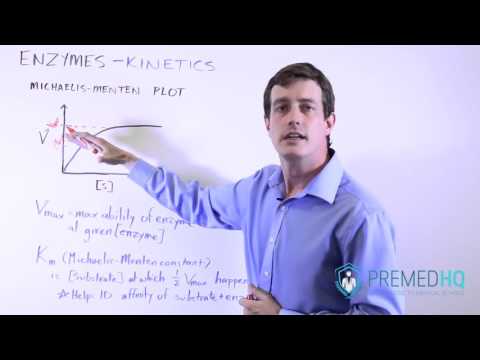
The cool thing about this model is that it gives us some key parameters to think about. One of them is Km, which is the substrate concentration at which the reaction rate is half of its max speed—pretty handy! A low Km means the enzyme has a strong affinity for its substrate. It’s like knowing your friend really loves pizza—they’re going to be right there when there’s pizza around!
Then there’s Vmax, which is basically the maximum rate at which an enzyme can work when it’s fully saturated with substrate. Imagine trying to fill up your car with gas—there’s only so fast you can pump before you hit maximum capacity.
But why should we care about all this? Well, these parameters help scientists understand and predict enzyme behavior under different conditions. For example:
- If you’re designing drugs or inhibitors, knowing Km and Vmax can help you figure out how effective that drug might be.
- This understanding also helps in metabolic engineering where pathways might need tweaking for better performance.
Real-life applications are everywhere. Take lactase, for instance—a specific enzyme that breaks down lactose in dairy products. If someone can’t digest lactose well, understanding its kinetic properties can help develop better lactose-free foods.
In summary, Michaelis-Menten kinetics isn’t just some fancy math; it tells us crucial information about how enzymes function and interact with substrates. This knowledge drives advancements in medicine and biotechnology—making life a little easier (and tastier) for many people out there! So next time you’re enjoying your favorite food or medicine that makes you feel better, remember there’s some serious science behind those tiny but mighty enzymes working hard for you!
Understanding the Michaelis-Menten Model of Enzyme Activity in Biochemistry
Enzymes are like tiny workers in our bodies that help speed up chemical reactions. Imagine you’re baking a cake. The flour, sugar, and eggs are all there, but it’s not until you mix them together that something delicious happens, right? Well, enzymes do something similar; they lower the energy needed to make reactions occur.
The Michaelis-Menten model is a way of understanding how these enzymes work. It basically describes the relationship between the amount of substrate (the stuff an enzyme works on) and the rate at which the reaction happens. So, let’s break it down a bit.
First off, when you add more substrate to an enzyme solution, you might think that the reaction would keep speeding up as you add more and more substrate. And it does—up until a point! That’s where the Michaelis-Menten model comes into play.
Here are some key points about it:
So why does this matter? Well, knowing these parameters helps scientists design drugs and understand metabolic pathways better. Like if they want to inhibit or enhance certain processes in the body.
There was this one time in my biology class where we did an experiment with catalase—an enzyme that breaks down hydrogen peroxide—in potatoes! We measured how fast bubbles formed (that was oxygen being released). It was wild seeing how changing concentration affected the bubbling rates!
In essence, understanding Michaelis-Menten kinetics equips us with powerful tools for both research and practical applications in medicine and biotechnology. It’s like having a blueprint for how these little helpers function. And every time they react in your body? That’s science working behind-the-scenes to keep everything running smoothly!
Understanding the Michaelis-Menten Constant: Its Role and Significance in Biochemical Kinetics
Understanding the Michaelis-Menten constant is a big deal in the world of biochemistry. You see, enzymes are like little machines in our bodies that help speed up reactions. The Michaelis-Menten constant, often represented as Km, is a key number that helps us figure out how well an enzyme is doing its job.
This constant tells us about the concentration of substrate (the stuff an enzyme works on) needed for the enzyme to reach half of its maximum speed. Basically, it gives you an idea of how much substrate is required before the enzyme starts working efficiently. So, if you have a low Km, it means the enzyme can do its thing even with a small amount of substrate. That’s pretty efficient!
Think about it like this: Imagine you’re trying to fill up a water bottle. If it only takes a little bit of water to fill it halfway, that’s kind of like having a low Km. But if you need to pour in a lot more water just to get halfway up, well, that’s like having a high Km.
- Km values can vary significantly between different enzymes.
- A low Km indicates high affinity: meaning the enzyme doesn’t need much substrate.
- A high Km, on the other hand, suggests lower affinity and needs more substrate.
Now, let’s talk significance for a sec! Enzyme kinetics isn’t just some academic fluff; it’s essential for understanding things like metabolism and drug action. For instance, penicillin works by inhibiting an enzyme in bacteria that has a particular Km. Knowing this can help scientists develop better antibiotics.
But here’s where it gets really interesting—the concept isn’t just limited to one-on-one interactions. In real life, there can be all sorts of factors like pH levels or temperature that affect enzyme activity as well. So while the Michaelis-Menten equation gives us that neat curve showing reaction rate vs substrate concentration, real-life situations often involve lots more complexity.
It’s like throwing different ingredients into your favorite recipe; sometimes you get something delicious and other times… well—a bit burnt! The environment plays a significant role too.
So next time you’re curious about how your body’s enzymes are keeping everything ticking along smoothly—remember Km: it’s an indicator of efficiency and capacity which unlocks so many secrets about how life works at the molecular level! How cool is that?
You know, when you think about all the amazing things happening in your body, it’s easy to overlook the little dance of enzymes. They’re like the unsung heroes behind the scenes, making sure everything runs smoothly. One of the cool ways scientists understand how enzymes work is through something called Michaelis-Menten kinetics. Sounds fancy, huh? But it’s really just a way to explain how enzymes interact with their substrates—the things they help transform.
Let’s take a step back for a moment. Imagine you’re baking cookies. You know that feeling when you put all the ingredients together and mix them up? That’s kind of like what an enzyme does with its substrate. The enzyme needs to grab onto the substrate, do its magic, and release whatever new product it’s made. Michaelis-Menten kinetics gives us a formula to describe how quickly that happens based on how much substrate is available.
The thing is, it’s not always a straightforward relationship. At low substrate concentrations, more substrate means more speed—that’s when the enzyme can really get to work! But as we add more and more substrate, there’s a point where our enzyme buddies can’t keep up anymore; they get saturated! Imagine trying to bake cookies but running out of oven space—no matter how many cookie dough balls you might have ready, only so many can bake at once!
Here’s where it gets interesting: this saturation point helps scientists figure out key properties of enzymes, like their affinity for substrates (which is basically how good they are at grabbing onto them). It’s fascinating because these details play a huge role in everything from metabolism to drug design.
I remember this one time in college when we were studying enzymes in biochemistry class. We had this crazy hands-on experiment where we measured reaction rates—like timing how fast our enzymatic cookie was baked under different conditions! I was totally lost at first but watching those numbers change based on our adjustments really brought the whole concept alive for me.
So yeah, Michaelis-Menten kinetics isn’t just some old-school math that sits quietly on the shelf; it brings life to our understanding of biology’s machinery! It shows us why some medications work better than others or why certain conditions affect metabolic processes in unexpected ways. Just goes to show you—the little things matter in big ways!