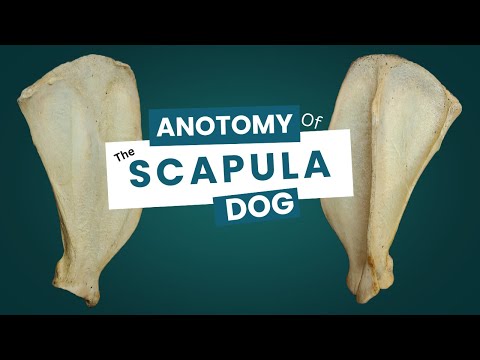
You know how your dog always looks like a ninja when they play? Seriously, they leap around like they have springs in their legs! Well, what’s helping them pull off those insane stunts is their scapula.
That triangular bone kind of hiding at the back? Yeah, that’s the scapula, and it plays a huge role in all that fancy footwork. It’s like the secret behind their awesomeness.
So, let’s take a little peek at this amazing structure. You’ll see why it matters! Whether your pup’s a sofa potato or an agility champion, understanding this bone can give us insight into how our furry friends move and groove through life!
Anatomical Description of the Scapula: Insights and Implications in Human Anatomy
So, let’s chat about the scapula, or as most folks call it, the shoulder blade. It’s a pretty neat bone with some vital roles in both human and canine anatomy. So here’s the scoop!
Structure of the Scapula
The scapula is a flat bone shaped kind of like a triangle. It sits on your back, connecting your arm to your trunk. You know that feeling when you reach behind your back? That’s your scapula working its magic!
Looking at it closely, it has some important parts:
- Glenoid cavity: This is where the humerus (the upper arm bone) fits in, like a ball in a socket. It allows for a ton of movement!
- Spine: Running diagonally across the back of the scapula, it divides two distinct surfaces—one for muscle attachment and one that’s more smooth.
- Acorion process: This little hook-like structure helps connect to muscles and ligaments. Think of it as an anchor point.
- Corners: Each corner has its own name—superior, inferior, and lateral—which helps when you’re trying to talk about injury or pain locations.
It’s pretty cool how all these sections work together to give our arms such full range of motion.
The Scapula in Humans vs. Dogs
When comparing human and dog scapulas, there are some similarities but also some key differences! For instance:
- The dog’s scapula tends to be longer and less flexible than ours because they need more strength for running and jumping.
- The shape also varies slightly; dogs have more pronounced structures for muscle attachment because they rely heavily on their front limbs.
This means their movements are more powerful but less stylish than our wiggly dance moves at parties.
Muscle Attachments
So you may be wondering which muscles hang out around this area? Well, there are quite a few:
- Serratus anterior: This bad boy helps hold the scapula against the chest wall. When you see someone throwing a punch (you know like in those action movies), it’s this muscle kicking into gear!
- Subscapularis: Found on the front side of the scapula, it’s essential for rotating your arm inward.
These muscles work in concert with others to make sure your shoulder can do all sorts of movements without throwing out an injury.
The Importance of Understanding Scapular Anatomy
When we dig into everything about this part of our anatomy—or even our canine friends’ anatomy—it opens up so many doors!
For physical therapy or injury prevention, knowing where everything is can help us heal better. If someone has issues with their shoulder, therapists can zero in on specific muscles around the scapula to target treatment.
Plus, veterinarians do much the same thing for dogs! If a pup is limping or not using its leg right? Checking out that scapula could lead to answers.
In short, understanding not just what this bone does but how it interacts with surrounding muscles gives us insights into movement mechanics—both in humans and dogs alike!
So next time you stretch those arms overhead or see your furry pal jump up high after a toy? Remember: there’s some serious anatomical magic happening behind those moves!
Exploring the Anatomical Markings of the Scapula: A Comprehensive Guide for Anatomy and Physiology
Alright, so let’s talk about the scapula, or what many people call the shoulder blade. It’s that flat bone that connects your arm to your body. Yep, it’s a big deal! Now, if we zoom into the dog scapula specifically, you’ll see some serious anatomical features that help us understand how these furry friends move and play.
First off, the scapula in dogs is shaped kind of like a triangle. It’s important because it provides a strong foundation for the shoulder joint—it’s basically where things get exciting when they run around!
Key features of the dog scapula include:
- Spine of Scapula: This is a prominent ridge running across the surface. Think of it as a muscle highway where tendons and muscles attach. It helps stabilize the shoulder.
- Acuate Angle: This is where things get interesting! This angle helps with how well the dog’s front legs can swing forward when they run.
- Glenoid Cavity: This little scoop-like area is where the humerus (that’s the upper arm bone) connects with the scapula to form a joint. It’s part of what lets your pup wag its tail and fetch that ball!
- Cranial Border: The edge closest to their head? It’s important for muscle attachment, allowing your dog to have powerful movements.
Now here’s something cool: have you ever noticed how some dogs seem to have more flexibility in their front legs than others? Well, this might be due to how their scapulas are shaped. Breeds with longer scapulas usually have better reach and range of motion.
The anatomy doesn’t stop there! Each part plays its own role in ensuring mobility and stability during activities—like jumping around at the park or just chasing their tail (hey, no judgment here!).
When you look at a dog’s movements closely, you can almost see the delicate dance between various muscles and bones working together thanks to this shape. I remember watching my friend’s golden retriever sprint down a hill happily—it’s amazing how all those anatomical details come together to create such grace!
In summary, exploring these anatomical markings on a dog’s scapula gives us insight not only into their structure but also into their incredible agility. So next time you see them zooming past or rolling over for belly rubs, think about all that hard work going on behind those smooth moves!
Understanding Scapular Muscle Attachments in Canine Anatomy: A Comprehensive Guide
The anatomy of a dog’s scapula is pretty cool, actually. It’s not just a funny bone; it plays a huge role in how our furry friends move around. Seriously, the scapula—also known as the shoulder blade—is key to their upper limb movement and supports everything from running to jumping and playing.
So, first things first: let’s talk about what the scapula looks like. Imagine a flat, triangular bone that sits on the dog’s back, towards the front. Pretty neat, right? This bone connects with the humerus (that’s the upper arm bone) at one end and has connections to other skeletal structures by muscles and ligaments.
Now, when it comes to **muscle attachments**, several important muscles connect to this bone. Here are some of them:
- Supraspinatus: This muscle is located above the spine of the scapula. It helps in extending and stabilizing the shoulder joint.
- Infraspinatus: Below that spine is where you find this muscle. It assists with shoulder flexion and allows for outward rotation of the arm.
- Teres major: This muscle attaches at the lower part of the scapula and works to pull the humerus inward.
- Teres minor: Found near teres major but smaller, it supports both flexion and rotation too.
- Subscapularis: Located on the front side of the scapula; it plays a major role in keeping everything stable while also helping with internal rotation.
Okay, but why does all this matter? Well, these muscle attachments allow dogs to perform various activities. Think about your dog chasing a ball or making sharp turns—those movements require precise control thanks to these muscles connecting to their scapula.
Here’s something that might hit home: I once watched my friend’s dog jump gracefully over hurdles at an agility training session. At first glance, it looked effortless! But when you know about those muscles attached to the scapula aiding every leap and twist? Wow! That just shows how important this anatomy really is.
Also important are some other structures around the scapula like ligaments which help stabilize everything during movement. Without them being in place, those impressive maneuvers could become risky.
So next time you’re watching your pup play fetch or run around in circles like a little tornado, remember: all that excitement is powered by an intricate system built around their **scapular structure**! Isn’t it amazing how much goes into something we might take for granted? It’s like they have their own sophisticated machinery working behind all that adorableness!
You know, when you look at a dog, what really stands out is their playful movement, right? They bound around, wagging their tails and jumping for joy, but have you ever thought about the mechanics behind that? Take a minute to think about their shoulder blades—those fascinating dog scapulas.
So, the scapula is like this flat bone that sits on the back of the dog, kind of like a little shield for their chest area. It’s not directly connected to other bones in a typical way. Instead, it floats a bit on their muscles and connective tissues. How cool is that? This design gives dogs incredible flexibility and range of motion in their front limbs! They can sprint after a squirrel or leap over puddles with such grace.
I remember watching my friend’s Labrador retriever play fetch at the park one sunny afternoon. This pup was flying through the air like an Olympic athlete! And I couldn’t help but think about how amazing it is that all those little parts work together. The scapula lets them lift their front leg up high as they catch that frisbee—it’s all thanks to this unique structure.
Now, the scapula has a few important areas worth noting. There’s this bony ridge called the spine of the scapula that runs diagonally across its surface. It serves as an attachment point for muscles that allow dogs to pull and push with power during play or work. Basically, it’s like attaching a power-packed engine to an athletic car.
Also, there are two main parts: the glenoid cavity and acromion process—just fancy names for sections where ligaments and tendons connect and provide stability during movement. But don’t get too caught up in jargon! What it all means is that these features help minimize injury while allowing for some seriously dynamic motions.
And you know what’s really impressive? Different breeds have different shaped scapulas based on what they’re built for. A Greyhound has a long, sleek scapula perfect for running fast while bulldogs might have sturdier ones for strength rather than speed. It’s just nature doing its thing!
So next time you see a dog running around with uncontainable excitement, think about all those anatomical elements working in harmony—their skeletons might be pretty basic compared to ours but what they can do with those simple structures is nothing short of extraordinary! Isn’t nature just awesome?