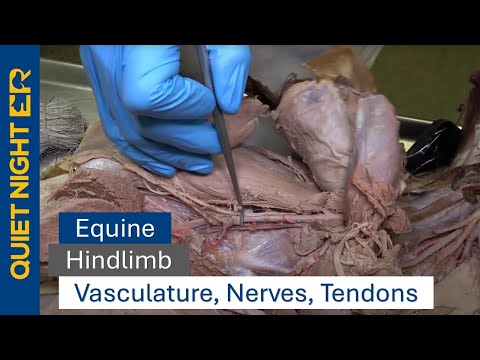
You know what’s funny? Horses have these incredible legs that can do some serious work. Like, have you seen them gallop? It’s like watching a sports car take off! But here’s the kicker: their hind limbs are way more complicated than they look.
Ever watched a foal trying to figure out its long legs? They’re all wobbly and adorable, but those limbs are engineered for speed and power. Seriously, it’s like Nature took a peek at race cars and thought, “Let’s make something that can win a Kentucky Derby!”
So if you’re into veterinary science or just love horses, learning about their anatomy is pretty cool. You’ll start to see why they can jump fences like they’re nothing and run like the wind. Get ready to dive into this fascinating world; it’s gonna be a wild ride!
Exploring the Anatomy of Horse Hind Leg Tendons: A Scientific Overview
Alright, let’s jump right into the anatomy of horse hind leg tendons. Horses are incredibly built for speed and endurance, and their hind limb tendons play a huge role in that. Basically, these tendons are like super-strong cables connecting muscles to bones, allowing horses to move gracefully and powerfully.
The main tendons you want to know about are:
- Superficial Digital Flexor Tendon: This one is located at the back of the leg and helps flex the digit (that’s just a fancy term for the horse’s toes!). It’s critical for shock absorption when they run.
- Deep Digital Flexor Tendon: It runs deeper than its sibling and goes down further into the foot. This tendon also helps with flexing but is key for pushing off the ground during movement.
- Common Calcanean Tendon: This one connects to the Achilles heel area. It’s all about propulsion, helping in those powerful leaps you see when horses gallop.
Now, there’s this cool thing about tendons: they can handle a lot of stress but can also get injured pretty easily. Imagine being out on a long trail ride and your horse suddenly pulls up lame—yeah, tendon injuries can be a bummer! And trust me; I’ve seen it firsthand when my friend’s horse got a nasty strain during a jumping lesson. It was heartbreaking seeing them struggle.
A big function of these tendons is storing energy. When horses run or jump, their tendons stretch like rubber bands and then snap back into place like it’s no big deal! This elasticity gives them an extra boost while conserving energy. Pretty nifty, huh?
The ligaments around these tendons are also super important because they help stabilize everything. The Suspensory Ligament, for instance, supports those bending movements during galloping or turning quickly. If that gets injured? Oof.
In terms of care, keeping your horse’s leg health in check is crucial. Regular exercises that strengthen these muscles and tendons can help prevent injuries. And don’t forget about warm-ups! Just picture going from zero to sixty without stretching; not fun!
So there you have it! The anatomy of horse hind leg tendons might seem detailed at first glance, but understanding how they work is essential for any equine enthusiast or vet science lover out there!
Anatomical and Functional Analysis of the Hind Limb Joints in Equine Physiology
So, let’s talk about the hind limb joints of horses, shall we? They’re pretty fascinating, and understanding them is essential if you’re into veterinary science or just love horses. These joints play a crucial role in how horses move, run, jump, you name it!
The major joints in the equine hind limb include the hip joint, stifle joint, hock joint (or tarsus), and fetlock joint. Each of these has its own unique structure and function. Let’s break it down a bit.
- Hip Joint: This is where the pelvis meets the femur (the thigh bone). It’s a ball-and-socket joint which allows for a lot of movement—forward, backward, and all around. Imagine how your hip works; same idea! The muscles surrounding this joint are crucial for power when running.
- Stifle Joint: Think of this as the horse’s knee. It connects the femur to the tibia (the shin bone). It’s really complex because it involves several ligaments and cartilage. This joint allows for flexion and extension but has some limitations on rotation. If you’ve ever seen a horse start a gallop, you know how important this is!
- Hock Joint: Also known as the tarsus, this one is kind of like our ankle but way more complicated! It consists of several smaller bones that work together to provide mobility. The hock can absorb shock when the horse lands after jumping or galloping.
- Fetlock Joint: This is where you’ll find some action! It’s located between the cannon bone and pastern bones. The fetlock acts like a hinge—allowing up-and-down movement while also providing some side-to-side flexibility. You might notice that when horses trot or canter, their fetlocks flex quite noticeably.
Now, let’s get into some fun stuff—how these joints work together to keep our equine friends moving smoothly!
Each time a horse trots or gallops, there’s this amazing synchronization happening. Imagine standing on one leg; that’s sort of what it feels like but with all four legs involved at once! When they lift their hind leg off the ground to take a step forward, multiple muscles engage to stabilize these joints.
The ligaments, which are strong tissues connecting bones at each joint, play an important part too by keeping everything in place during those rapid moves. Any damage here can lead to serious issues—like lameness or reduced mobility—which no horse owner wants!
It’s also interesting to note that while we’ve talked about these major joints individually, they actually depend heavily on each other when it comes to function. For instance:
– When a horse runs fast or jumps high—the **hock** must be strong enough to handle landing impacts.
– Likewise, powerful **hip** extensions provide propulsion.
So yeah! All these anatomical details connect with functional aspects beautifully—making sure our majestic friends can leap fences or make sharp turns without missing a beat.
Understanding all this not only deepens your appreciation for these animals but also highlights how intricate their physiology truly is! Whether you’re looking at routine check-ups or analyzing performance issues—the anatomy behind their legs tells us so much about what makes horses special.
Next time you’re near a horse—take just a moment to observe its movements! You might start seeing those hardworking joints doing their thing in real-time!
Understanding Horse Hind Leg Anatomy: A Comprehensive Study of Muscular Structure and Function
Understanding Horse Hind Leg Anatomy
So, let’s talk about the magical world of horse hind leg anatomy. Seriously, it’s pretty amazing how these powerful limbs work. Horses rely on their hind legs for everything from jumping over obstacles to simply trotting around the pasture. It’s like having a finely tuned sports car, if you think about it.
Muscle Structure
The hind leg of a horse is basically a marvel of engineering, made up of various muscles that work together to power their movement. The main muscles include:
- Gluteals: These are on the back and help with the horse’s thrusting motion when they move forward.
- Hamstrings: They start at the pelvic area and run down to the lower leg. These muscles are crucial for flexing the stifle joint, which is like your knee.
- Quadriceps: Located at the front of the thigh, these guys straighten out the stifle joint.
- Soleus and Gastrocnemius: These muscle groups at the lower leg are vital for powerful jumps and speedy gallops.
It’s like each muscle has its own job and they all coordinate to make sure that when a horse takes off, it’s smooth as butter.
The Joints
Now, don’t forget about joints! They’re essential for movement too. The pivotal joints in a horse’s hind leg include:
- Tarsal Joint (Hock): This big joint is super important for flexibility and shock absorption as they land after jumps.
- Stifle Joint: This one connects the femur with the tibia and fibula, helping with powerful strides.
- Dewclaw (or Splint Bones): While not exactly a joint, these help support the leg structure.
Each joint plays a role in movement efficiency and overall performance.
Nervous System Integration
You might be wondering: how do all these parts communicate? Well, innervation, which sounds fancy but just means nerves sending signals, is crucial here! Nerves manage muscle contractions so that everything happens in sync. For example, when a horse decides to gallop away from something scary—like that sudden loud noise—it doesn’t just spring into action randomly; there’s a whole system behind those reflexes.
When I was little, I remember watching horses gallop across an open field. It seemed effortless; but knowing what I know now makes me appreciate those strides even more!
The Importance of Care
All this anatomy means horses are athletes requiring proper care. Keeping their joints healthy with good nutrition can prevent injuries during rigorous activities. Regular vet check-ups help spot issues early on.
Whether you’re caring for your own horse or just fascinated by them, understanding their hind leg anatomy gives insight into what keeps them moving gracefully.
In summary: Horse hind leg anatomy isn’t just about bones or muscles—it’s about teamwork between all components working in harmony allowing these majestic creatures to thrive, like nothing else on earth!
So, let’s chat about the anatomy of a horse’s hind limb. If you’re like me, you probably think of horses as majestic creatures galloping through fields, right? But there’s so much more happening underneath all that beautiful muscle and fur. You know, understanding their anatomy isn’t just for veterinarians—it’s for anyone who loves these animals or is curious about how they work.
First off, the horse’s hind limb consists of several key parts: the femur, patella (like their knee), tibia, fibula (which is kinda small and not super important), plus all those bones in their lower leg—the tarsal bones (or hocks), metatarsal bones, and phalanges (which are basically their toes). That’s a lot going on down there!
One time I went to this equestrian event and saw a vet demonstrate how crucial the hock is for movement. Seriously, it’s like the hinge that allows horses to spring into action. They can really leap! And if something goes wrong with that joint? Well, trust me; it’s no small issue. Watching that horse struggle made me realize how every little piece in their anatomy plays such an important role in overall functionality.
And let’s not forget about tendons and ligaments. Those hardworking cords of connective tissue are what help stabilize everything. The suspensory ligament is particularly fascinating; it acts almost like a rubber band—stretching and recoiling to help absorb shock when the horse lands after a jump. Can you imagine running full speed and landing without those? Ouch!
Now here’s where it gets really interesting: did you know that each horse has its own unique anatomy? Sure, they might look similar at first glance, but take a closer look—you’ll find subtle differences in their bone structure or muscle development based on their breed or even their specific training routines.
So yeah… understanding equine hind limb anatomy isn’t just about knowing where to find bones or muscles; it’s also about appreciating how everything works together to create those amazing movements we see during competitions or even casual rides through the park. And that connection between structure and performance? That brings a whole new level of respect for these magnificent creatures!